

13 NYC Couples Photo Locations for Street, Park & Skyline Sessions
Start with a place you would enjoy together. Compare neighborhoods, parks, and waterfronts, then build a short route around the feeling you want.
Found a NYC couples photoshoot location you love? Sessions start at $650, including help with the route and 90–120 minutes of photography. See NYC couples sessions from $650 or ask about your couples session.
Choose your NYC couples-photo location by how you want the photographs to feel: quiet and close, lively and urban, open and cinematic, or connected to your everyday life. These location references and photographs from my own sessions show what each choice can add.
Planning a session? Browse my Love portfolio and see NYC couples session details and pricing.
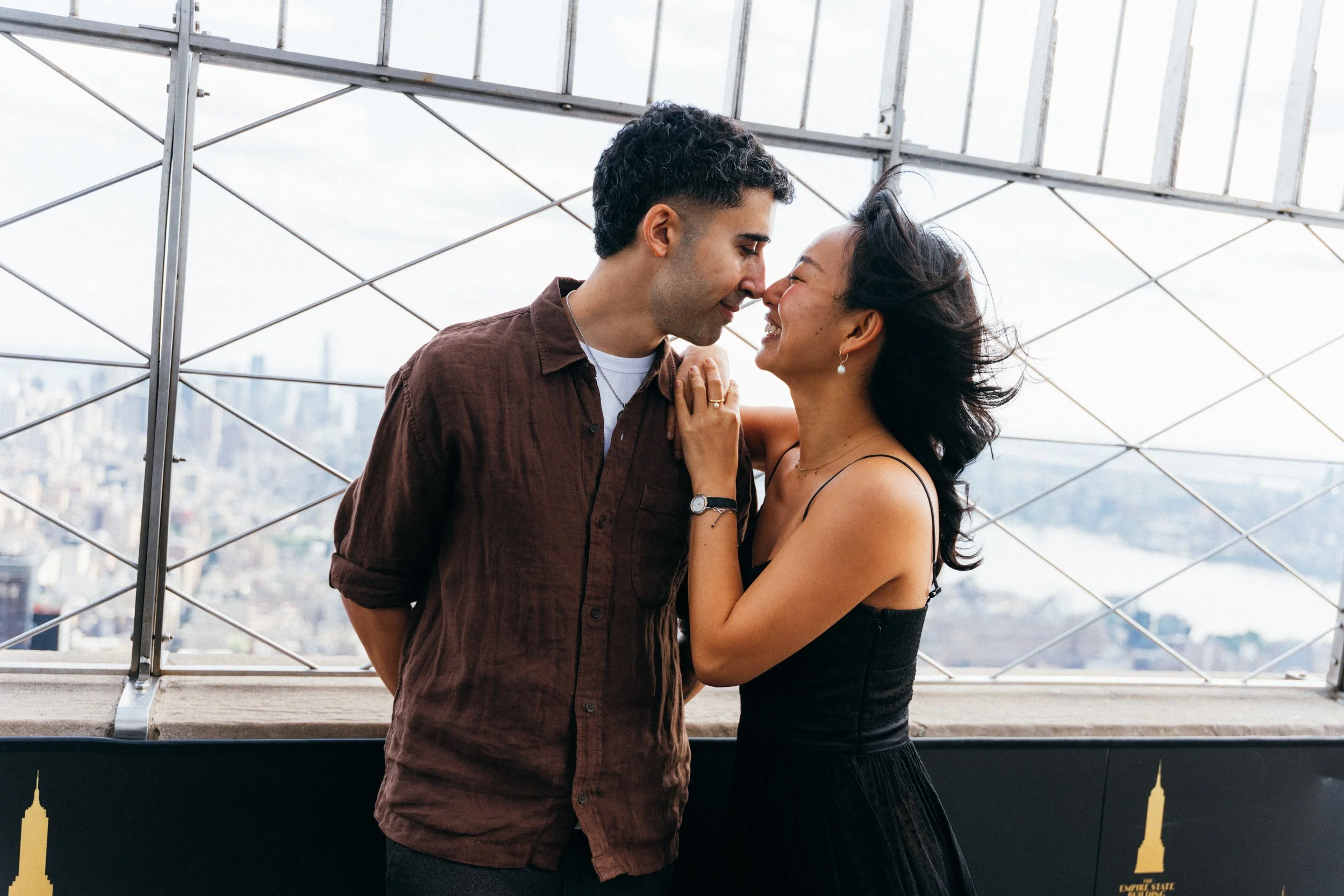
Choose one main setting and a nearby change of scene. The table below narrows the options by mood; the location sections explain what each route needs.
Choose a setting for your NYC couples photos
| If you want… | Start with… | What to plan around |
|---|---|---|
| A relaxed neighborhood walk | West Village side streets | Keep the route compact and choose shoes you can comfortably walk in. |
| Color and city movement | Chinatown and the Lower East Side | Choose a few backgrounds that work together; busy streets are part of the mood. |
| Recognizable bridge views | DUMBO and Brooklyn Bridge Park | Allow flexibility for visitors and check access requirements for your exact session. |
| Greenery and a quieter visual mood | Central Park’s northern landscapes | Plan for paths, seasonal light, and comfortable walking rather than a long list of stops. |
| Open water and an architectural backdrop | Roosevelt Island walkways | Consider wind, exposure, and a nearby sheltered alternative. |
| Something personal to your relationship | Your own neighborhood | Choose a place you actually use together and confirm access for any indoor stop. |
A setting can look different by season, weather, and time of day. The photographs below help you compare the visual possibilities; we’ll shape the final route around your date and the two of you.
Photos from my sessions show how I photograph couples; separately credited location references show the places themselves. Use both to decide what feels right for you.
Start with the way you are together
Look at the scale of the two people inside the photograph before judging the backdrop. A close frame can make a busy area feel intimate; a wider frame can give the city an active part in the story. Sophia and Mike's photographs below show both possibilities. Their expressions remain the point even when the architecture takes up more space.
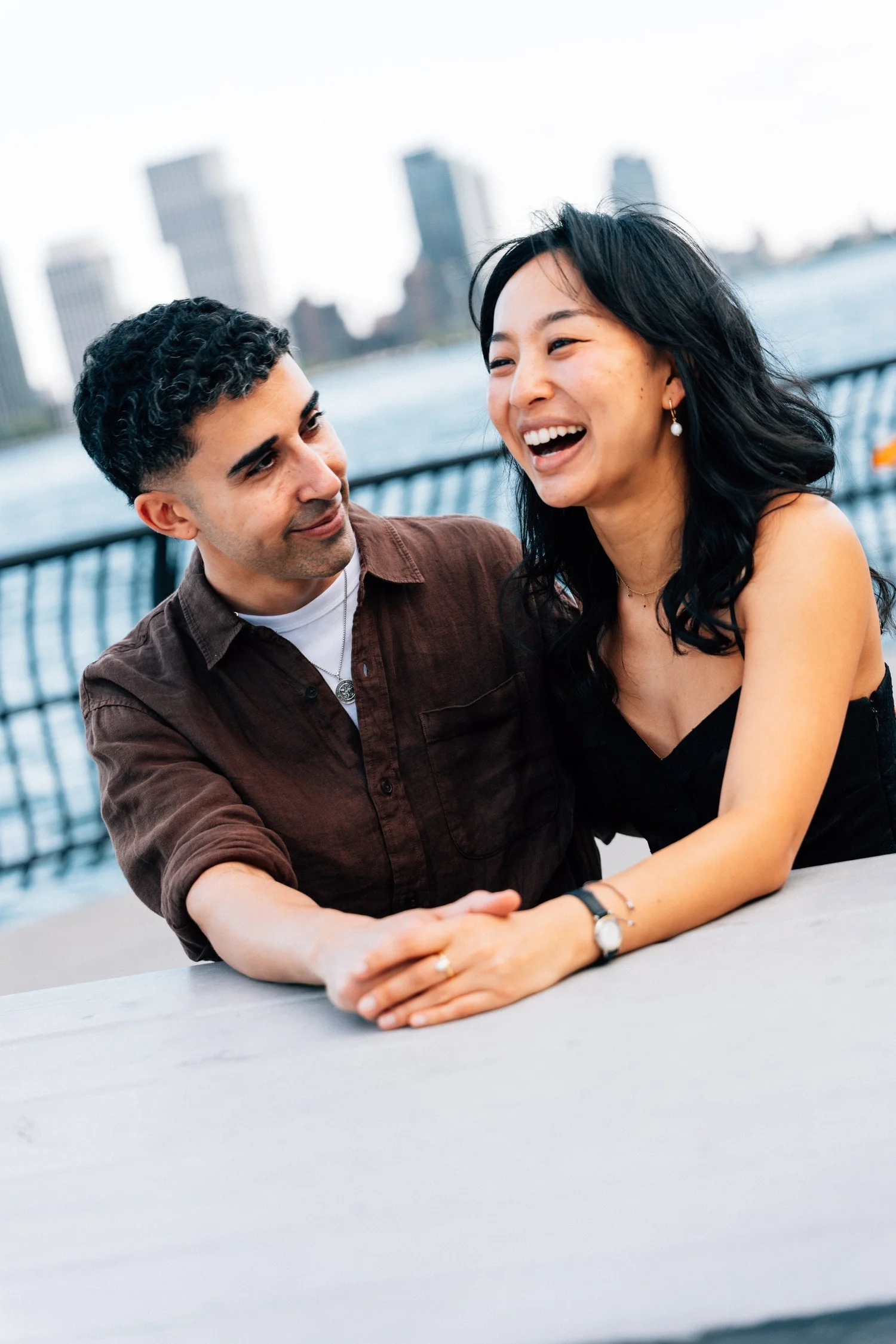
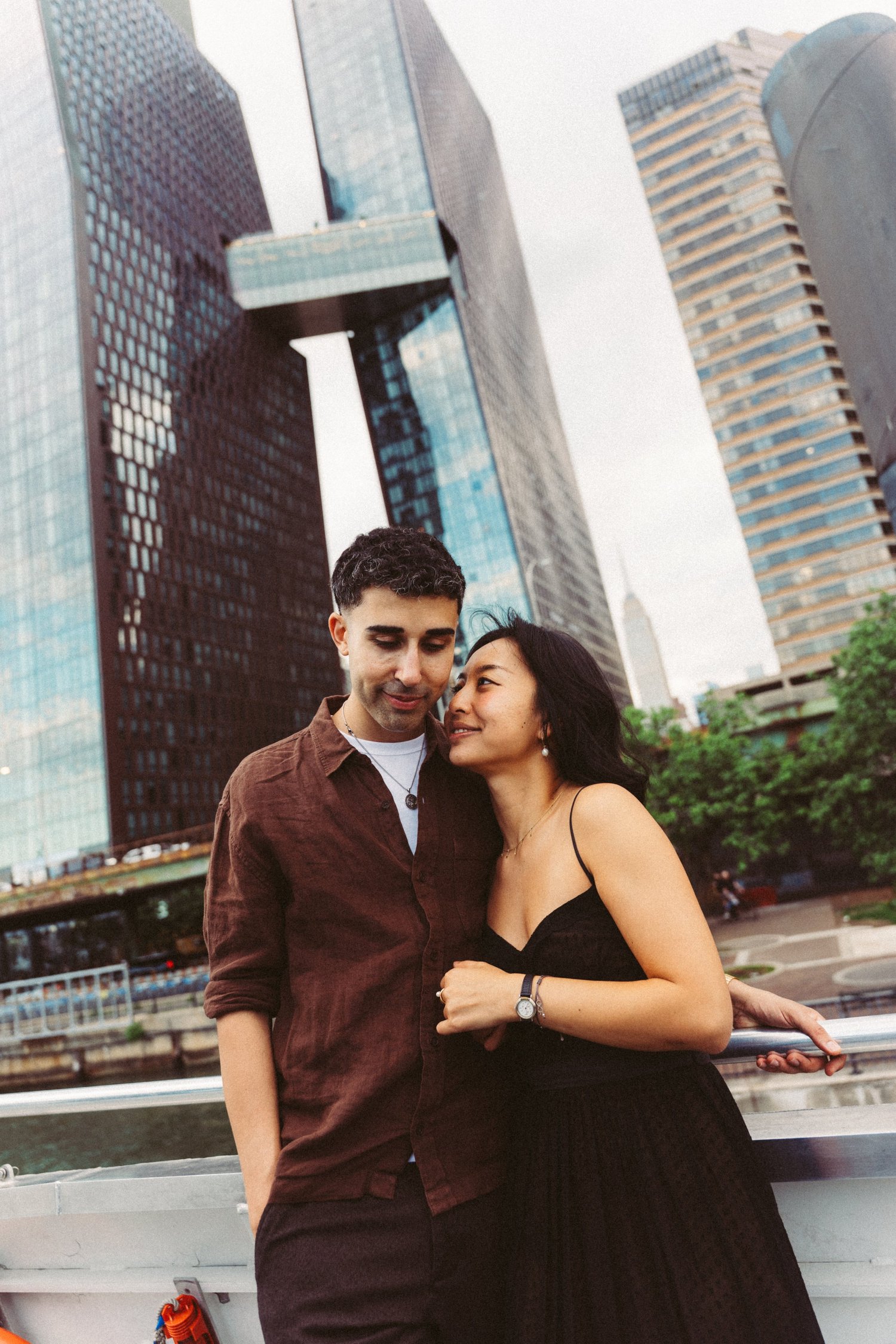
An NYC couples photographer should choose a location that does more than sit behind you: it should give you something believable to do. Partners who talk while walking may need a route, not a fixed overlook. People who become quieter in public may prefer a path with several close-framed angles. A pair who loves the city’s noise might look more present beside a crosswalk than in an empty garden.
A Brooklyn couples photographer might build that route around a quiet residential block, a waterfront path, or an industrial edge, depending on the relationship and the mood—not simply the borough name.
Privacy in New York is relative. A permit rarely turns public space into a private set, and no hour guarantees a clear background. The practical goal is flexibility: several directions, space to keep pedestrian traffic moving, and a second scene nearby. If being photographed is the larger worry, read how to look natural in photos before choosing a backdrop.
Quiet and intimate
1. West Village side streets

.jpg)
Short blocks, brick, trees, and irregular corners support close frames and slow walking. The mood is intimate rather than secluded; residents, deliveries, diners, and traffic remain part of the street. A compact loop works for partners who warm up through conversation. Stay on public sidewalks, keep entrances clear, and never assume a stoop or doorway is available.
2. Carl Schurz Park paths


Curving paths, stone edges, trees, and water glimpses let the pace alternate between walking and stillness. It suits gentle interaction and wardrobe that can handle a real park route. The park stays public, so privacy depends on framing rather than control. Confirm the specific professional session with NYC Parks’ current permit guidance and keep an exterior street backup.
Energetic and urban
3. Chinatown and Lower East Side storefront blocks


Signs, shutters, reflections, restaurant light, and foot traffic create an active visual field. This fits partners who respond to movement and do not need a silent set. Crowds and business activity are the reality, not an inconvenience to erase. Keep the route handheld and mobile, avoid blocking doors, and get permission before entering or arranging a picture against private property.
4. Subway entrances and brief station passages


Tile, steel, stairs, and arriving trains produce quick, observational frames. This is a poor fit for anyone wanting quiet or elaborate setup, but useful for a couple whose shared city rhythm includes transit. Current NYPD transit guidance allows photography only without ancillary equipment such as lights, reflectors, or tripods and without a safety or operational hazard. Keep moving and never stage on a platform edge.
5. Bushwick mural streets


Painted walls, brick, industrial scale, and hard color suit expressive clothes and playful movement. The energy can overwhelm delicate styling, so choose one wall whose palette supports you rather than collecting every mural. Sidewalk activity and current artwork can change. Identify the exact wall and owner, work from lawful public space, and use a quieter nearby block as contrast.
What a street-style couples session in NYC feels like
You do not need to know how to pose. We’ll use a short walk, a pause together, and small changes in where you stand or look to help the photographs feel natural. Some frames can include the wider city; others can stay close enough that your expression, hands, or movement become the focus.
For a route with variety, choose one neighborhood and a second visual setting nearby. A street and a waterfront can give you different backgrounds without turning the session into a tour across the city. We’ll work out the route and timing together, including access and a weather backup.
Sophia and Mike’s NYC session shows how city scenery, movement, and close portraits can belong in the same story.
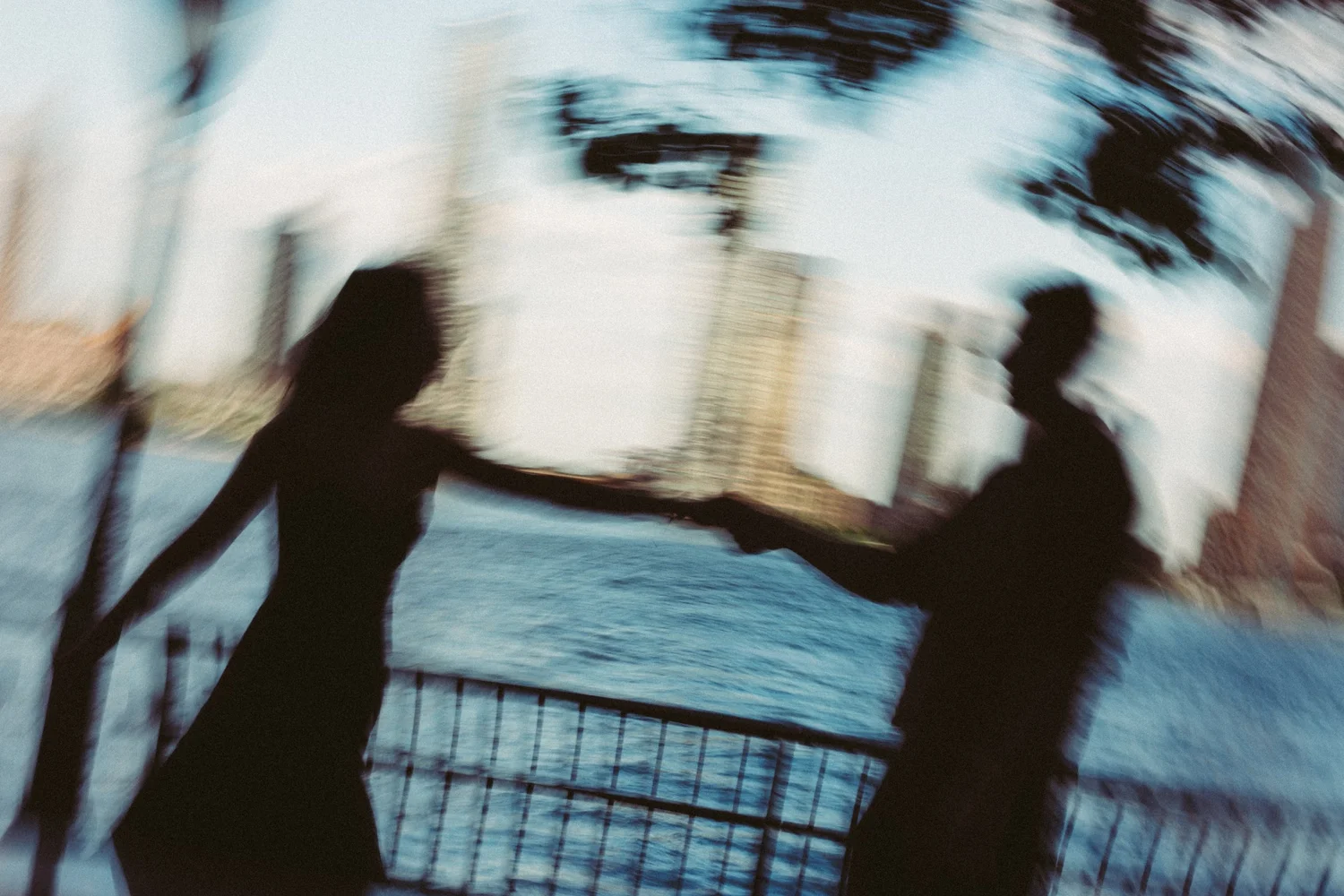
Planning the feeling as well as the place? See how I approach natural NYC engagement photographs, including movement, gentle direction, and time to settle in.
For a closer look at the visual choices behind that city feeling, explore my NYC street photography guide: ten photographs from four NYC portrait shoots, with lessons in light, color, framing, and gesture.
Cinematic and waterfront
6. Roosevelt Island walkways


Long paths, concrete, brick, river edges, and open sky can feel spare and cinematic. Walking creates the strongest connective thread; exposed sections also mean wind, bright sun, and little shelter. The island contains multiple properties and authorities, so verify the precise route instead of treating it as one permission zone. Pair an open waterfront stretch with a more protected architectural corridor.
7. Hudson River Park piers

_078_-_Pier_45.jpg)
Reflected light and long horizontal lines give partners room to move, while wind and events can change the plan quickly. This works for bold silhouettes and people comfortable being visible in a public setting. Hudson River Park’s policy sends commercial photography through an advance permit process, and a permit does not grant exclusive use. Treat the permit as access planning, not crowd control.
8. Brooklyn Bridge Park and DUMBO


The recognizable bridge and skyline are legitimate choices when they mean something to you. They are simply not the only pictures available: planted paths, industrial details, stone edges, and side-on waterfront views can tell a fuller story. Expect visitors and programming. Brooklyn Bridge Park’s guidance says professional shoots may require a permit, without promising an unobstructed view.
Green and romantic
9. Central Park’s northern landscapes


Woodland paths, rock, water, and elevation support quieter frames and unhurried movement. The romance comes from scale and texture, not from pretending the park is empty. Tree cover, seasonal change, and other visitors affect every route. Confirm the exact landscape and equipment plan under the Central Park Conservancy’s current rules, and keep paths open.
10. Fort Tryon Park


Stone walls, sloping paths, mature trees, and elevated openings can feel expansive without requiring formal garden symmetry. It favors walking, layered clothing, and partners who like a quieter tempo. Hills, wind, public events, and changing vegetation shape the logistics. Choose a compact loop rather than chasing every overlook, and confirm current NYC Parks guidance for the planned session.
11. Conservatory Garden


Ordered paths, gates, and seasonal planting create a polished, composed atmosphere. It can suit formal wardrobe or a slower, more deliberate session, but it is managed space rather than a casual backup. Professional or staged milestone photography follows the garden’s permit guidance; hours vary, applications need lead time, and a timed permit does not make the garden private.
Meaningful and everyday
12. Your actual neighborhood walk
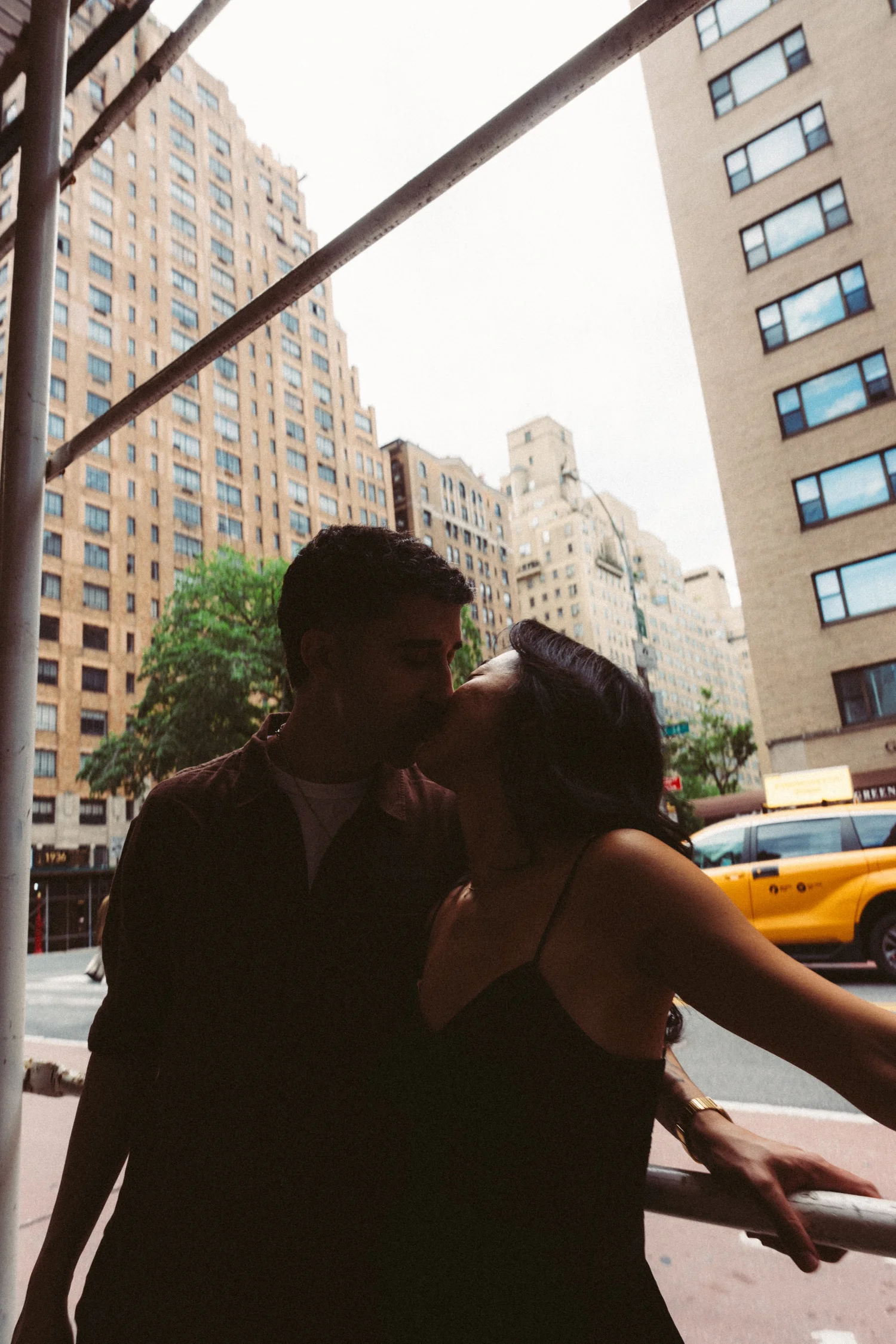
A subway entrance you use, the corner where you meet, a laundromat exterior, or the block you wander after dinner can carry more emotional weight than a landmark. Familiar actions also reduce performance. Build a legal public-sidewalk loop, photograph without obstructing anyone, and ask before using a business facade as more than passing context. Ordinary is not visually empty when the connection is specific.
13. An approved interior
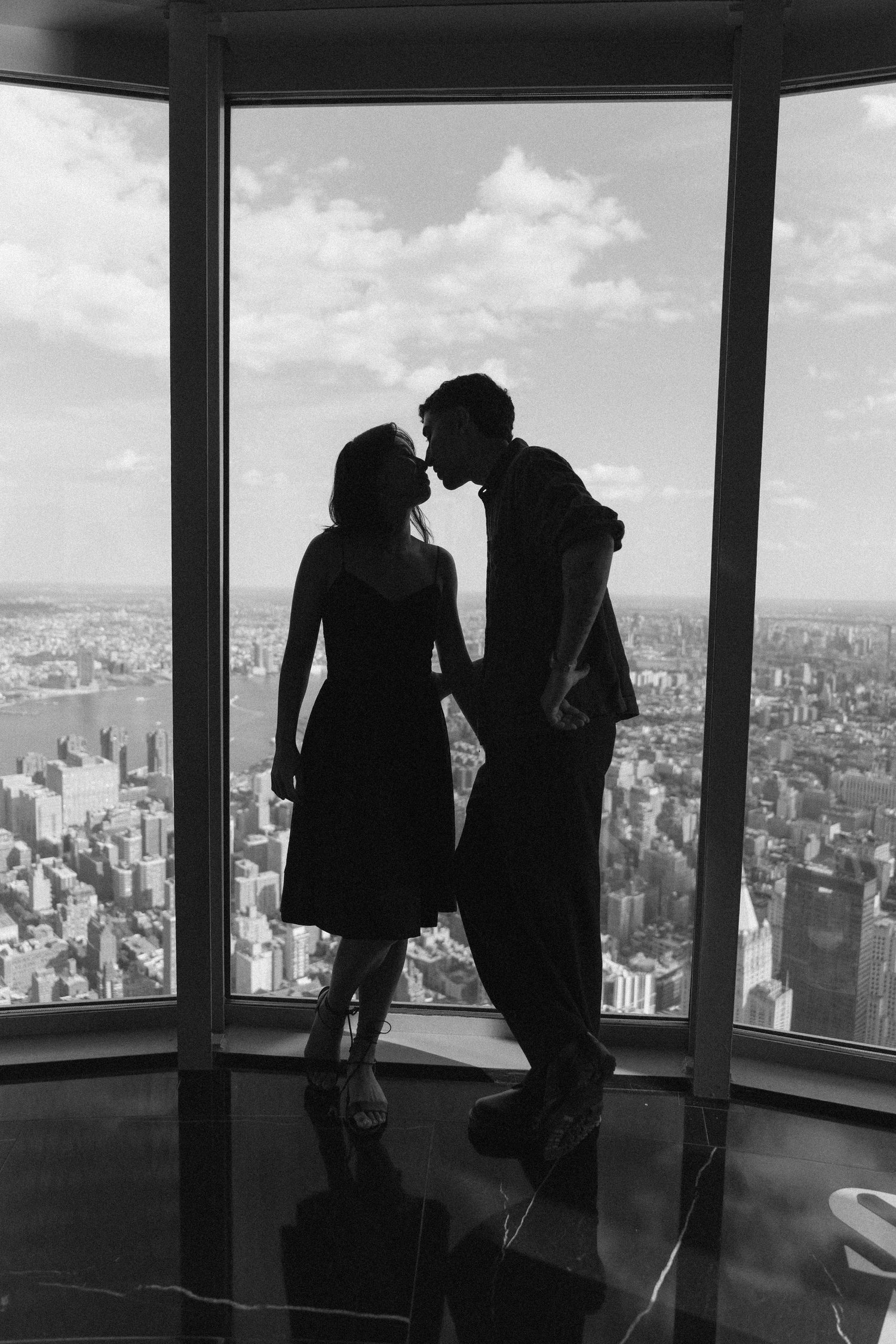
A private place connected to your routines can hold gestures that would never happen at an overlook: choosing a book, making tea, or sitting in a familiar corner. That intimacy depends on written owner permission and a clear equipment plan. Museums, hotels, rooftops, apartments, and shops set their own policies. Pair the interior with one nearby public exterior so the route remains simple.
Pair locations by purpose, not distance on a map
When making your shortlist, choose one photograph from this guide for atmosphere and one for interaction. Explain what you like about each: the room around the people, the relaxed posture, the color, or the way the light falls. That is more useful than asking to reproduce a particular couple's pose. The NYC couples photo ideas guide develops this into a practical session sequence.
Two visual zones are usually enough: one active and one quiet, or one green and one architectural. They should be close enough that travel does not interrupt the emotional rhythm. West Village streets plus a permitted nearby waterfront segment can contrast scale; a neighborhood block plus an approved indoor place can move from public energy to private familiarity. A long subway transfer rarely creates more useful variety than changing light, distance, and movement within one compact area.
Choose the route first, then check the actual date’s sun with the NOAA Solar Calculator, the local forecast, transit service, and the City event calendar. Rain deserves a real backup: a studio, a covered exterior, an approved interior, or an agreed reschedule threshold. For light-specific planning, see the guide to the best time of day for outdoor portraits; for controlled privacy, compare studio and location portraits.
Clothing should cooperate with the route. Shoes need to survive the walking plan, layers should be easy to carry, and a change needs a legitimate private place. Coordinate mood and color without dressing as copies; the broader principles in what to wear for a creative portrait session apply here too.
For the practical details between choosing a place and arriving ready, use the NYC portrait-session planning guide: weather, walking, layers, crowds, and a day-before checklist.
NYC couples-photo location FAQ
Do NYC couples sessions need permits?
There is no blanket answer. City sidewalks, parks, conservancies, transit property, private plazas, and businesses use different rules. A small handheld session on a City sidewalk may fall outside the City film-permit requirement, but equipment and exclusive-use needs can change that. Confirm the exact plan with the named authority; the NYC Film Office explains its jurisdiction.
When are locations quietest?
No time guarantees an empty background. A weekday can offer more flexibility, but events, construction, commuters, weather, and seasonal activity still matter. Choose a route with several angles and check current schedules close to the date instead of relying on a universal “quiet hour.”
Can we change outfits?
Yes, when there is an approved private changing place or the change is a simple layer swap. Do not assume a café, restroom, lobby, vehicle, or park facility is available. One purposeful change is easier to manage than carrying a full wardrobe across neighborhoods.
What if it rains?
Decide the rain plan while choosing the location. Use an approved interior, a covered exterior that remains safe and accessible, a studio, or a reschedule threshold agreed in advance. Rain can become part of the photographs, but nobody should be pressured to accept it.
Can we combine two neighborhoods?
Sometimes, but count travel as part of the session pace. Two nearby zones with different emotional purposes usually offer more than distant landmarks joined by a long ride. If the second neighborhood does not change the story, stay compact and explore the first more deeply.
Should we choose meaningful or iconic?
Choose the place that supports how you want the relationship to feel in the photographs. An iconic view can matter personally; an ordinary block can be visually rich. Meaning and recognition are not opposites. The useful choice gives you actions, memories, and an environment you can inhabit together.
Can these locations work for non-traditional wedding portraits?
Yes—a neighborhood walk, waterfront, or approved place with personal meaning can be part of wedding portraits as well as a couples session. Start with the ceremony location and the time you have available, then choose a nearby setting that suits your clothes, guests, and travel plans. We’ll discuss portrait time within your engagement session or wedding coverage, including the access and weather plan.
From a location shortlist to a real session
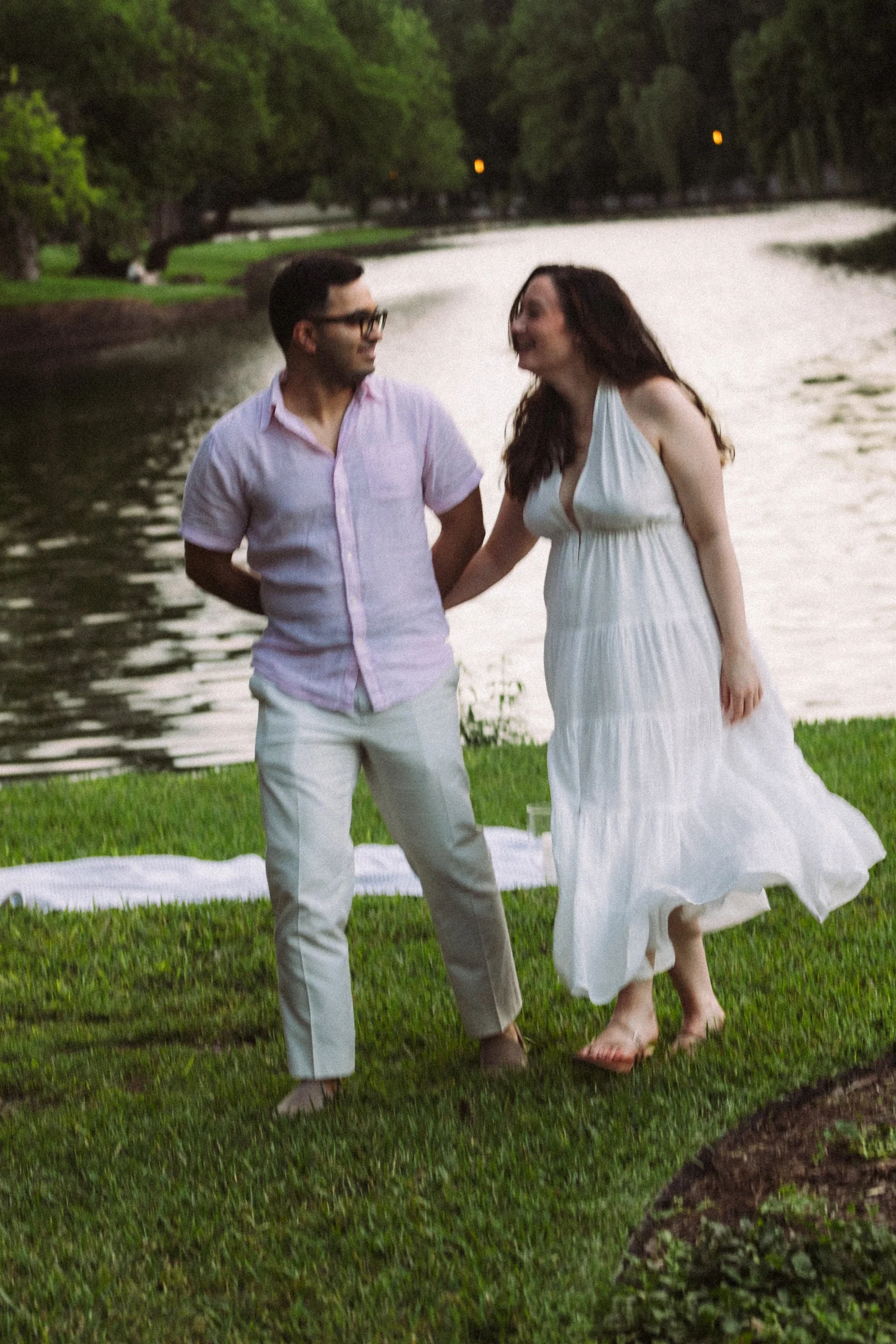
For a surprise proposal, the meeting point and approach matter as much as the view. Shelby and Himanshu’s Central Park story includes advance coordination, photographs made from a distance, and relaxed portraits afterward. For an ordinary couples session, choose a route where you can move and pause without constantly relocating.
Explore NYC couples photography and engagement photography, and read how to keep engagement photographs natural.
Turn your location shortlist into a session
For an anniversary, a New York visit, or an afternoon together, my NYC couples sessions start from $650 and include about 90–120 minutes, location planning, 50+ edited photographs, a preview within 7 days, and the complete gallery within 4 weeks.
- Engagement portraits: sessions start at $1,000, with three hours, two locations, and a complete gallery within four weeks.
- Your wedding day: full-day coverage starts at $5,000, with no hourly limit and a complete gallery within eight weeks.
Send your preferred date, the setting you like, and anything that would make the photographs feel more like you. I’ll help you choose the next step.
Plan your route for NYC couples photographs
Send your preferred date or range and your first two location choices. Tell me whether you want a relaxed couples session, engagement photographs or proposal coverage; we can discuss the right package, access and timing for that occasion.
Ask about your couples session · See NYC couples sessions from $650
Continue planning with ideas for natural interaction and engagement photographs.