

NYC Couples & Engagement Photo Ideas That Feel Natural
Want NYC engagement photographs that feel like your relationship? Engagement sessions start at $1,000; ordinary couples sessions start at $650. See engagement sessions from $1,000 or ask about your engagement photographs.
You do not need a catalogue of poses to make good photographs together. A little direction and room to respond to each other are more useful. These couples and engagement photo ideas bring together different portfolio sessions to show how movement, stillness, light, and small gestures can create a varied set.
Start with the connection you want to remember
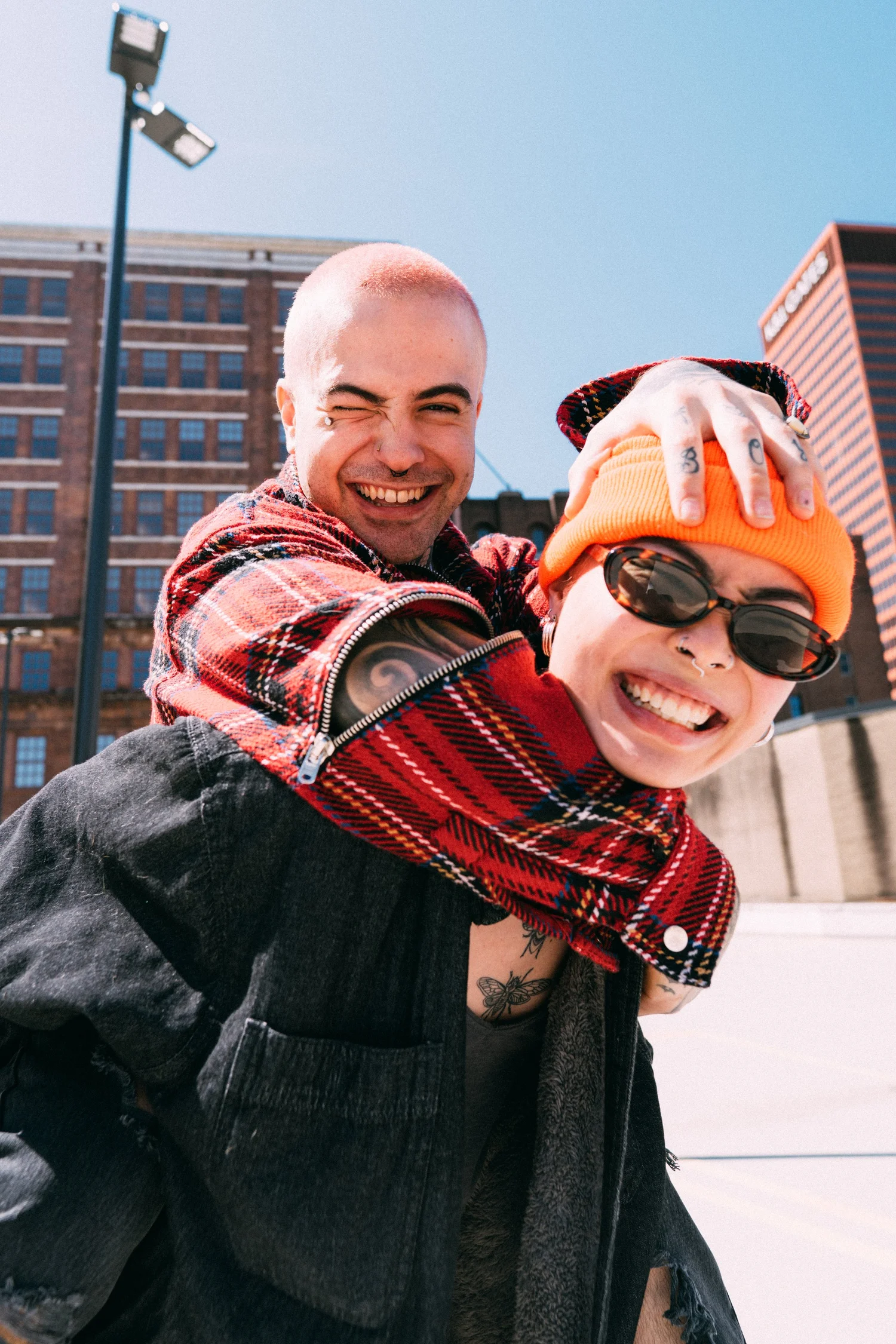
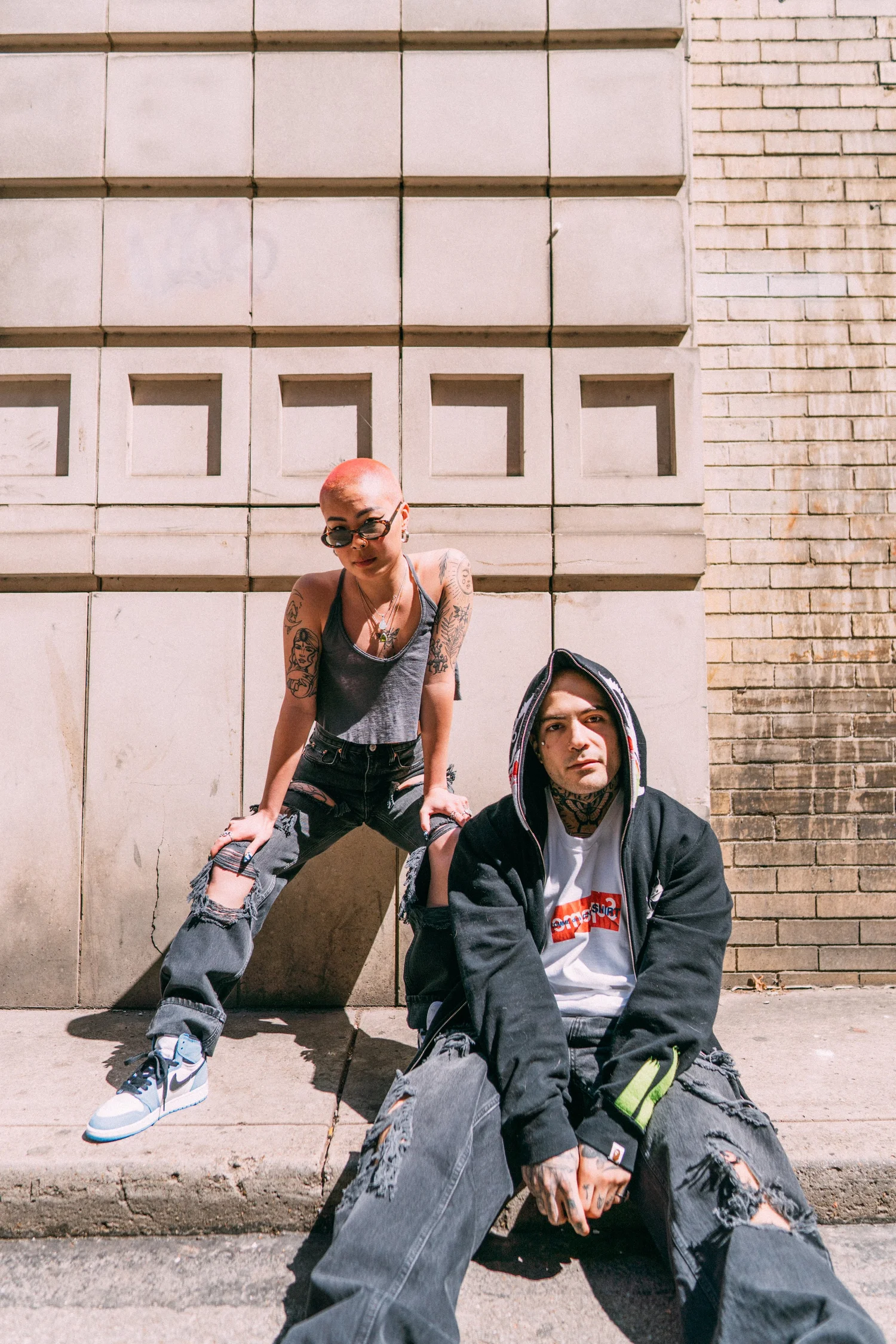
Are your favorite photographs usually playful, quiet, or affectionate? Tell me what feels familiar and what would feel like performing. Ash and AJ’s close portrait keeps the attention on their expressions rather than the surroundings. Borrow that feeling without copying their pose. An engagement or an ordinary afternoon can both be a reason to make photographs that reflect how you relate to each other.
Give your hands and attention something to do
Walking gives your body a manageable task. In Stefano and Maddy’s photograph, joined hands connect the frame while their posture changes. Walking beside each other without touching works too. I might ask you to repeat a short stretch for another chance at the timing. Repeat the action, not a fixed expression. Running, lifting, and elaborate movement are optional; they are not a test of enthusiasm.

Use conversation without demanding laughter
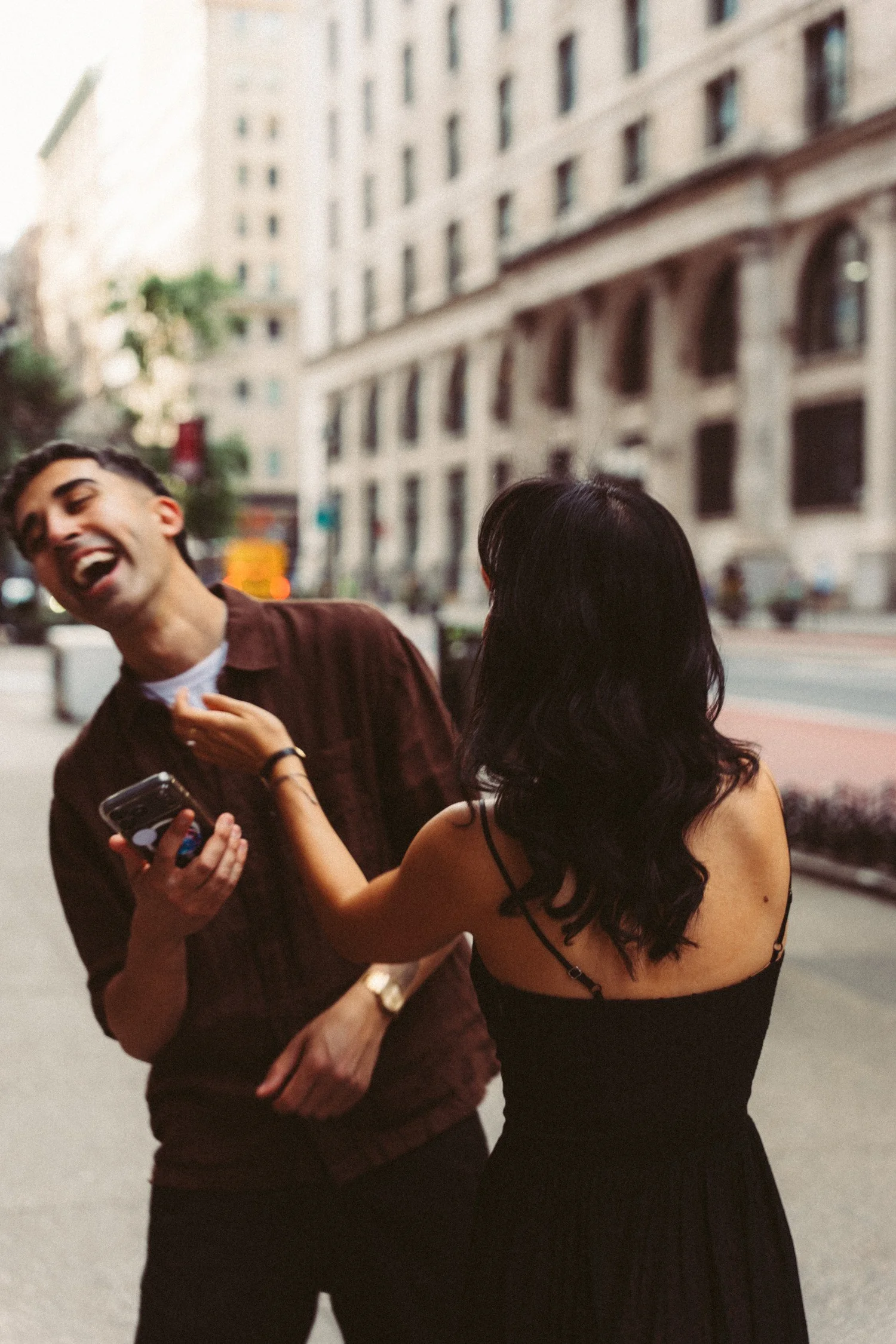
Talking about dinner plans, a familiar story, or something small your partner did gives your attention a real destination. Sophia and Mike’s sidewalk photograph works through their exchange rather than a formal pose toward the camera. A laugh is one possible response. Listening and a smaller smile can be equally expressive. Tell me if teasing, personal questions, or whispering feels awkward so the direction can change.
Make room for a quiet pause
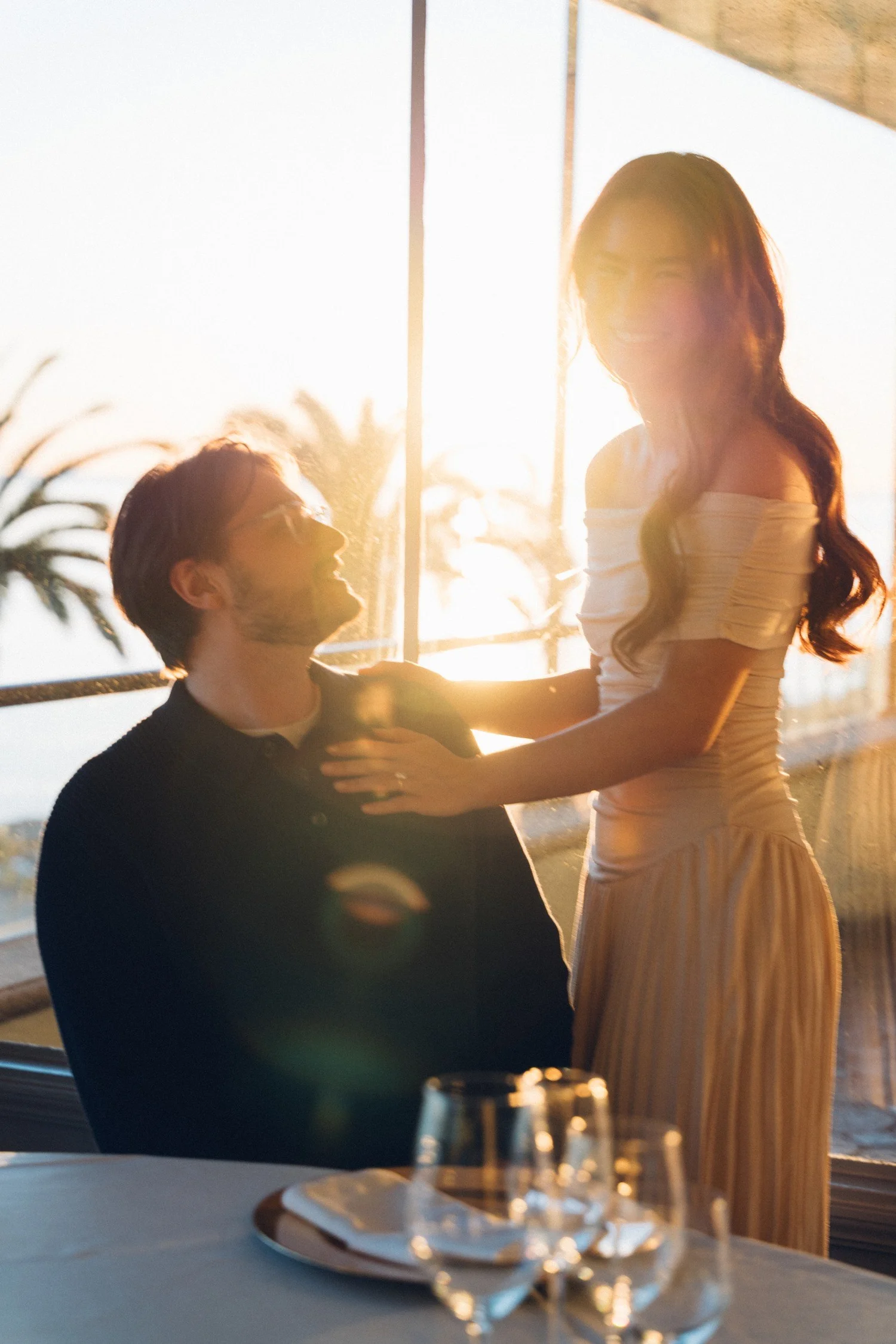
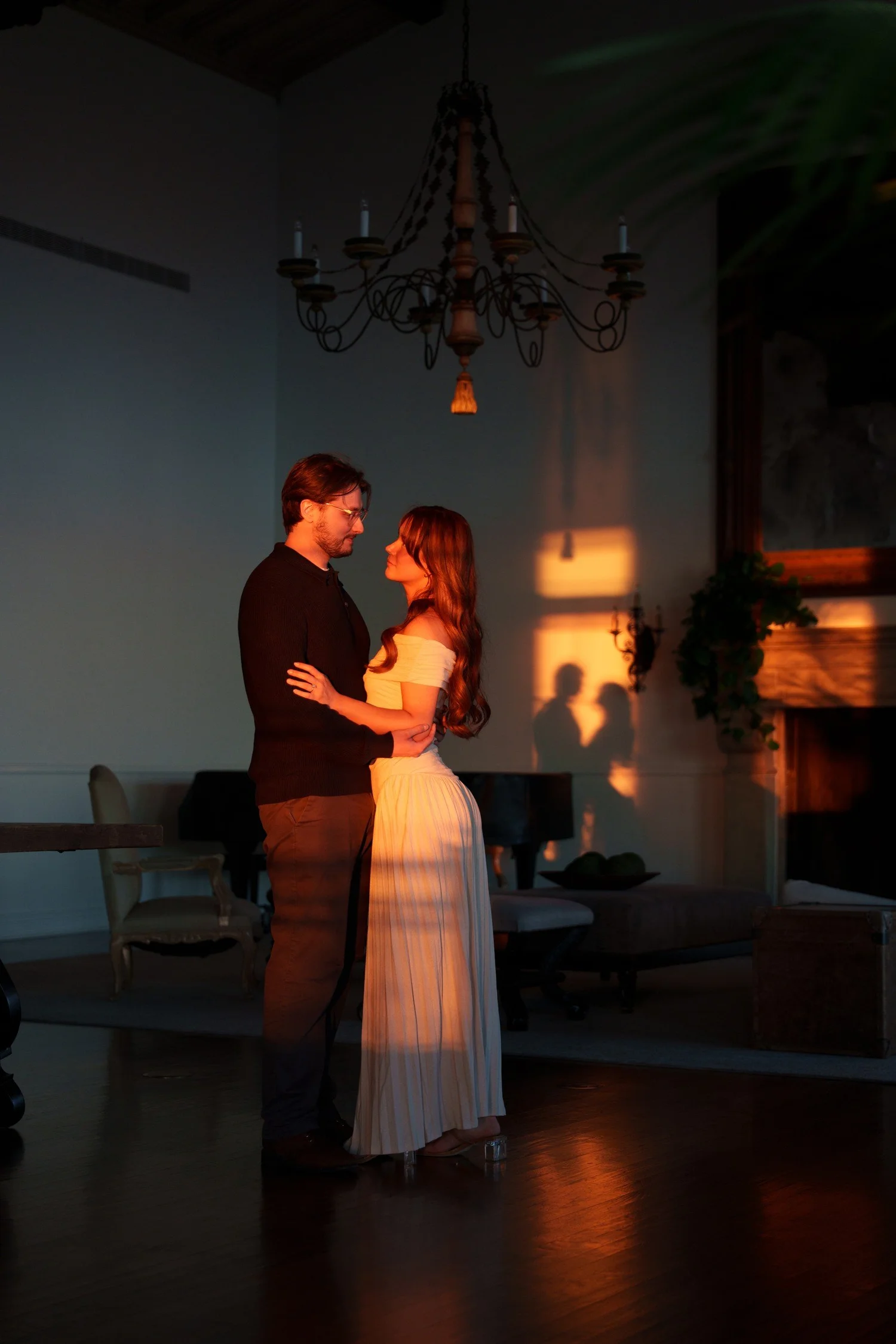
A session does not need maximum energy throughout. A window, chair, or suitable wall can offer a place for hands and shoulders to settle. Hannah and Garrett’s portrait illustrates closeness and window light, rather than recommending a NYC venue. If an interior matters to your idea, we need a specific space with confirmed permission. The useful reference is the quieter pace, not an identical room.
Keep playful ideas optional
Ash and AJ’s wider moving frame includes joined hands, movement in their clothing, and space around them. A tight crop would tell a different story. If you like that energy, we can discuss a comfortable action. If not, a turn or a few steps can supply variety. Public affection and energetic movement are never requirements. Say when something feels unlike you; changing the prompt is part of good direction.

Coordinate clothes without prescribing behavior
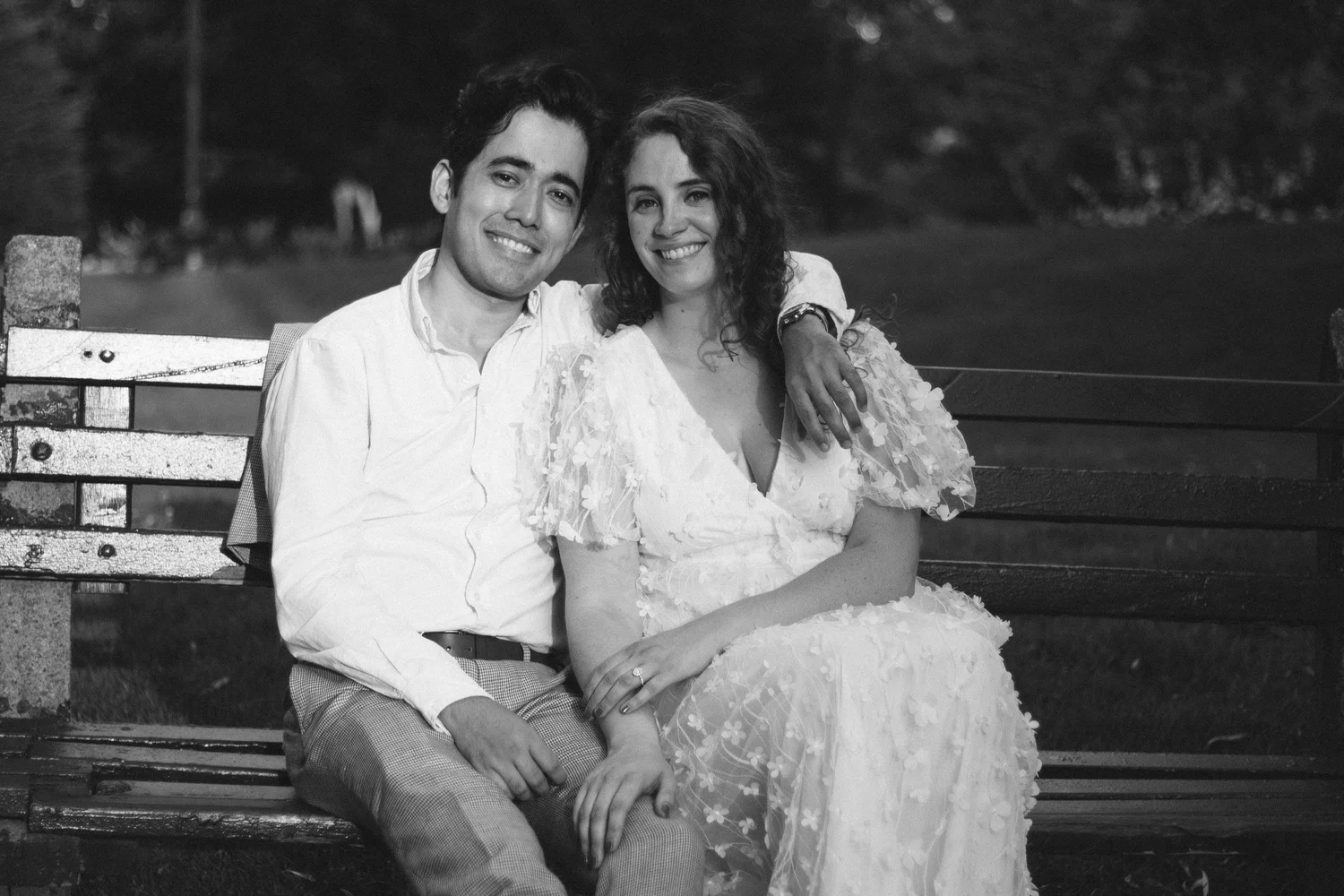
Choose a shared level of formality while keeping individual style. Check your complete outfits while sitting, walking, and standing close. Stefano and Maddy’s seated portrait lets clothing texture support their expressions. Dressing up does not mean behaving formally, and casual clothes do not demand playful posing. The NYC couples outfit guide explains how to coordinate the practical details without matching every color.
Include the city, then come closer
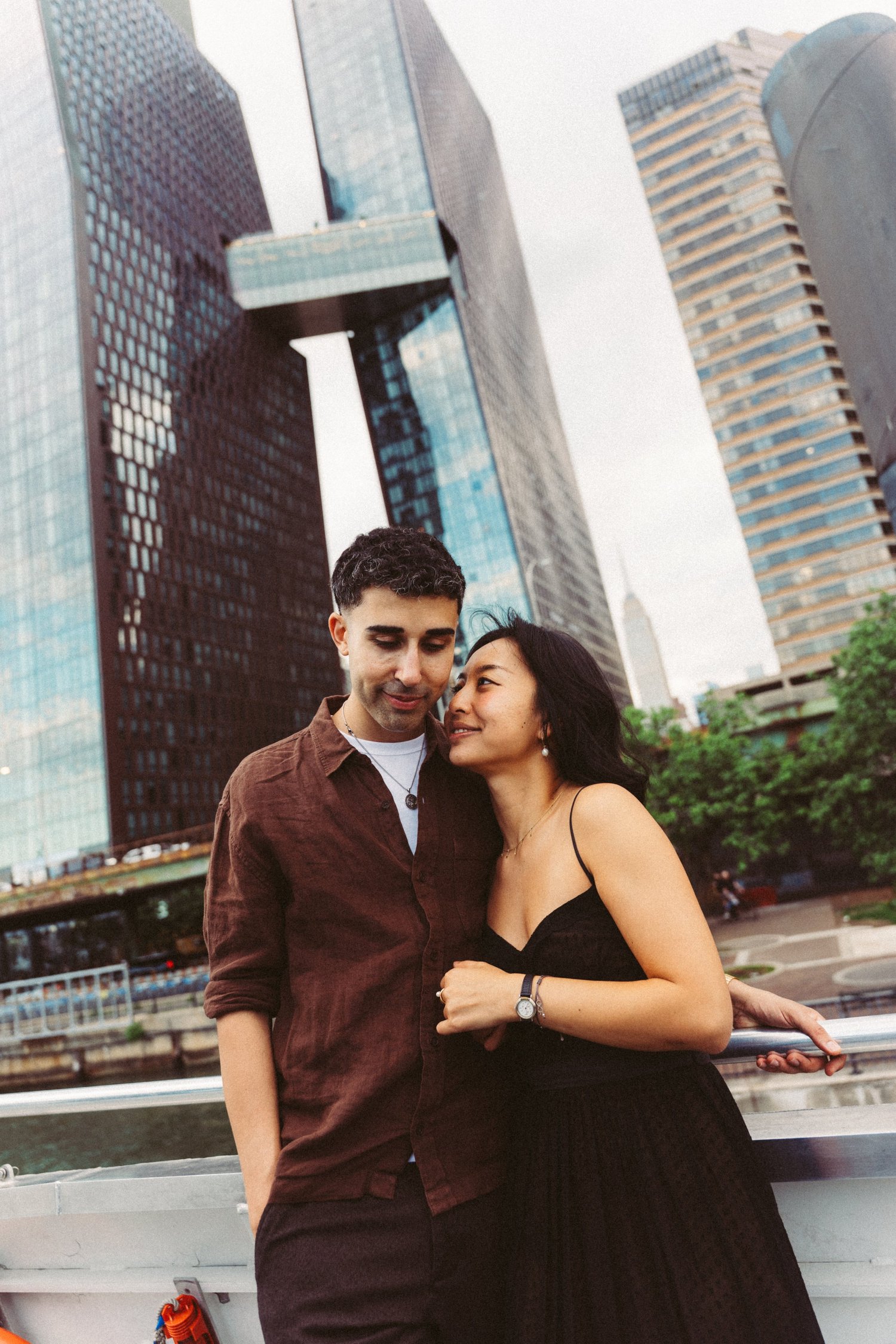
A wider frame explains the setting; a close portrait emphasizes expression. Sophia and Mike’s city photograph uses buildings to shape the space around them. You can make both kinds of picture within a compact area. Use the NYC couples photo locations guide to choose an atmosphere, then allow a nearby alternative angle. Public places can be busy even when a reference photograph looks quiet.
Show affection through small details
Linked fingers, shoulders touching, or a hand at a sleeve can communicate connection without asking for a particular expression. Conversation and eye contact work if you prefer less physical affection. The ring and hand detail adds another kind of image to a larger set. We can photograph a detail after a wider portrait in the same comfortable position. It should belong to the interaction, not an invented checklist.

Give engagement photographs a useful job
If the pictures are for an announcement, save-the-date, or wedding website, share the layout and image deadline. Different crops need different space. A clear seated portrait such as Ash and AJ’s can accompany more expressive frames. Include printer or designer requirements before the shoot. For a longer portrait session with two locations, explore engagement photography. Engagement galleries arrive within four weeks; leave additional time for choosing a design and printing. For the wedding day itself, see wedding photography.
Bring two or three references
Explain the element you like in each: a close gesture, generous space, soft light, or silhouette. Hannah and Garrett’s silhouette is an example of shape taking priority over a fully visible face, not a requirement for every session. Browse my couples photography, then share your preferred mood and comfort boundaries. The set can hold laughter, stillness, details, and wider scenes without making you perform a different relationship.
Plan natural NYC couples or engagement photographs
Share the occasion, your preferred dates and a few photographs whose feeling you like. Tell me whether you are planning save-the-dates, celebrating an engagement or simply making pictures together, and we can choose the appropriate session and setting.
Ask about your engagement photographs · See engagement sessions from $1,000
Continue planning with planning engagement photos for save-the-dates.