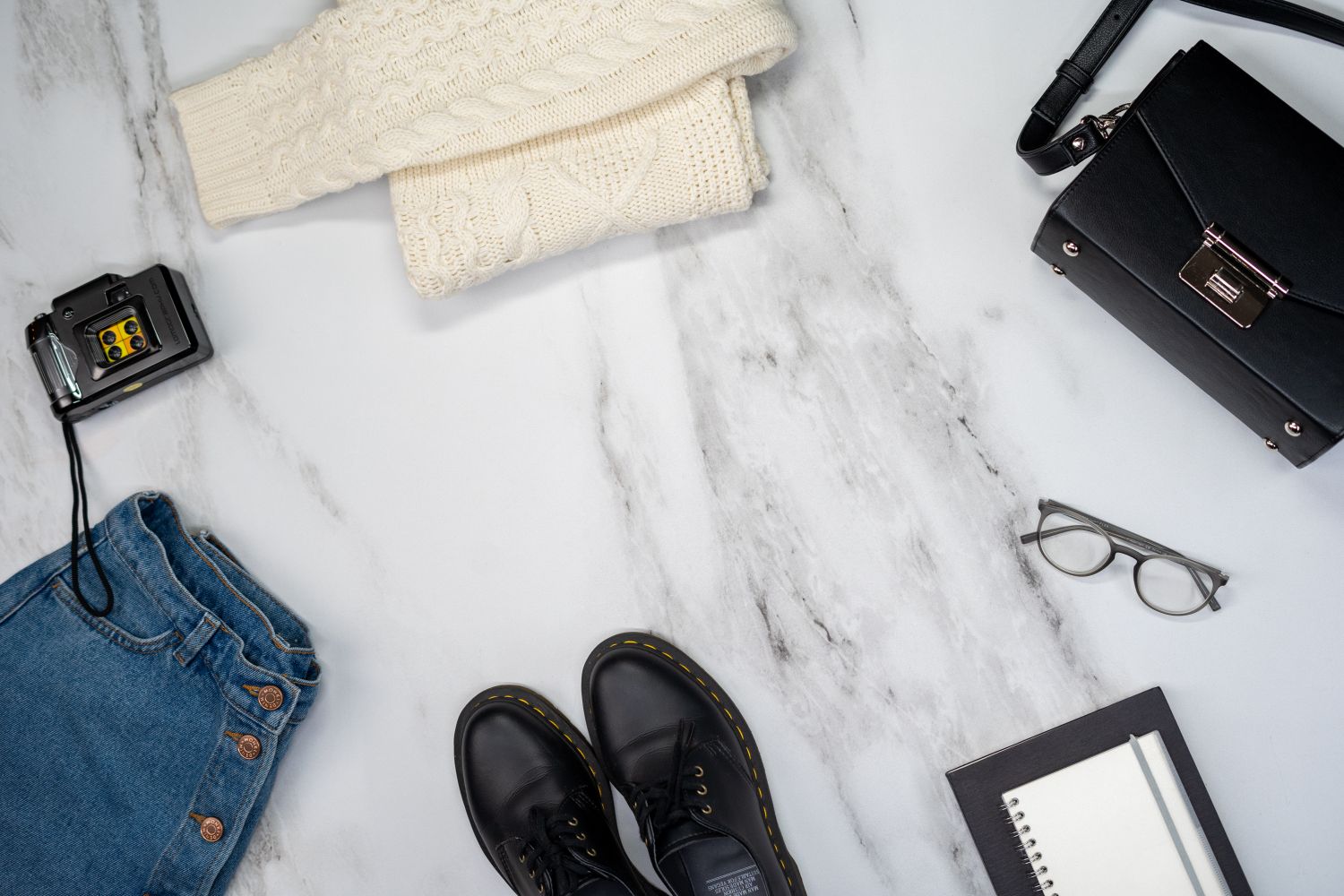
What to Wear for a NYC Couples Photoshoot
Two outfits, one shared feeling. You can coordinate without matching—and still look like yourselves.
Try this before buying anything new:
- Lay out both complete outfits together in daylight, including shoes and coats.
- Match the level of formality, while keeping your individual styles.
- Sit, walk, and lean close to check fit and comfort.
- Photograph the combinations so we can compare them against your location.
One coordinated look plus a simple layer change can be enough. Confirm a private changing place if a full outfit change matters to you.
Agree on the overall feeling first
Before sending each other photographs of individual shirts or dresses, agree on how dressed up the session should feel. Words such as relaxed, polished, playful, or understated give you a shared direction while leaving room for different personal styles.
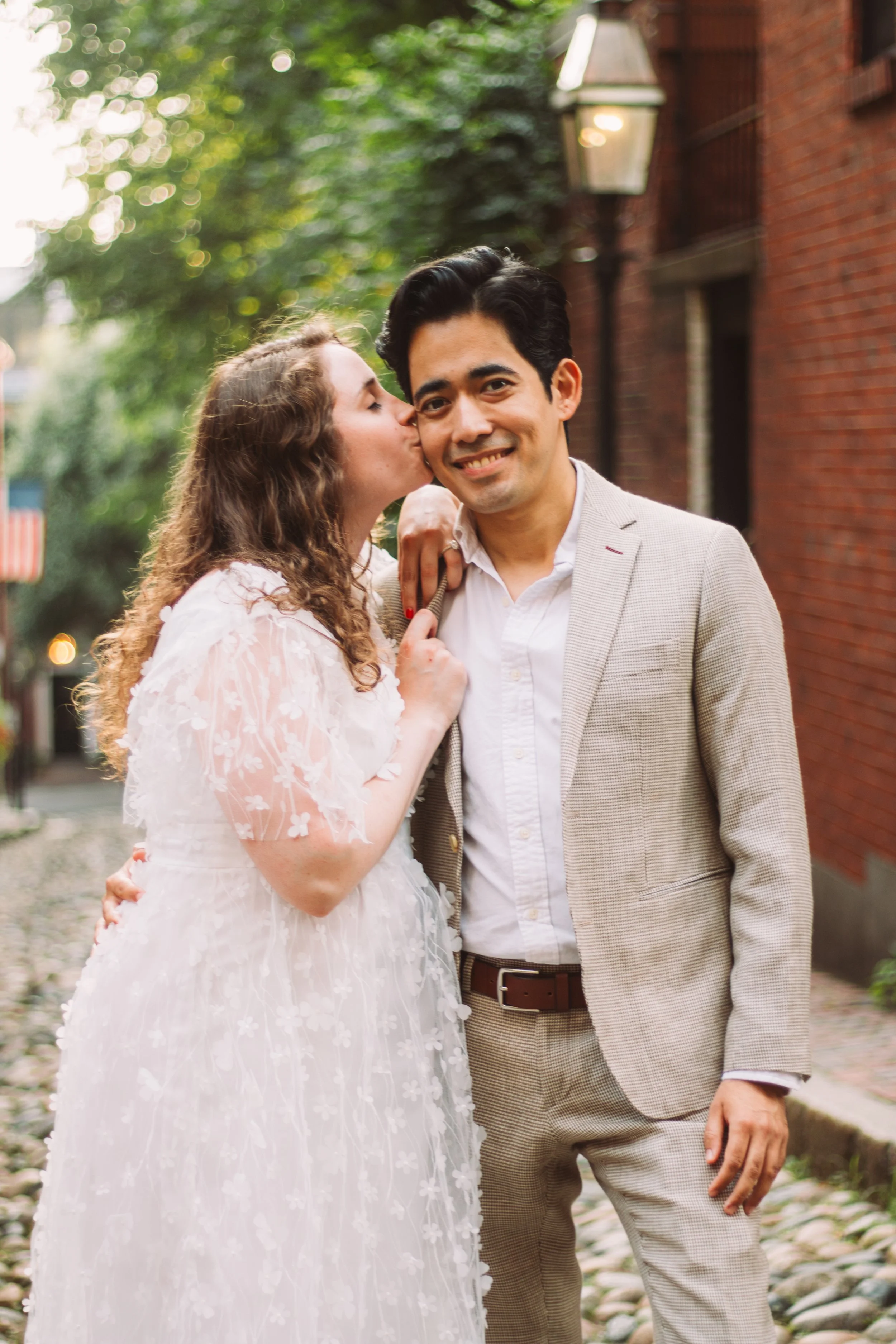
Stefano and Maddy's portrait brings a light suit and a textured white dress together. The fabrics differ, while the level of formality feels consistent. You can borrow that relationship between the outfits without choosing the same clothes or feeling you need to dress for a particular occasion.
Coordinate colors without matching everything
Lay both outfits beside each other in daylight, or photograph them together. Look for a combination you enjoy seeing as one picture. You might choose related warm tones, a quieter base with one stronger color, or a mix of light and dark.
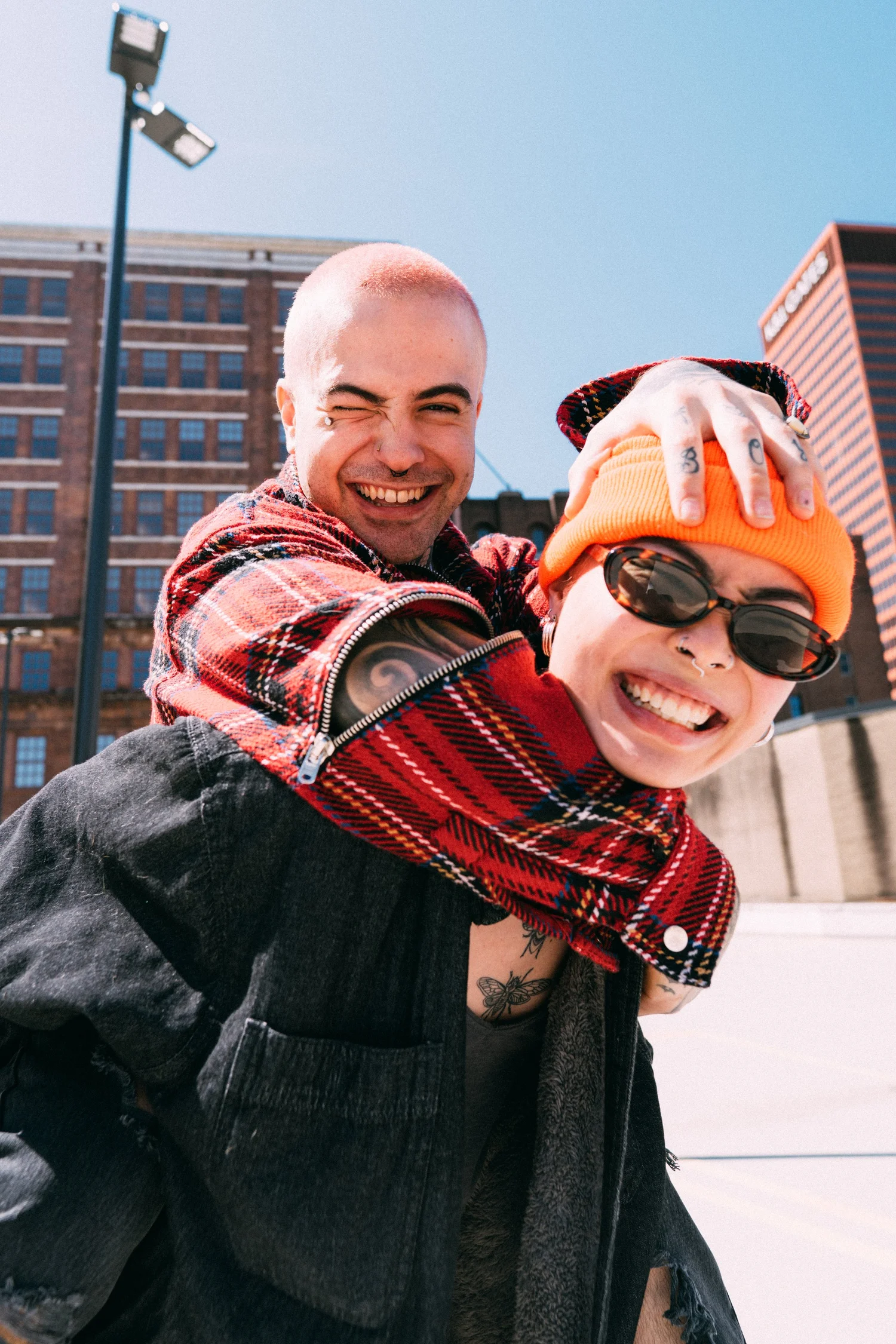
In Ash and AJ's portrait, the orange beanie, dark clothing, and red plaid create a lively mix that suits the energy of the photograph. If you prefer a calmer feeling, reduce the number of competing colors rather than assuming you must wear matching neutrals.
Let texture and shape do some of the work
A soft knit, structured jacket, or flowing skirt changes how a portrait feels even within a restrained palette. Think about the outline of the clothing as well as its color. A fitted top and a loose layer behave differently when you put an arm around someone or sit down.
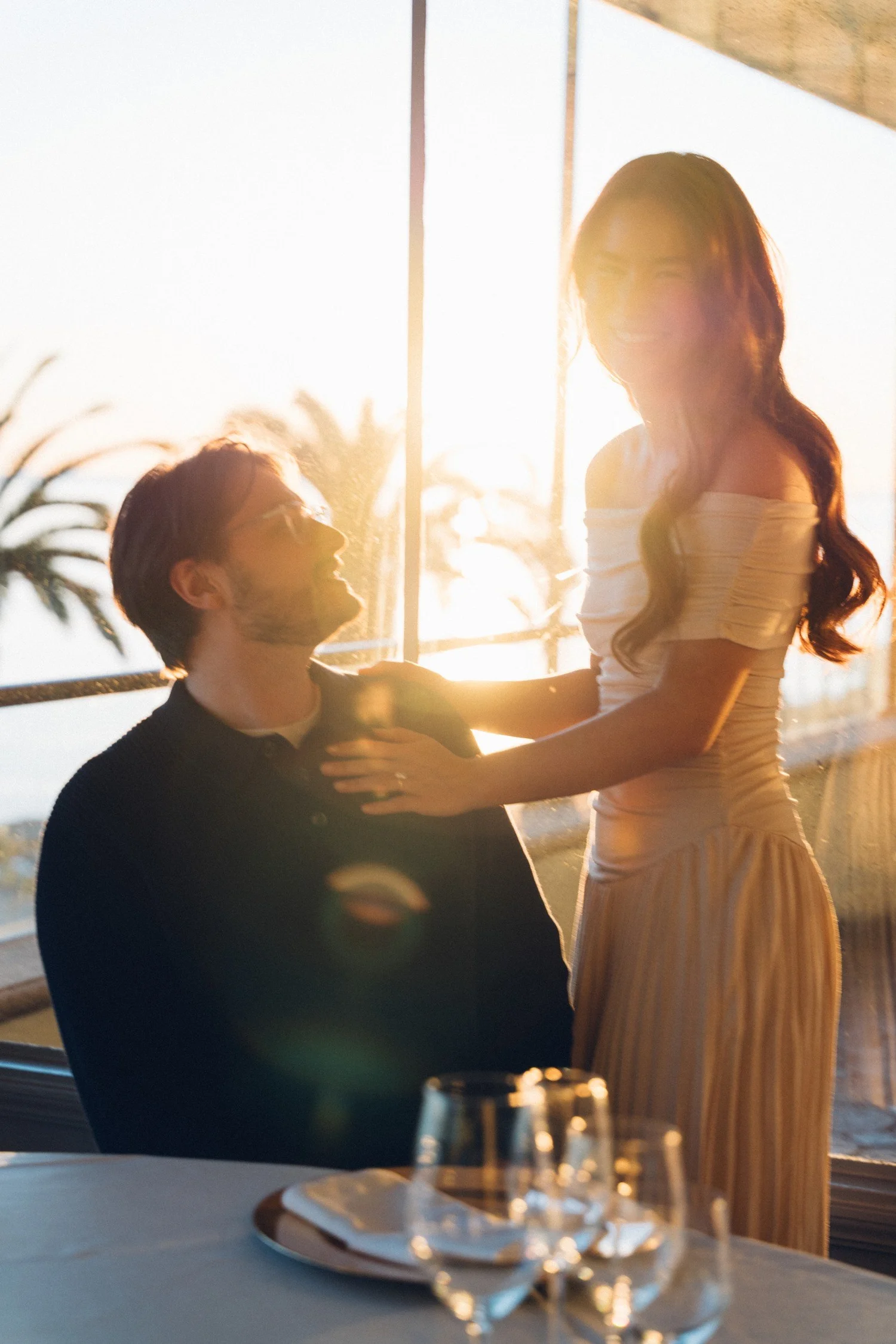
The window portrait combines different fabric shapes while the light ties the picture together. Consider what happens when you move. A sleeve you constantly adjust or a neckline you dislike while seated can distract you throughout the session.
Test the outfit through ordinary movements
Try walking, sitting, leaning close, and raising your arms before the day. Check how shoes feel over more than a few steps. If an outfit only works while you stand perfectly still, decide whether that limitation fits the photographs you want.
The running photograph shows how clothing becomes part of movement. You do not need to run during your own session, but flexibility helps if we walk between locations or try a more animated picture. Tell me about your comfort when we plan, including movements you would rather avoid.

Choose clothes in relation to the route
A long walk in delicate shoes and a short session near one location need different preparation. Consider the surface underfoot, the forecast, and how much you want to carry. If you bring another pair of shoes, decide who will hold the bag while photographs are being made.
Layers can provide a change without a full outfit swap. A coat on and off may be enough. Use the NYC couples location guide to choose the setting first, then make the wardrobe practical for that plan.
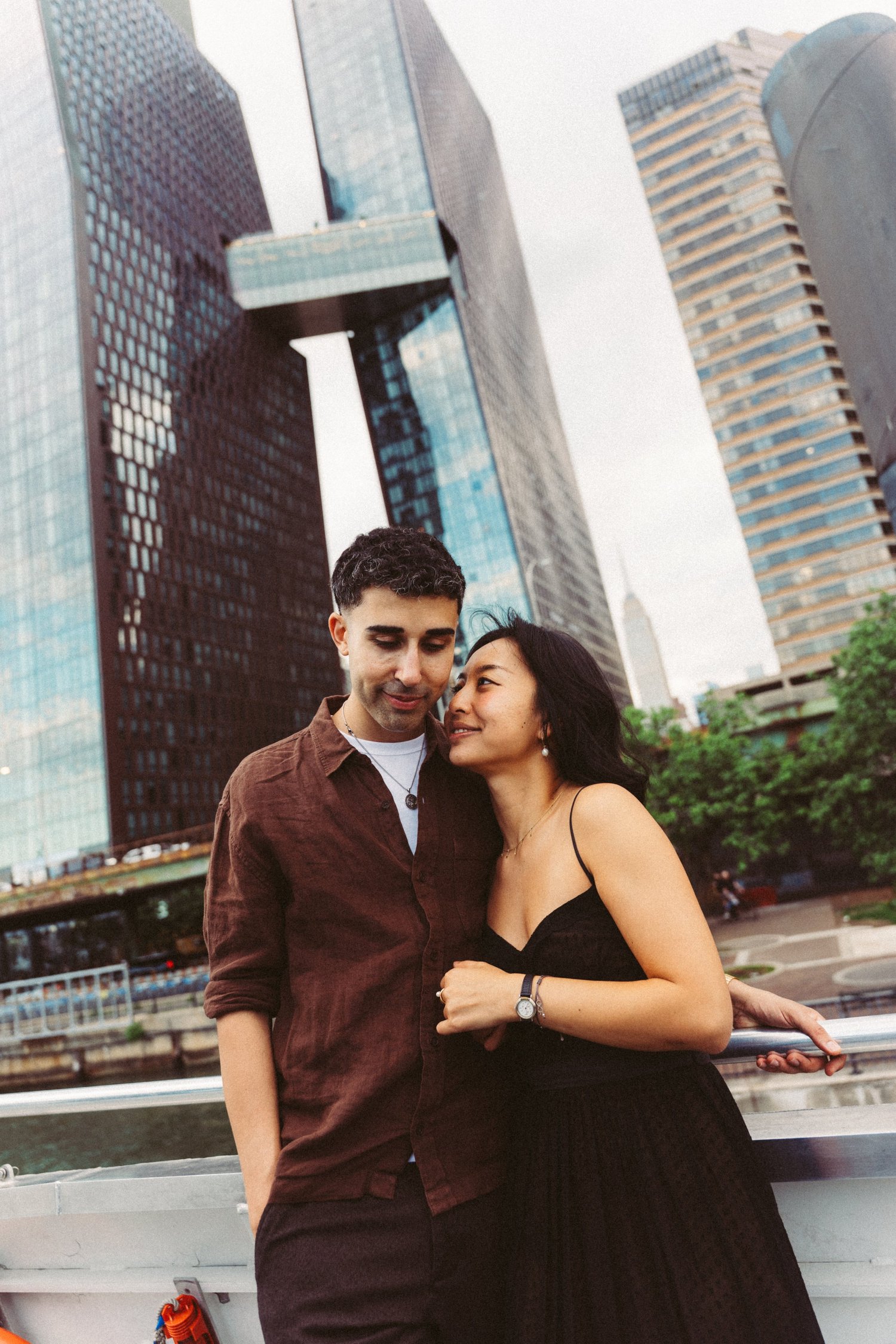
Give each person room to feel like themselves
One partner may enjoy a more styled look while the other prefers something familiar. You can meet in the overall tone without forcing identical clothes. Ask what each person wants to feel like when they see the photographs later.
Mention anything you are self-conscious about before the shoot. That can help us think about layers, posture, or framing. Clothes you recognize as your own often make it easier to settle into the session than an outfit chosen only because it looked good on somebody else.

Make the final choice easy to use
Narrow your options before you arrive. Two complete outfit photographs are more useful for planning than a large collection of disconnected garments. Include shoes and outer layers so the full combination is clear. If changing outfits matters, discuss when and where it can happen rather than assuming a changing space will be available.
Find more examples in my couples portfolio. Notice which combinations let you pay attention to the people first. Your final choice should support that feeling and leave you free to spend time together.