

How to Feel Comfortable and Look Natural in Photos
Want NYC portraits with direction that feels comfortable? You can arrive without a collection of poses. Explore NYC portrait sessions or ask about your portrait session.
Start with one small action and a setting where you feel comfortable. The examples below show how a walk, a place to sit, or a light touch can give a portrait shape without asking you to perform.
A photograph is one view of you
A still photograph holds one angle and a fraction of an expression. You usually experience yourself moving, speaking, and reacting, so that view can feel unfamiliar. Your first reaction does not have to be your final judgment.
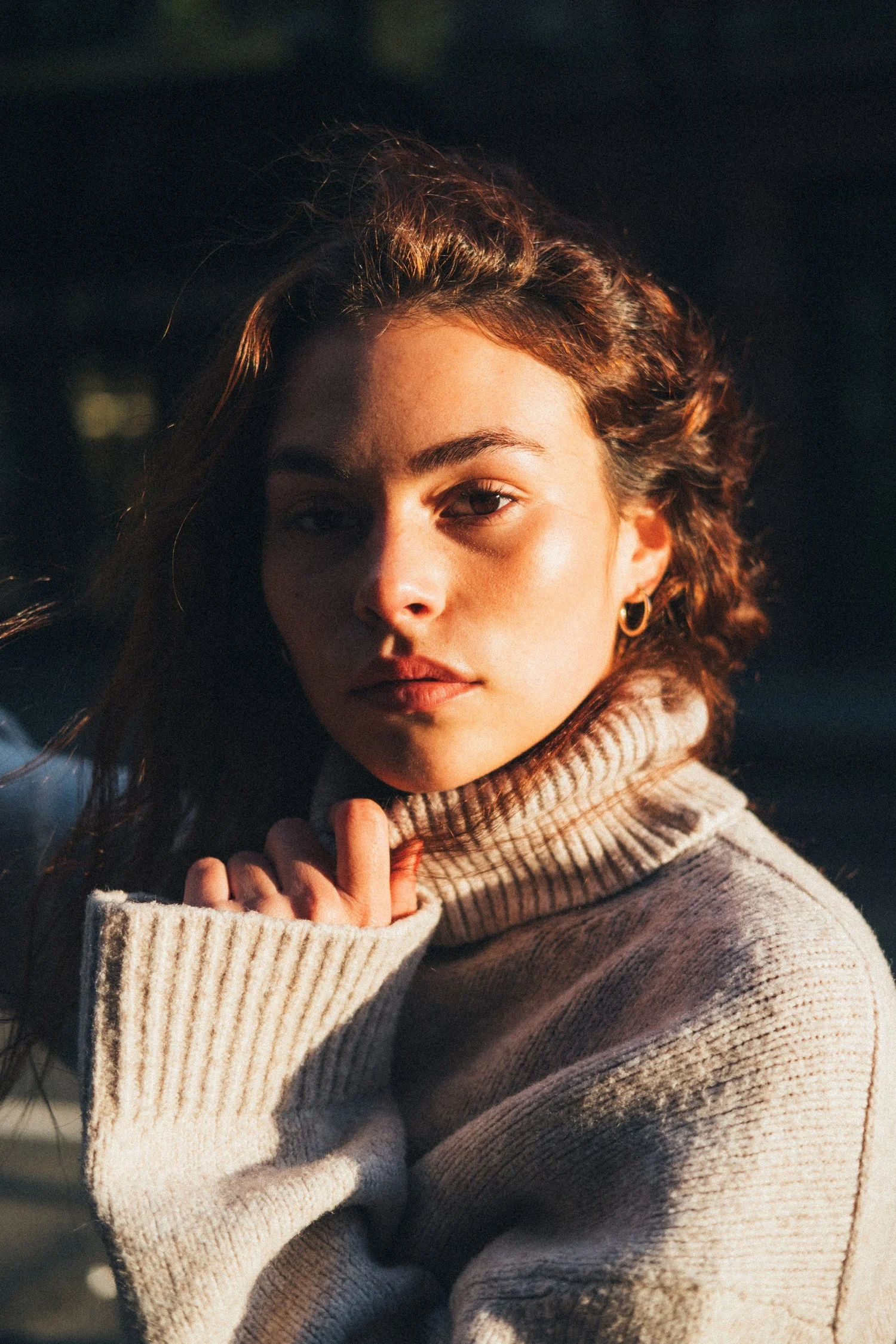
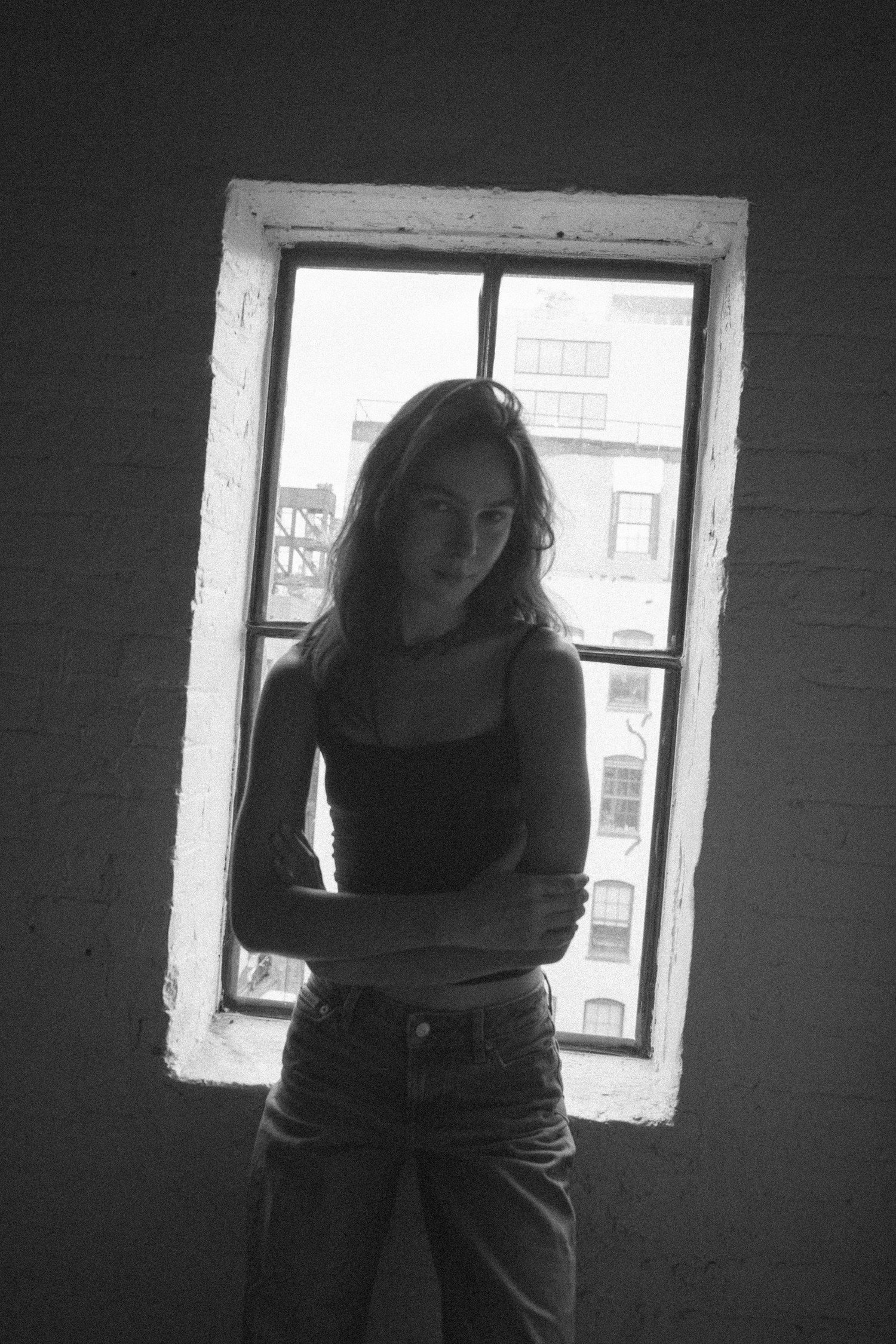
Begin with what you want: an expression you recognize, less stiffness, or pictures you feel comfortable sharing. Marley’s close portrait emphasizes her face and side light; Amanda’s window portrait emphasizes outline and shape. Photographic choices change what you notice, and you can have preferences about those choices.
Tell me what would help before we start
Mention a preferred side, a pose you dislike, or discomfort with being watched in a busy place. You do not need to justify those preferences. They help us choose a starting point that works for you.
Bring references and explain what interests you. “I like the quiet expression” is more useful than wanting to look exactly like someone else. A picture of yourself that you enjoy helps, too. Tara’s direct portrait shows how a calm expression can hold the photograph without a broad smile.

Give your body one simple action
Trying to arrange your hands, shoulders, feet, and face at once can make standing still feel difficult. Work through one instruction at a time. For example: “Walk slowly toward me, then pause.” Once that feels comfortable, the next prompt might be “Turn your face slightly toward the light.” You can reset between photographs; there is no need to hold every adjustment at once.
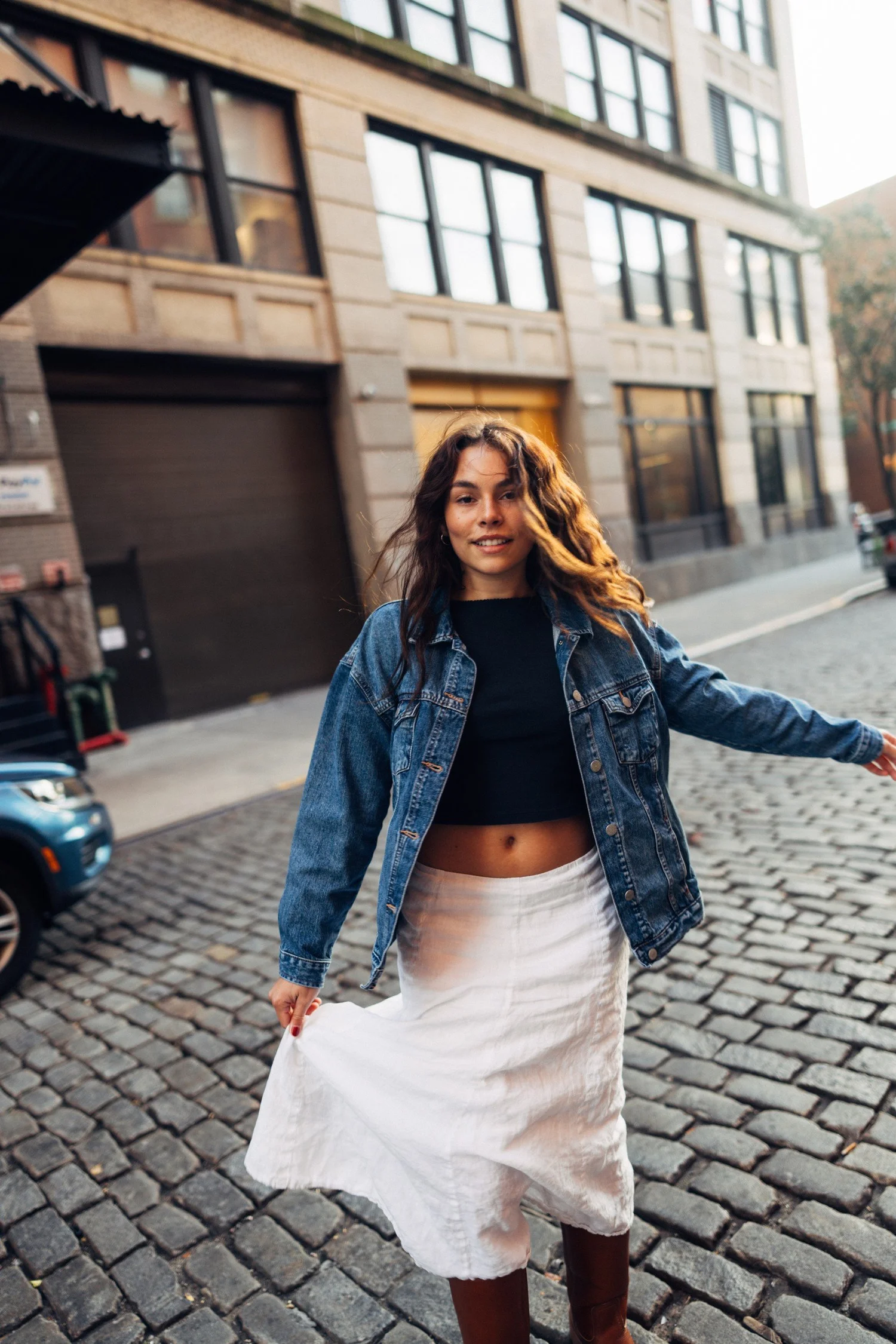
Marley’s turning step changes her weight and clothing without a dramatic gesture. Repeat an action comfortably rather than rushing. Between photographs, release the position, reset your hands, and begin again. You do not have to hold a pose until it becomes uncomfortable.
Let your hands make comfortable contact
Give your hands a light point of contact: a chair, sleeve, knee, or nearby surface. Keep the pressure comfortable and change the gesture if it starts to feel rigid.
Rose’s hand beneath her chin becomes part of the close composition. You do not need to copy it; the useful idea is a gesture that fits the picture and feels manageable. Ask for a specific instruction if you are unsure. One clear adjustment is easier than solving every detail alone.
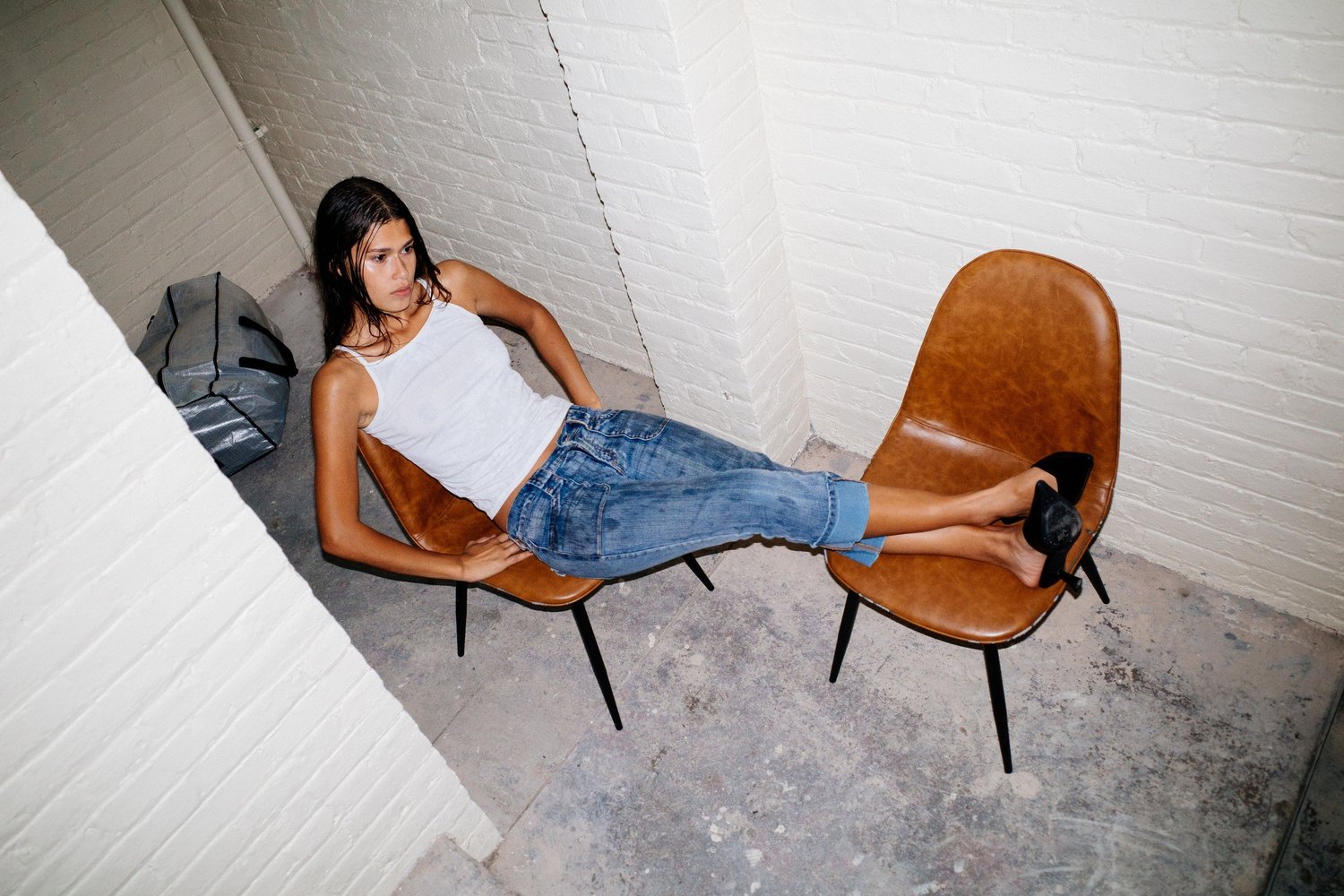
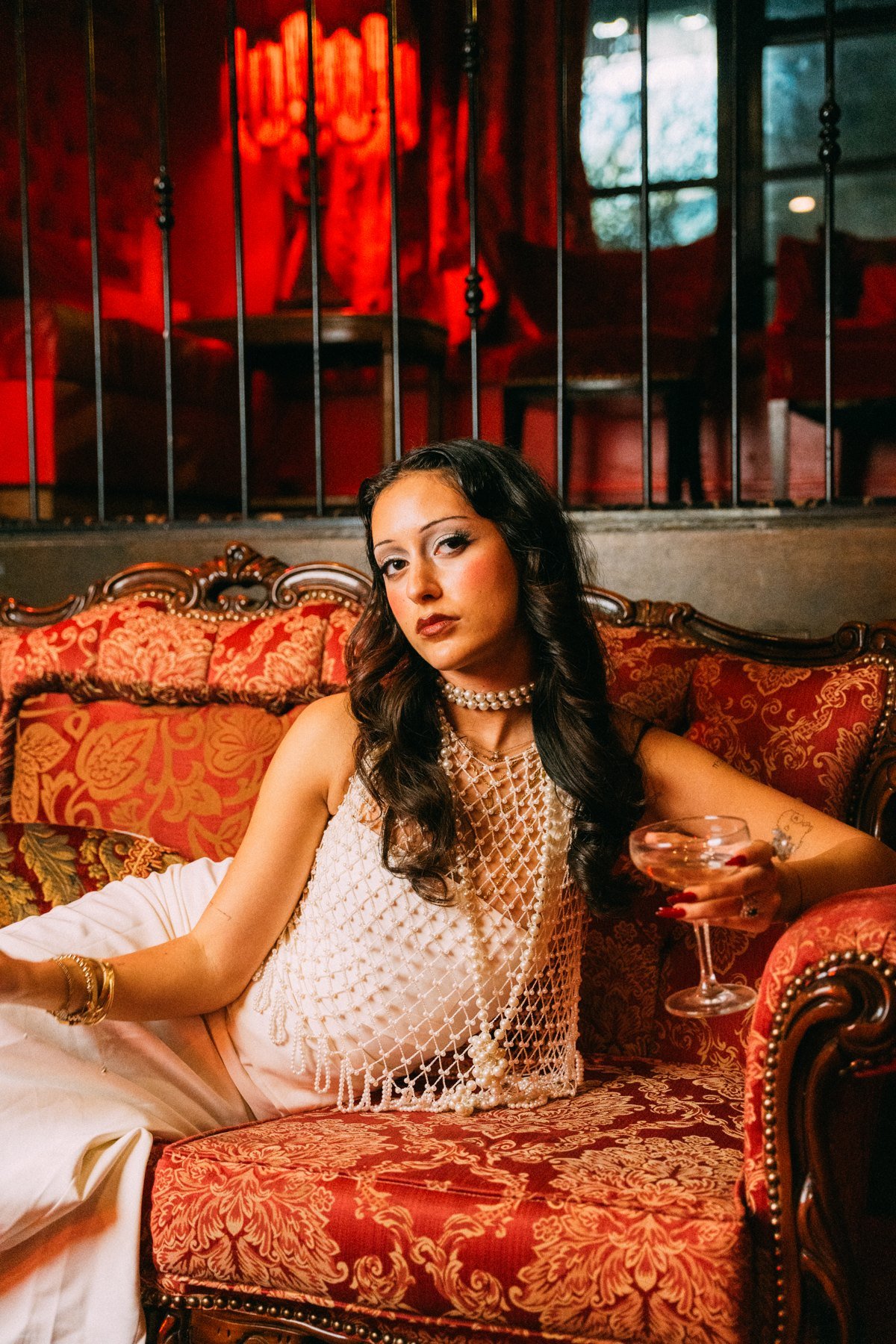
Use a seat without copying someone else’s pose
Sitting can give your weight somewhere to settle. Begin in a stable position, then turn slightly, lean forward, or change where a hand rests. We can adjust what the camera sees without asking you to remain uncomfortable.
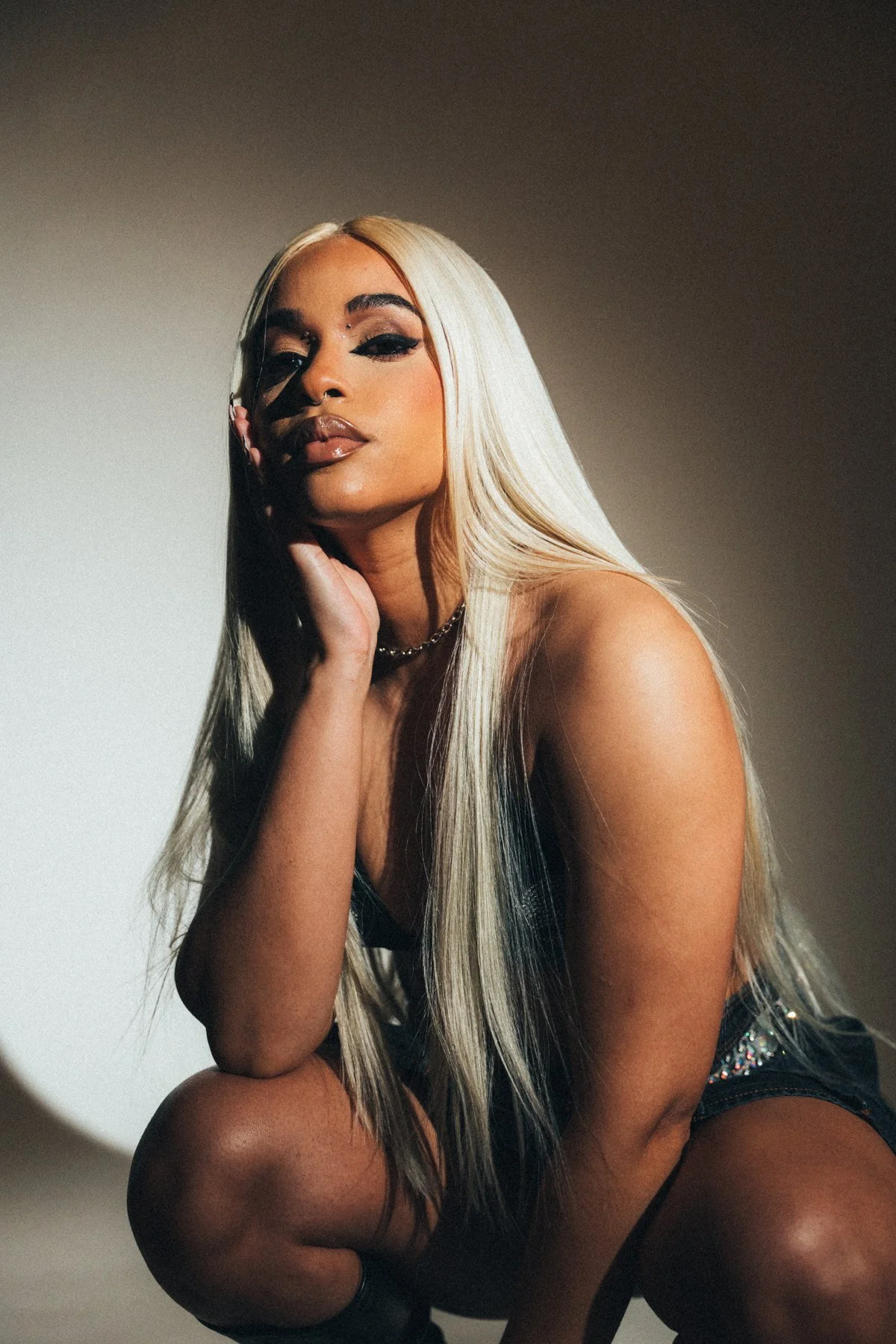
Tara’s two-chair portrait and Eden’s quieter sofa photograph use furniture differently. Borrow the idea of support, not the exact pose. Wear something you can move in without constant adjustment; the wardrobe guide helps you prepare a familiar option alongside anything experimental.
Let your expression change
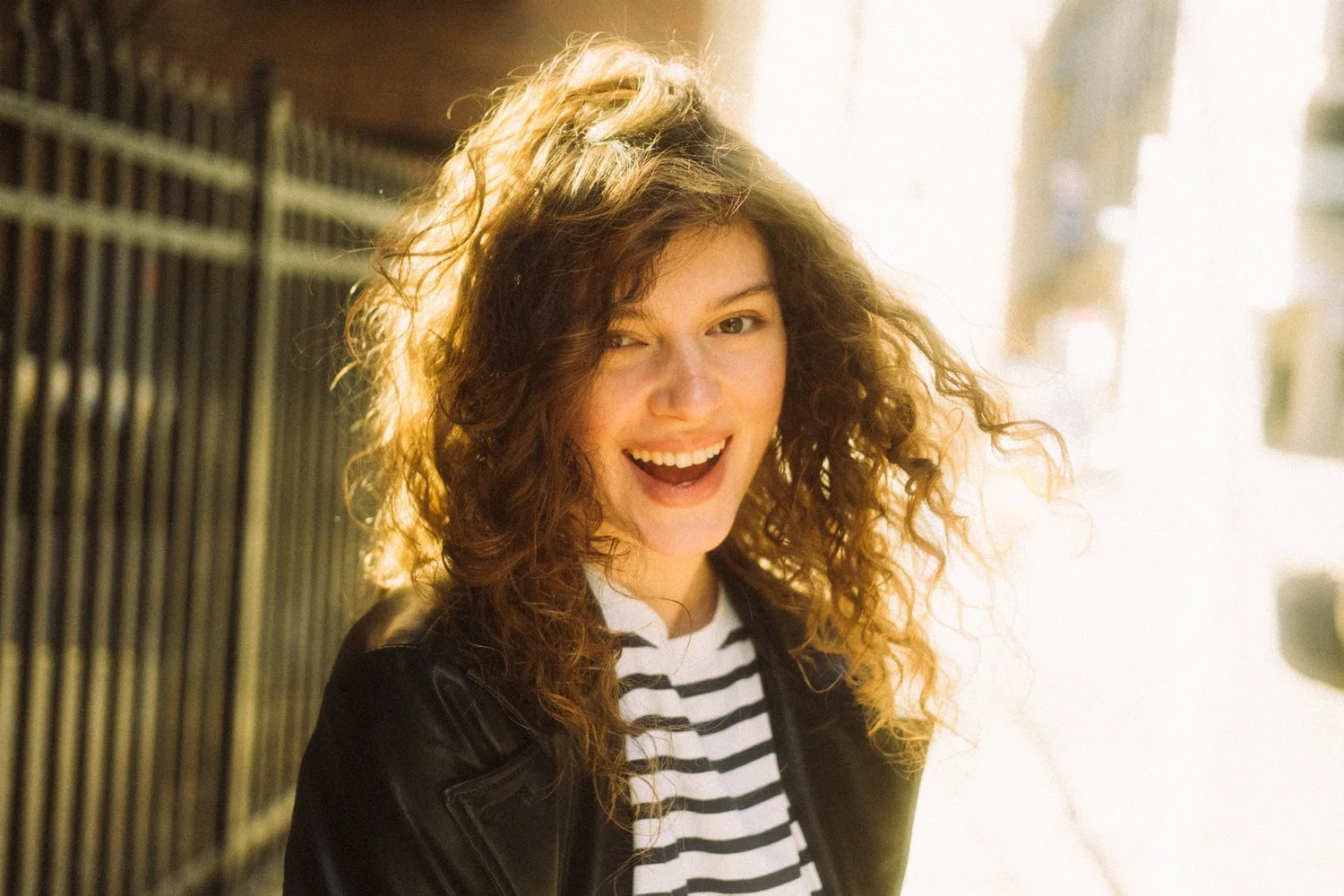
Natural does not mean smiling in every frame. A thoughtful pause, direct gaze, and laugh can belong to the same person. Tell me which expressions feel familiar and which prompts you would rather skip.
Olenka’s laugh and Johnny’s steady gaze have different energy. Give expressions time to change through conversation, movement, or a pause. If seeing pictures during the shoot would help, discuss a brief review. Use it to check the direction rather than interrupting every frame to inspect yourself.

Choose an environment you can participate in
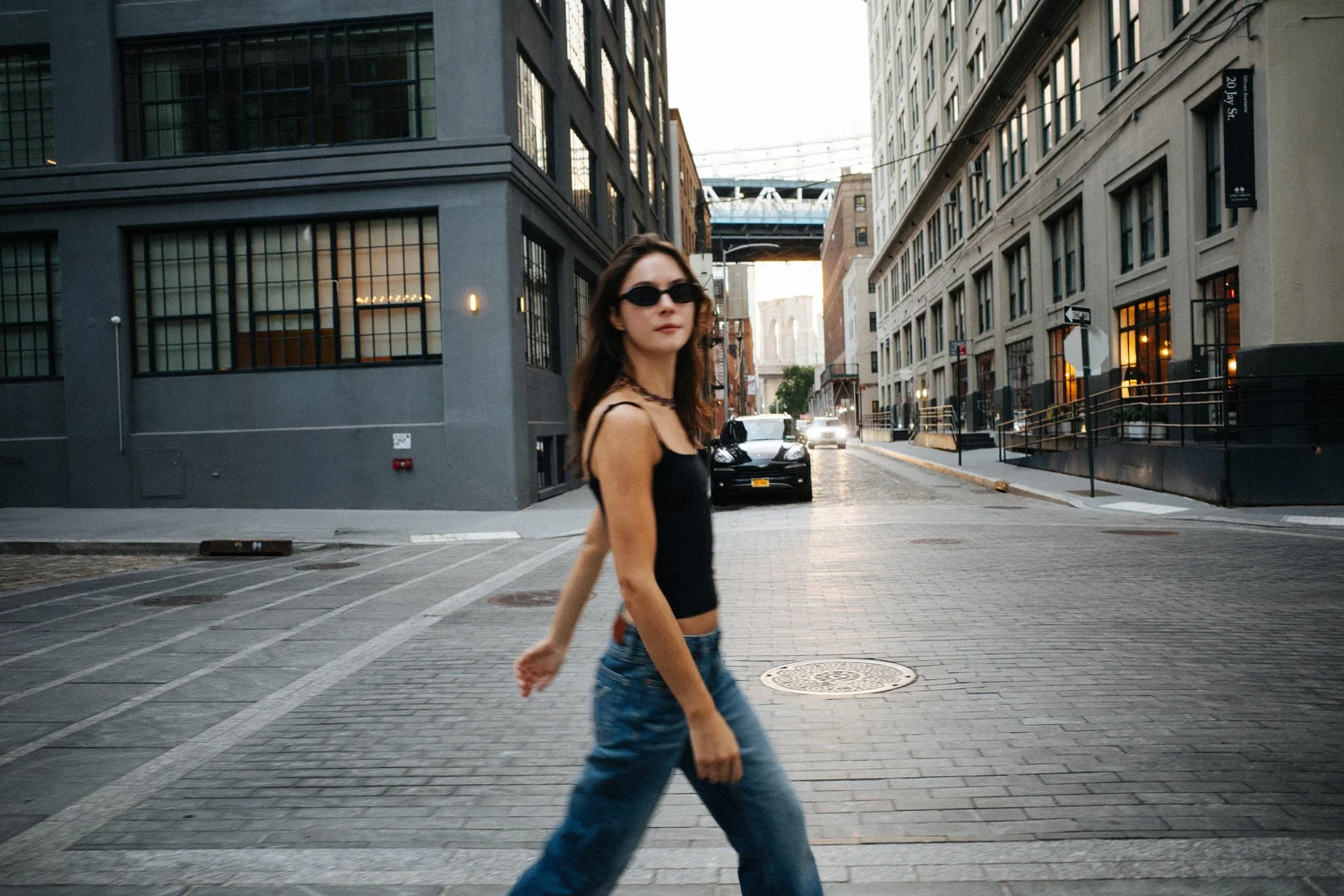
Some people enjoy a lively street; others prefer somewhere quiet. That preference matters alongside the appearance of the background. Choose an environment you can participate in comfortably.
Amanda’s walking portrait lets the buildings and paving contribute to the image. Your face does not have to carry every picture alone. A close portrait and a wider scene can both belong in your set. The studio and location guide helps compare the experience and practical choices.
Look at the whole picture afterward
When the gallery arrives, look at normal viewing size before zooming into a feature. Consider expression, light, posture, and the overall feeling. If everything starts to look wrong, pause and return to a smaller group.
You do not have to love every frame to find a meaningful set. The final-photo selection guide explains that process. For my NYC portrait sessions, tell me what usually feels difficult on camera and what you would like this experience to feel like.
Plan a portrait session you can settle into
Send your preferred dates, what the photographs are for and a few examples whose feeling you like. Tell me if you would prefer to begin with walking, sitting or a quieter setup. We can plan clear, manageable direction around your comfort and the images you need.
Ask about your portrait session · Explore NYC portrait sessions
Continue planning with reviewing photographs of yourself with more perspective.