

Studio vs. Location Portraits: How to Choose
Choosing between studio and location portraits in NYC? Start with the atmosphere, privacy and practical conditions you need. Explore NYC portrait sessions or ask about your portrait session.
Choose the setting around what matters most to you:
- Studio: controlled light, a simple background, and space to concentrate on expression or clothing. Confirm the room, rental hours, and changing facilities.
- Outdoors: movement, architecture, and the feeling of a neighborhood. Allow for weather, people, and walking.
- At home or in a private interior: a personal setting with furniture and window light. Confirm permission, usable space, and access.
Ask for studio rental, equipment, access fees, and any extra time to be itemized in the quote before deciding. A studio reference photograph does not mean those costs are included.
A studio lets the person and styling lead
A studio can provide a quiet background, repeatable light, and space to work through a visual idea. That makes it useful when the emphasis belongs on expression, clothing, shape, or a particular lighting treatment. It can also reduce interruptions from passing people and changing weather.
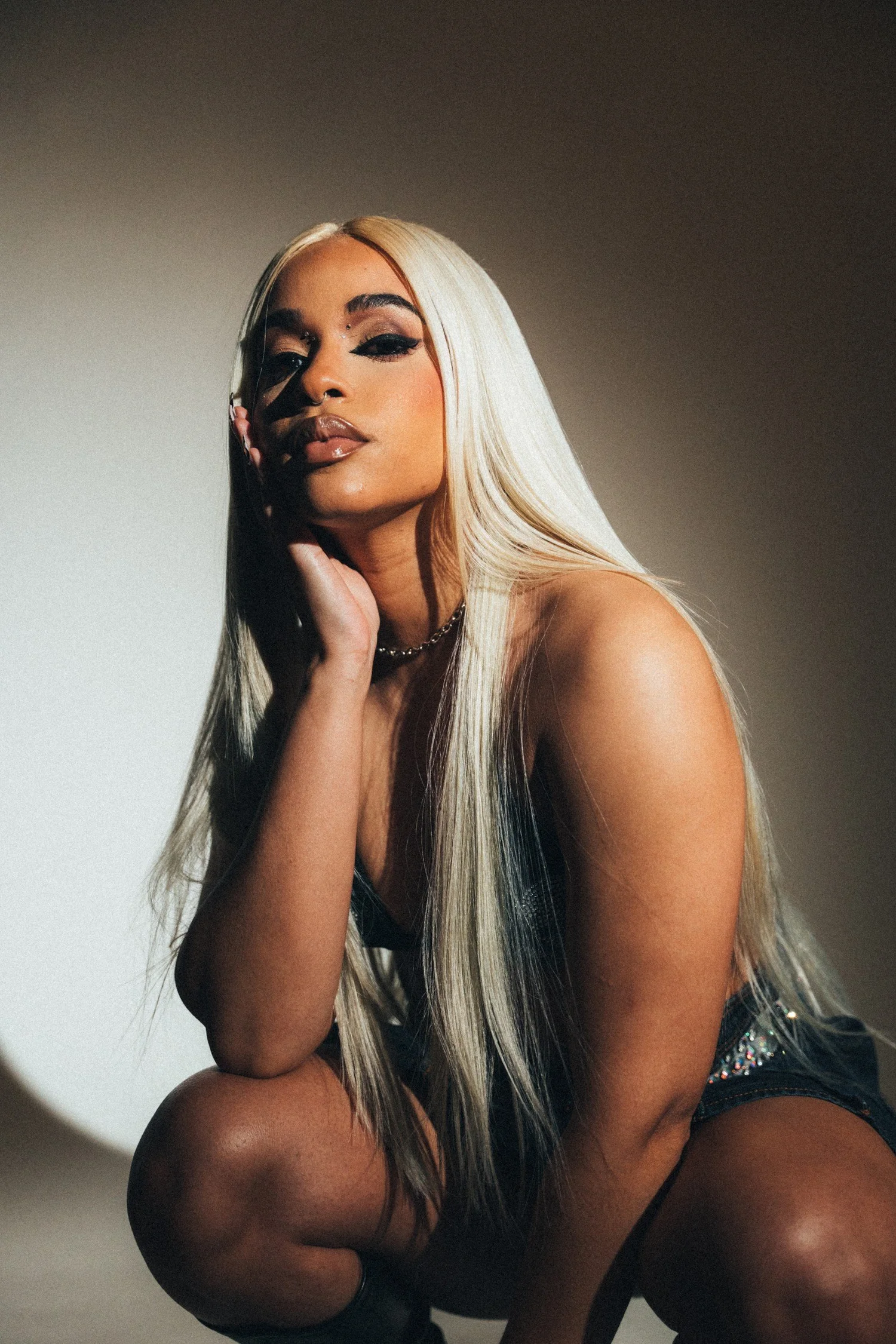
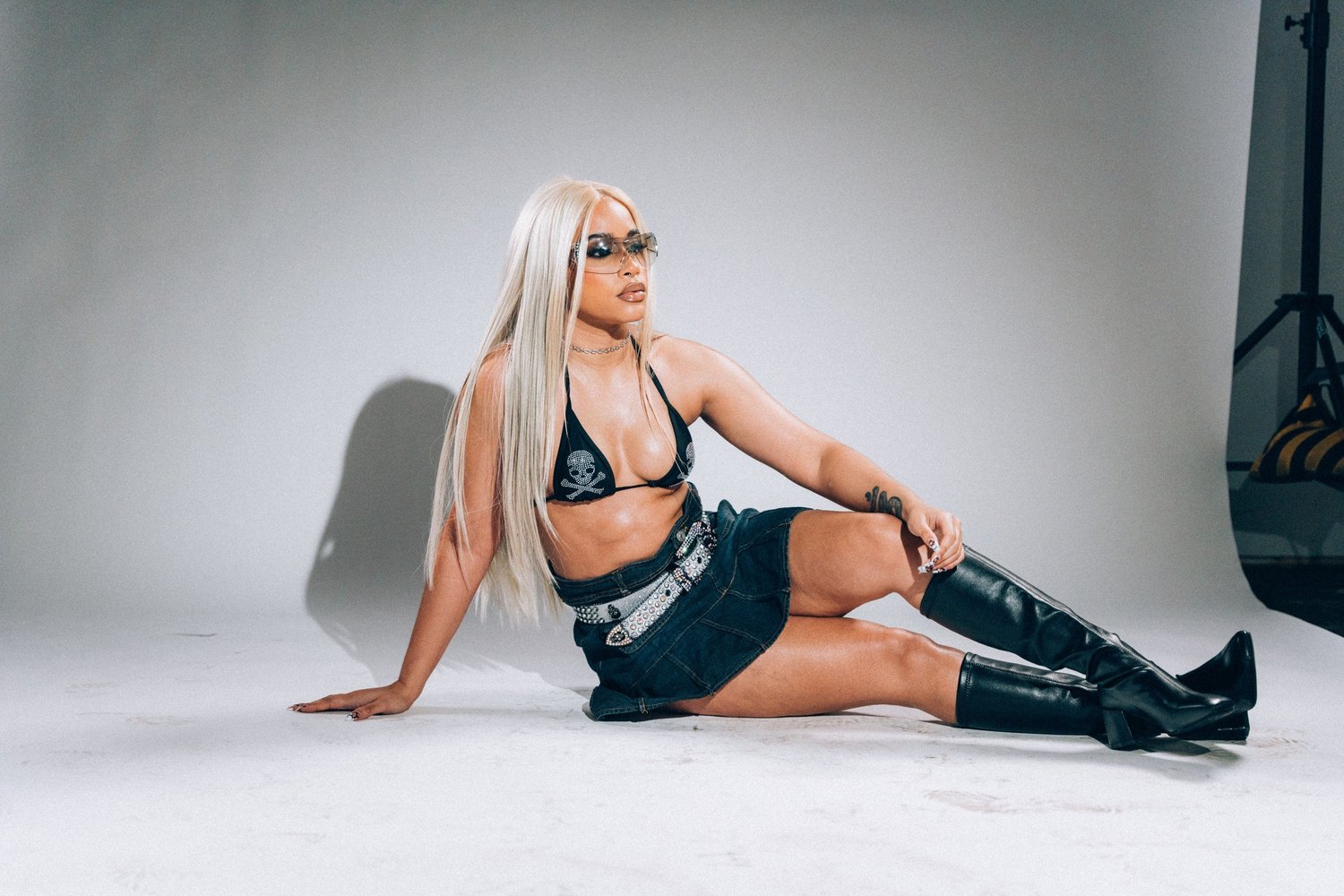
Rose's photographs show two possibilities within a studio. The closer frame concentrates on her face and hand; the seated composition gives the boots, skirt, and line of the body more room. A plain backdrop does not make the photographs identical. Framing, gesture, and light still offer plenty of choices.
Control still takes planning
A studio is a working space, not an automatic solution. The size, available light, background, access, and room for wardrobe changes all affect the plan. Discuss what the proposed studio includes and what needs to be arranged separately. A visual reference can help explain whether you want something clean, dramatic, soft, or more experimental.
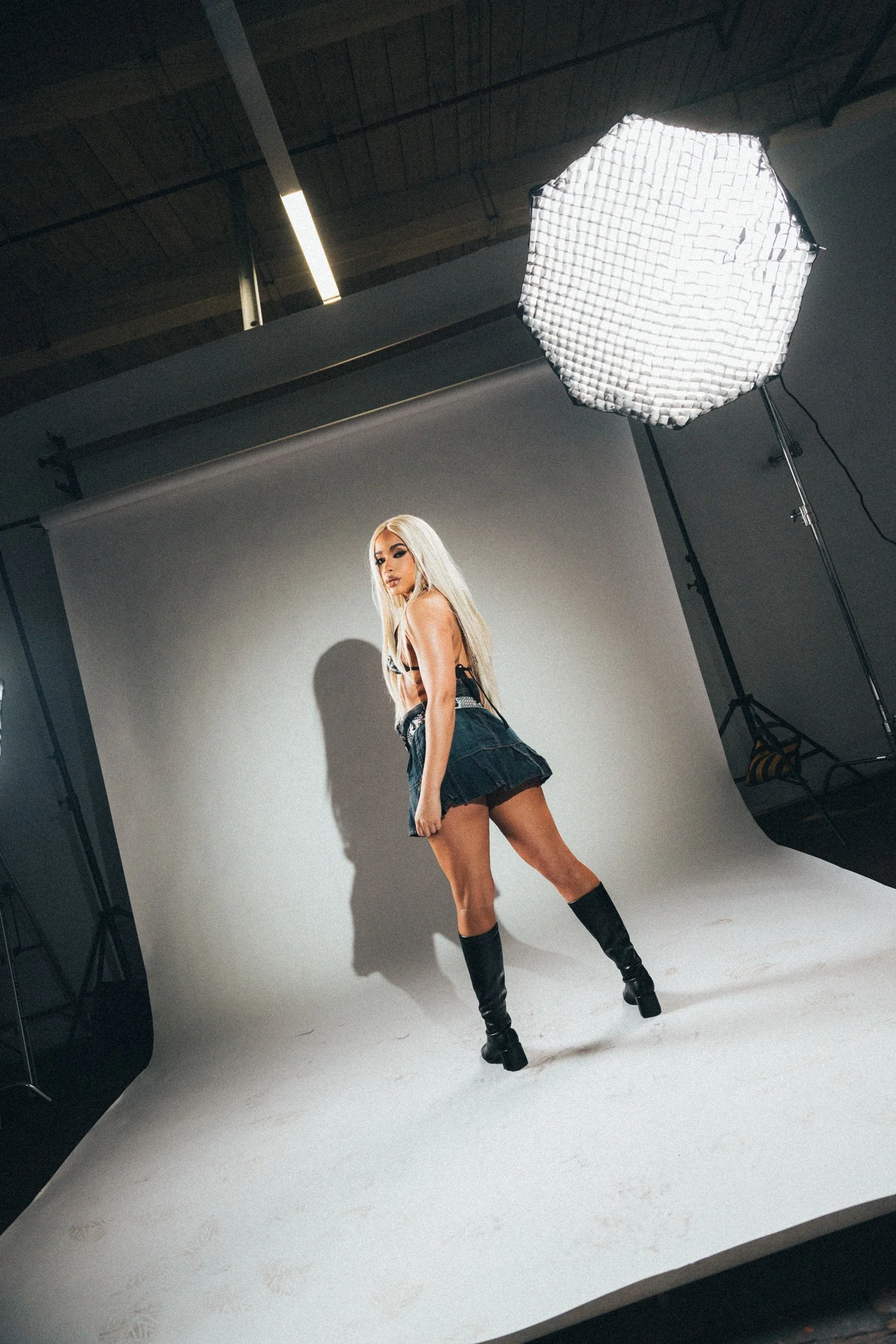
The wider photograph of Rose shows equipment and space beyond the finished frame. That working area makes some images possible, but it also needs time to set up and adjust. If you need several looks, prioritize the ones that matter most instead of assuming every lighting arrangement can happen instantly.
A location contributes part of the story
A street, home, stairwell, or designed interior brings existing shapes and textures. Those details can make a portrait feel connected to a place, or simply give it an atmosphere that supports the person. The surroundings should earn their space in the composition rather than function as a famous backdrop.
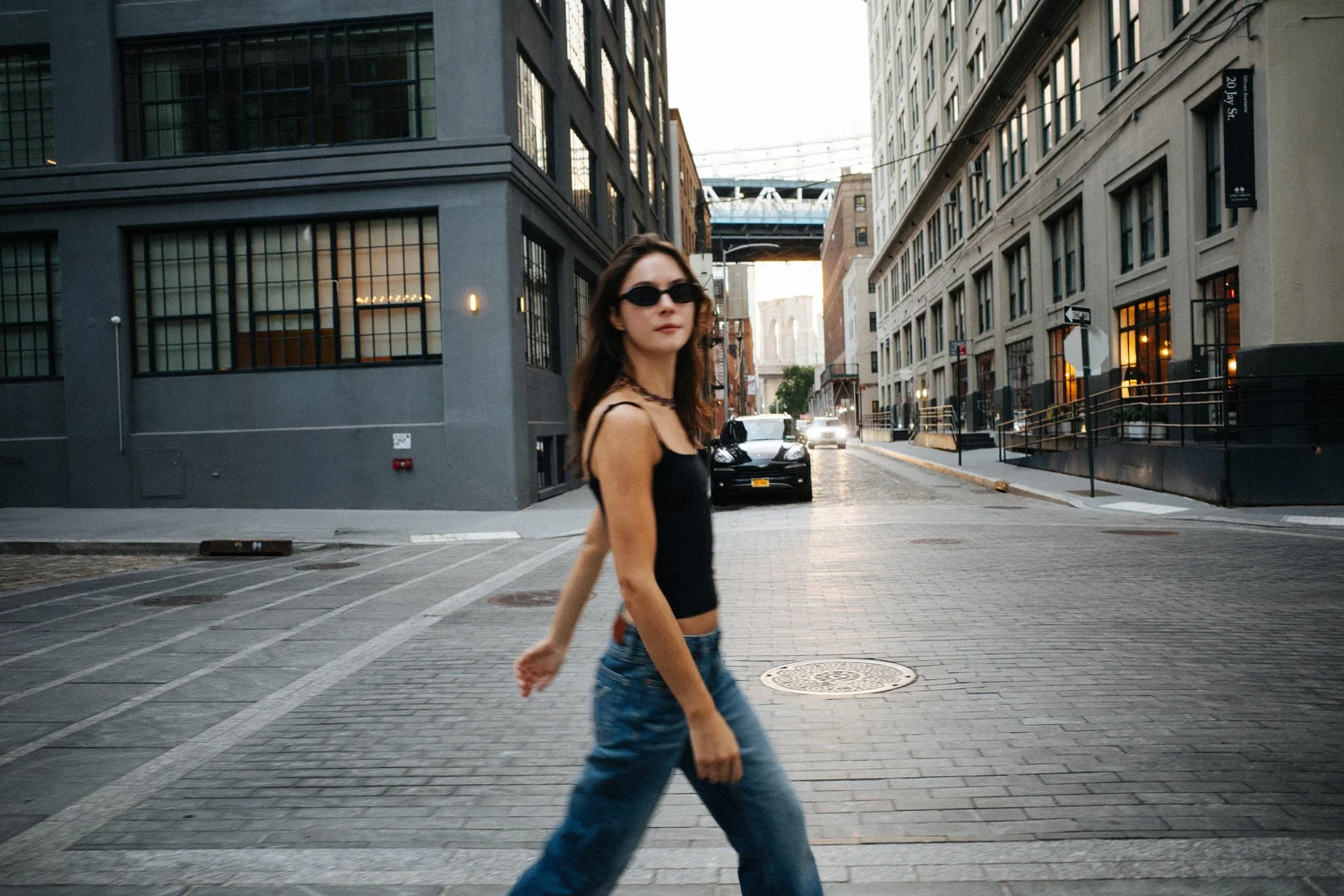
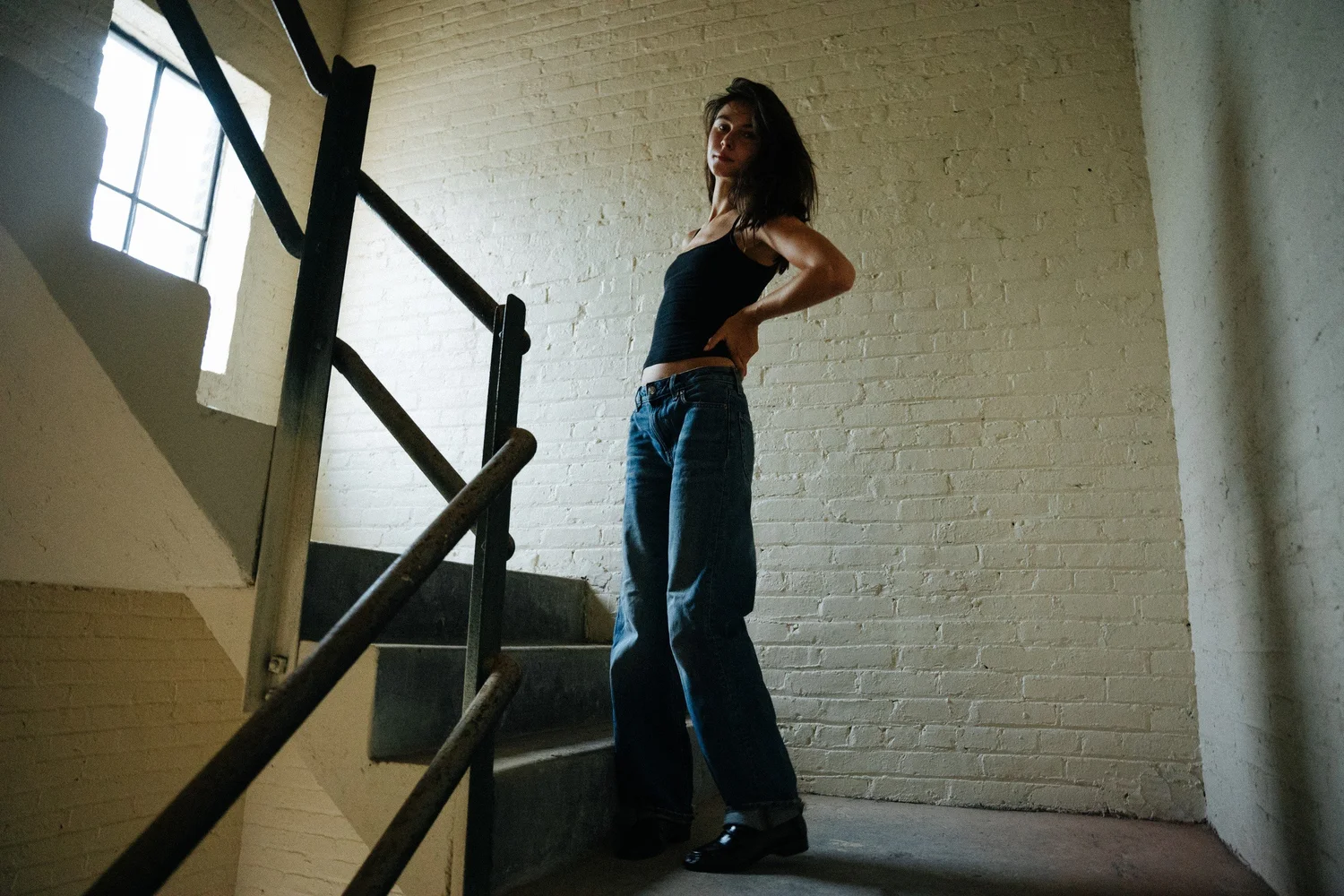
Amanda's street portrait uses the depth between buildings and the movement of a step. Her stairwell image uses a railing, white brick, and tall windows. The different settings change the picture even with a simple wardrobe. For a NYC route, the street photography article explores how city details can become part of a portrait.
Interiors can offer a third kind of choice
The decision is not limited to a seamless backdrop or an outdoor street. An interior with existing furniture and window light can combine a sense of place with a more contained working environment. It may still require permission, advance access, and a plan for where everyone and everything will fit.
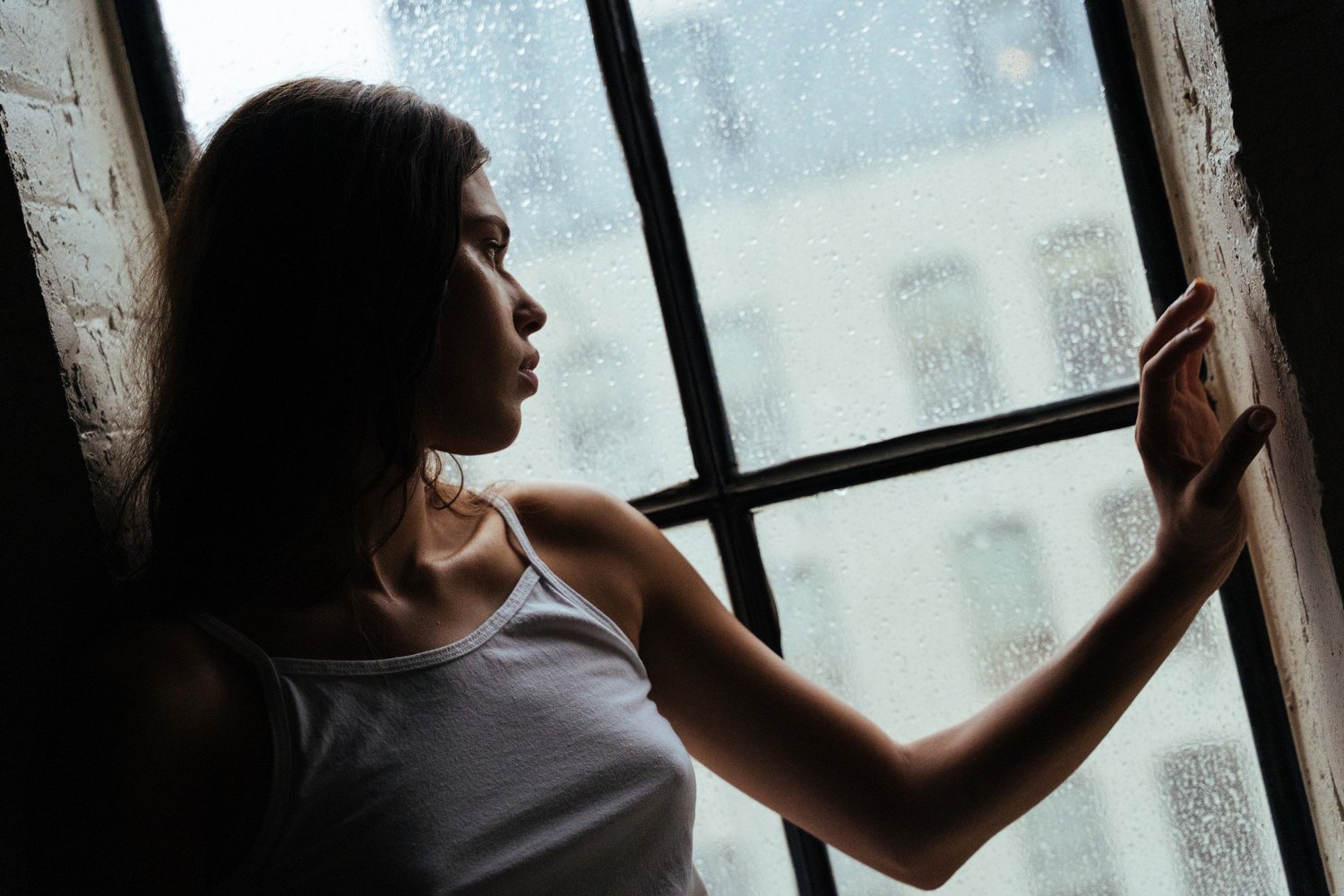
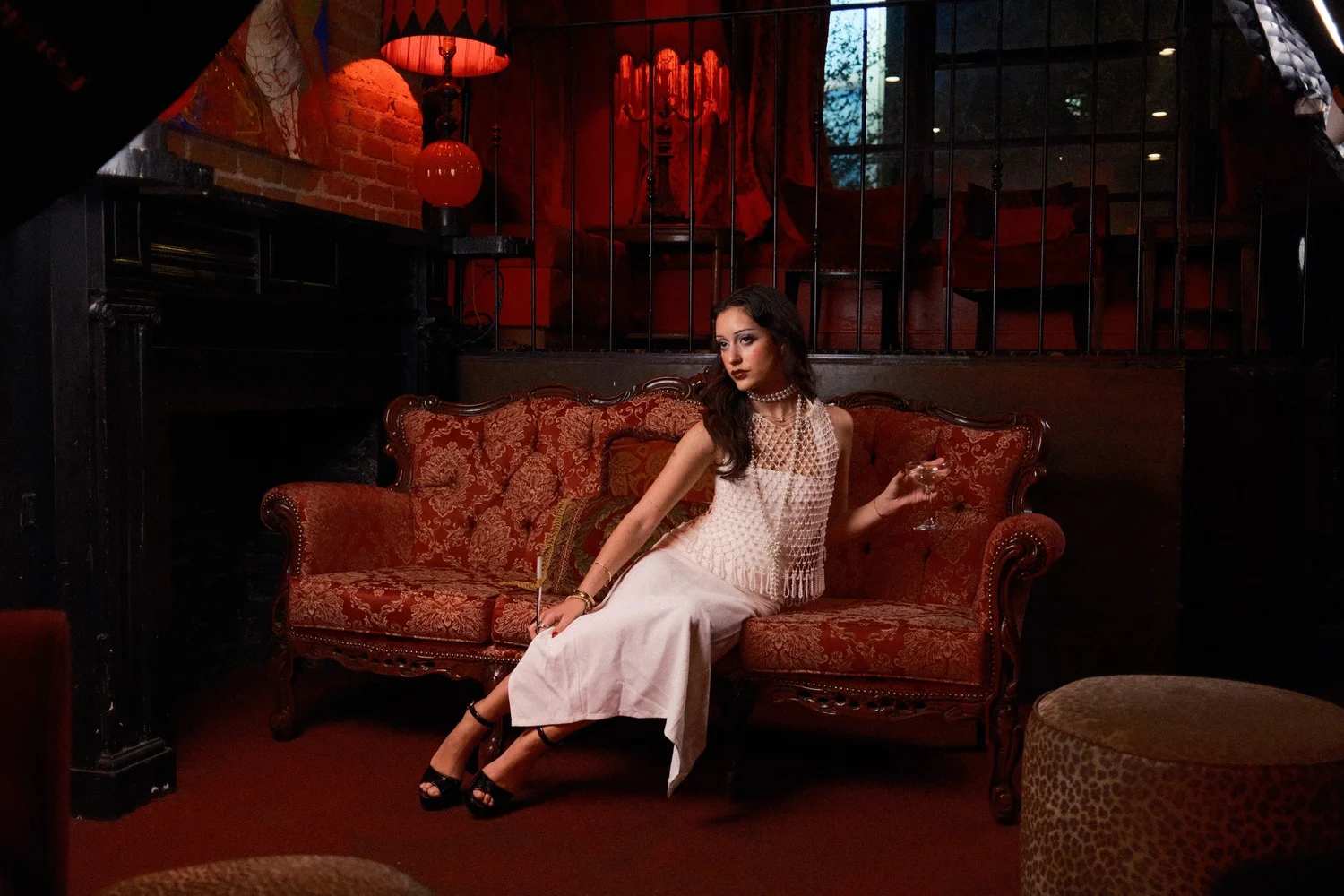
Tara's window portrait depends on the shape of the glass and the light beyond it. Eden's wider image draws on the color and texture of a furnished room. Both surroundings have a strong visual presence. Choose an interior because that presence belongs in your pictures, and confirm the practical arrangements before relying on it.
Match the environment to your comfort
Think about how you feel when other people watch, how much privacy you need to change, and whether you enjoy moving through a neighborhood. Those preferences can influence the photographs as much as the visual reference. A location you love may still be distracting if the working conditions make you tense.
A controlled environment can be useful for beginning slowly. A walk between a few nearby spots can suit someone who feels better with movement. There is no need to choose the setting that seems most impressive on paper. The natural portrait guide offers ways to think about movement and direction in either environment.
Compare the practical details
Before deciding, discuss weather, access, travel, privacy, changing space, lighting, and any restrictions that affect the proposed shoot. Ask what happens if the conditions change. For outdoors, the portrait timing guide explains why the session time belongs in the location conversation.
For a studio, confirm the working space and what is included. For a private interior, confirm permission and usable hours. For a public location, plan around the real surroundings and people using it. These details help turn an attractive reference into a session we can actually make.
Choose the smallest plan that gives you the right variety
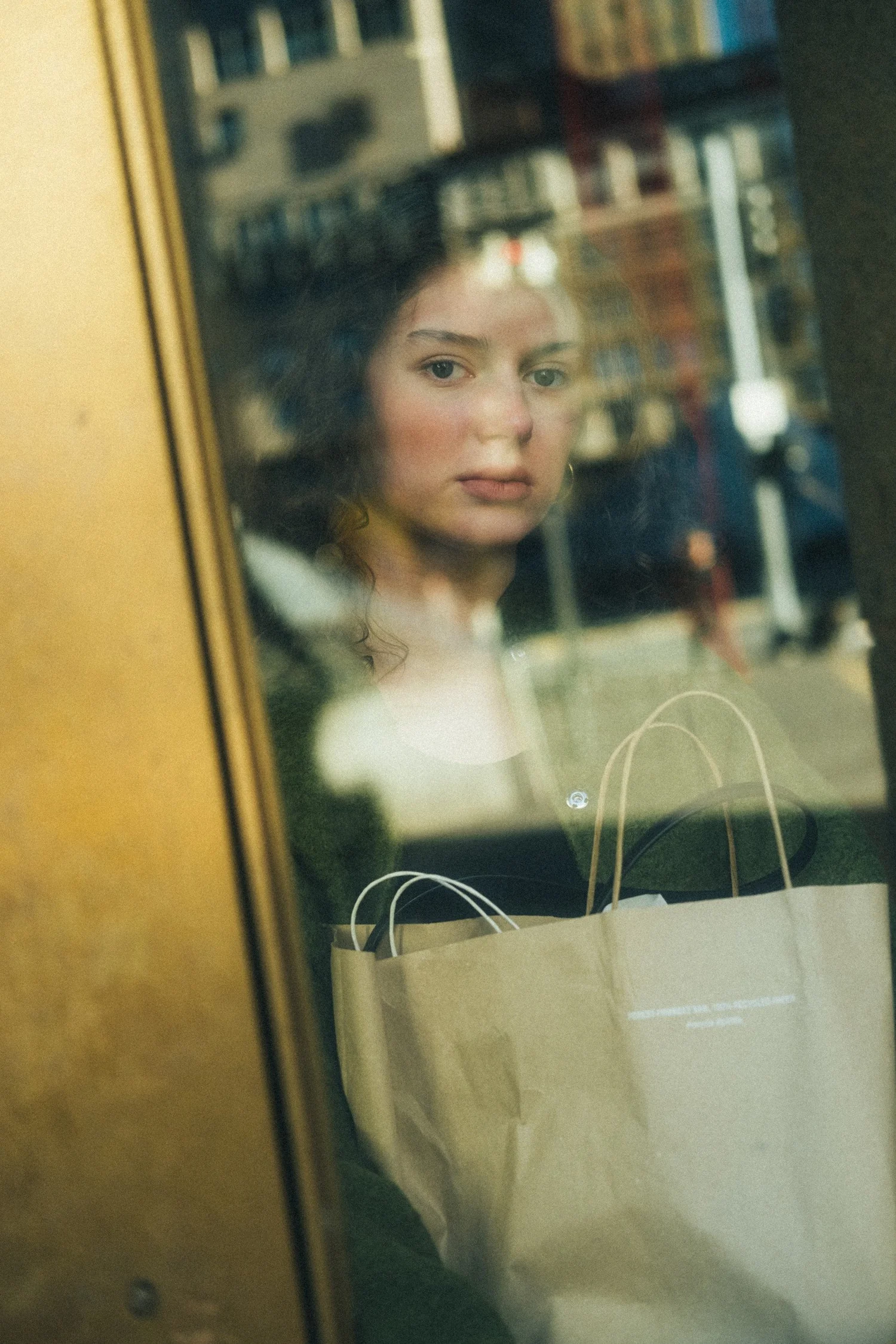
You may not need both a studio and several locations. A single setting with useful light and different camera positions can support a varied set. Olenka's reflection portrait is a reminder that one window can create a distinct frame without requiring an entire new destination.
Start with your priority images and the atmosphere you want. If combining environments adds something meaningful, build in time for the transition. Share a few references and your intended uses when you inquire; we can then discuss a setting that supports the photographs, your comfort, and the practical scope of the session.
Choose a setting for your NYC portraits
Share your preferred dates, two or three visual references and any studio or location access you already have. Mention privacy, clothing changes and the final image uses; we can discuss which setting supports your priorities.
Ask about your portrait session · Explore NYC portrait sessions
Continue planning with outdoor and city locations to compare.