

15 NYC portrait locations that don’t look like everyone else’s
Found a NYC portrait location that matches your style? Share your dates and shortlist so we can choose the light and route together. Explore NYC portrait sessions or ask about your portrait session.
The best NYC portrait location gives you good light, room to move, and a background that supports the photograph. Use these 15 starting points to choose a compact route, then decide which visual qualities matter most for your own portraits.
The short answer:
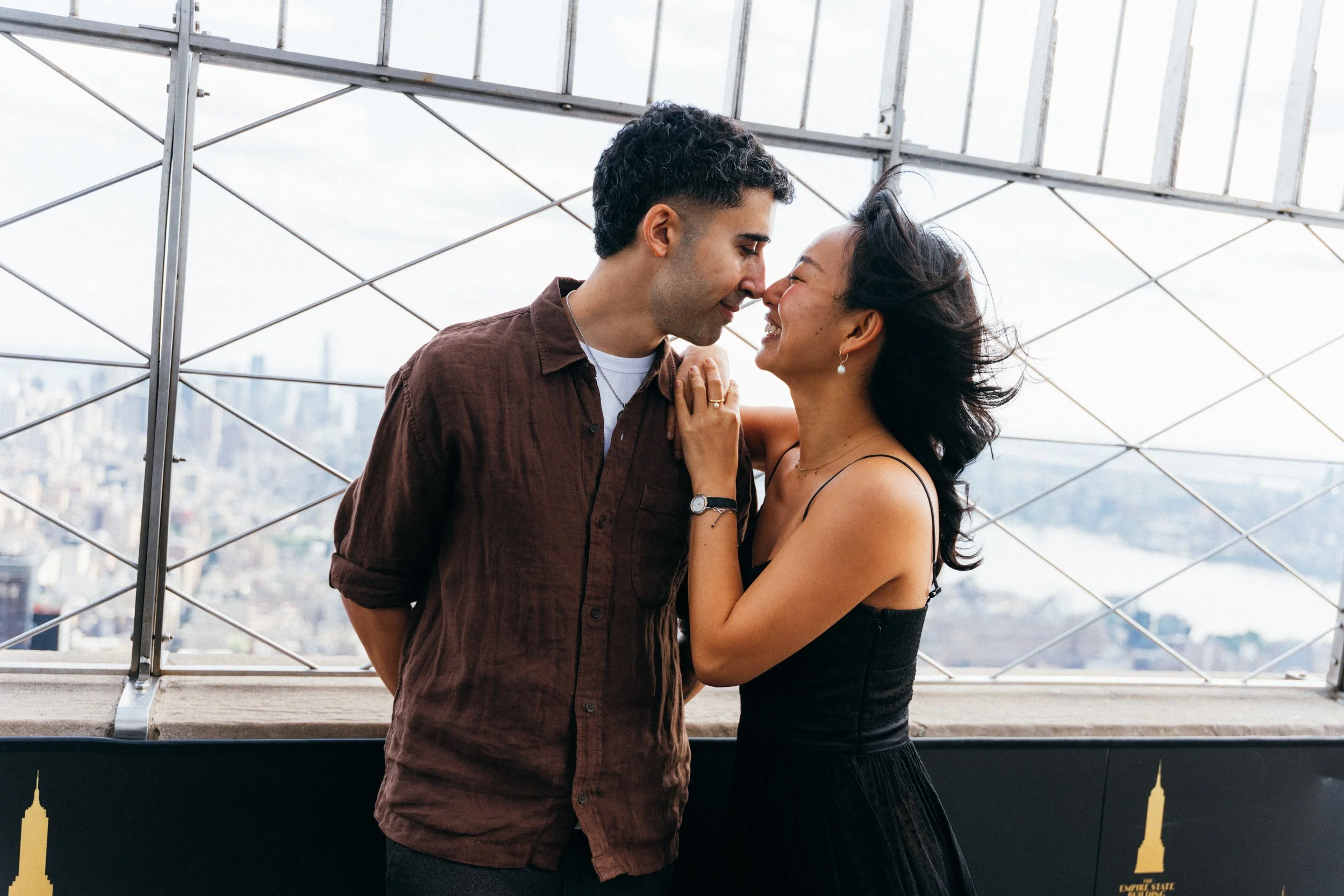
Choose an NYC portrait location by mood before landmark: quiet, architectural, green, waterfront, colorful, or nocturnal. Then test the real route for light, crowds, walking distance, ownership, and a nearby backup. A distinctive photograph comes from a setting that helps you behave naturally—not from collecting famous backgrounds.
Choose a starting point by mood
- Quiet neighborhood: West Village side streets for a compact walk with brick, doorways, and softer backgrounds.
- Architecture: Civic Center for pale stone and strong lines, or Roosevelt Island for concrete, brick, and a river edge.
- City and waterfront: Brooklyn Heights Promenade with nearby side streets, so a broad view and a closer portrait can share one area.
- Green and textured: Central Park’s northern landscapes or Fort Tryon Park for paths, stone, and seasonal greenery.
Pick one area first, then use the notes below to compare light, access, and a nearby alternative. These are route ideas to confirm for your date, not a promise of exclusive access.
What makes a location useful, not merely photogenic
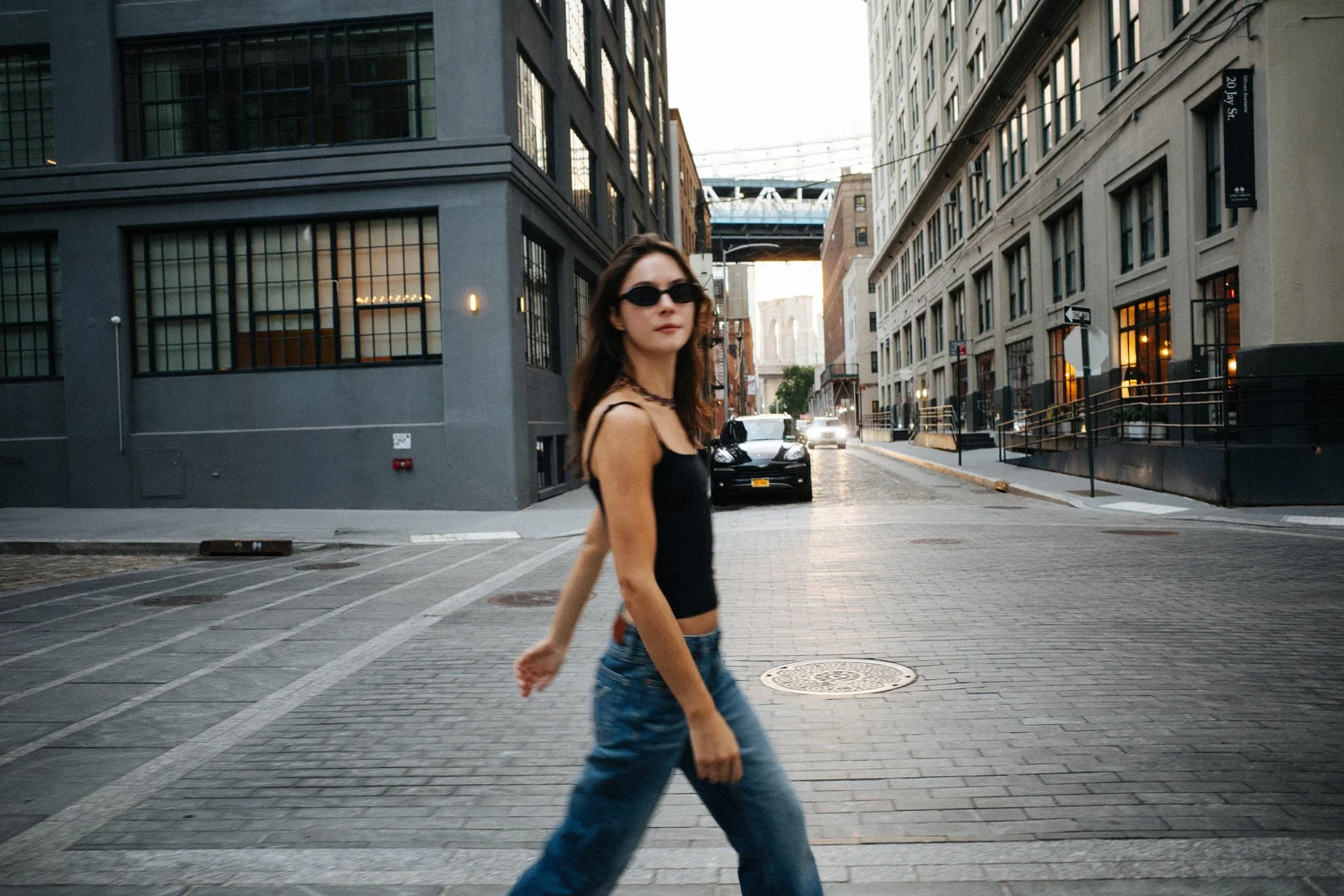
Amanda's street portrait uses the buildings and cobblestones as lines that lead into the frame. The walk gives the photograph movement, while the dark top keeps her shape readable against the surrounding gray tones. A useful street does several jobs at once: it offers a route, a clear direction for the eye, and somewhere to pause without interrupting other people.
Start with what the portrait needs to communicate. A close, reflective image benefits from a calm route and simple surfaces. A musician, designer, or performer may want harder geometry, saturated color, or night light. If privacy and repeatable lighting matter more than city context, compare a public route with a controlled option in studio versus location portraits (https://heyzian.com/journal/studio-vs-location-portraits/) before choosing.
A Brooklyn photographer can build a quieter route around brownstone blocks, waterfront edges, or industrial geometry without pretending that one borough has a single look. The useful question is still whether the setting fits the person, the light, and the pace of the session.
Look for several usable angles within a short walk: open shade, a brighter stretch, one sheltered edge, and a place to pause without blocking anyone. Crowd level is never guaranteed. A weekday and a route with more than one workable direction generally leave more room to adapt than a plan built around one exact frame.
Finally, separate visual access from legal access. A small handheld session on a City sidewalk may fall outside the City film-permit requirement, but the photographer still needs to confirm ownership and avoid obstructing pedestrian flow. The NYC Film Office explains when its permit pathway applies (https://www.nyc.gov/site/mome/permits/when-permit-required.page); it does not control MTA, state, federal, Port Authority, or private property. Parks and managed sites have their own rules.
Quiet and intimate
A location does not have to be empty to produce an intimate portrait. Cropping closer changes the role of the background. In Johnny's close portrait, the distant surroundings become soft tone, leaving expression and eye contact to lead. Use this as a framing reference when considering the quieter routes below; it is not a location photograph of those named parks or streets.

1. West Village side streets

.jpg)
Short blocks, irregular street lines, trees, brick, and small storefronts create a human scale without requiring a famous stoop. The light changes quickly between open intersections and narrow streets, while residents, deliveries, and diners keep moving. This suits writers, actors, and anyone wanting an understated neighborhood portrait. Stay on public space; a private stoop or doorway needs permission.
2. Carl Schurz Park paths


Curving paths, stonework, trees, and glimpses of water can shift from formal to relaxed within a compact route. Tree cover can soften bright conditions, but seasonal foliage and park activity change the background. It suits gentle, conversational portraits and people who settle through walking. Because it is a City park, confirm the specific shoot with NYC Parks’ current permit guidance (https://www.nycgovparks.org/permits).
3. Conservatory Garden


Ordered paths, clipped greenery, gates, and seasonal planting offer a quieter, more composed mood than a broad lawn. The visual character suits polished portraits, formal clothing, and restrained color palettes. It is managed rather than casually available: staged or professional milestone photography follows the garden’s photography guidance (https://www.centralparknyc.org/activities/guides/weddings), hours vary, and a permitted session does not make the garden private.
Architectural without defaulting to a skyline
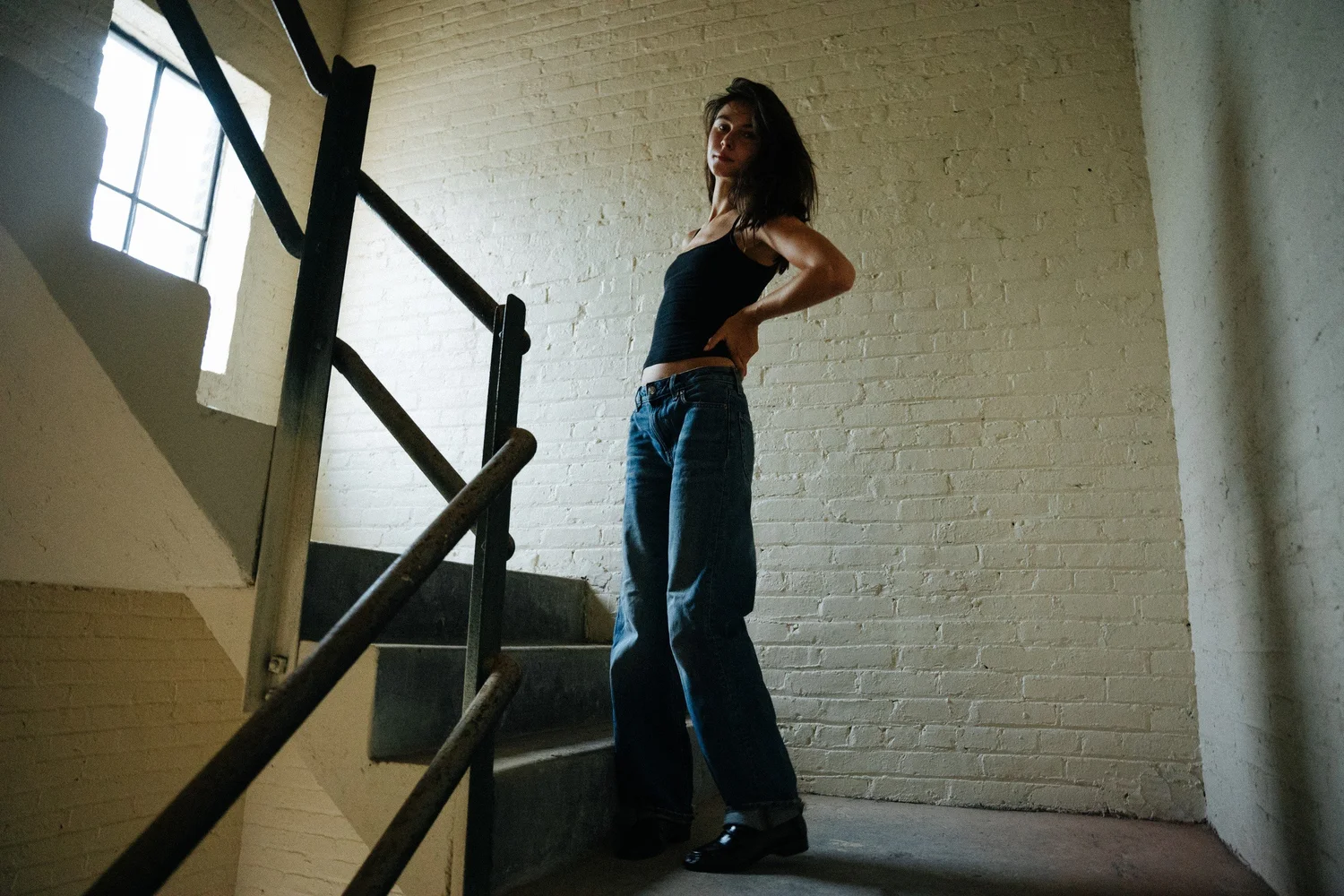
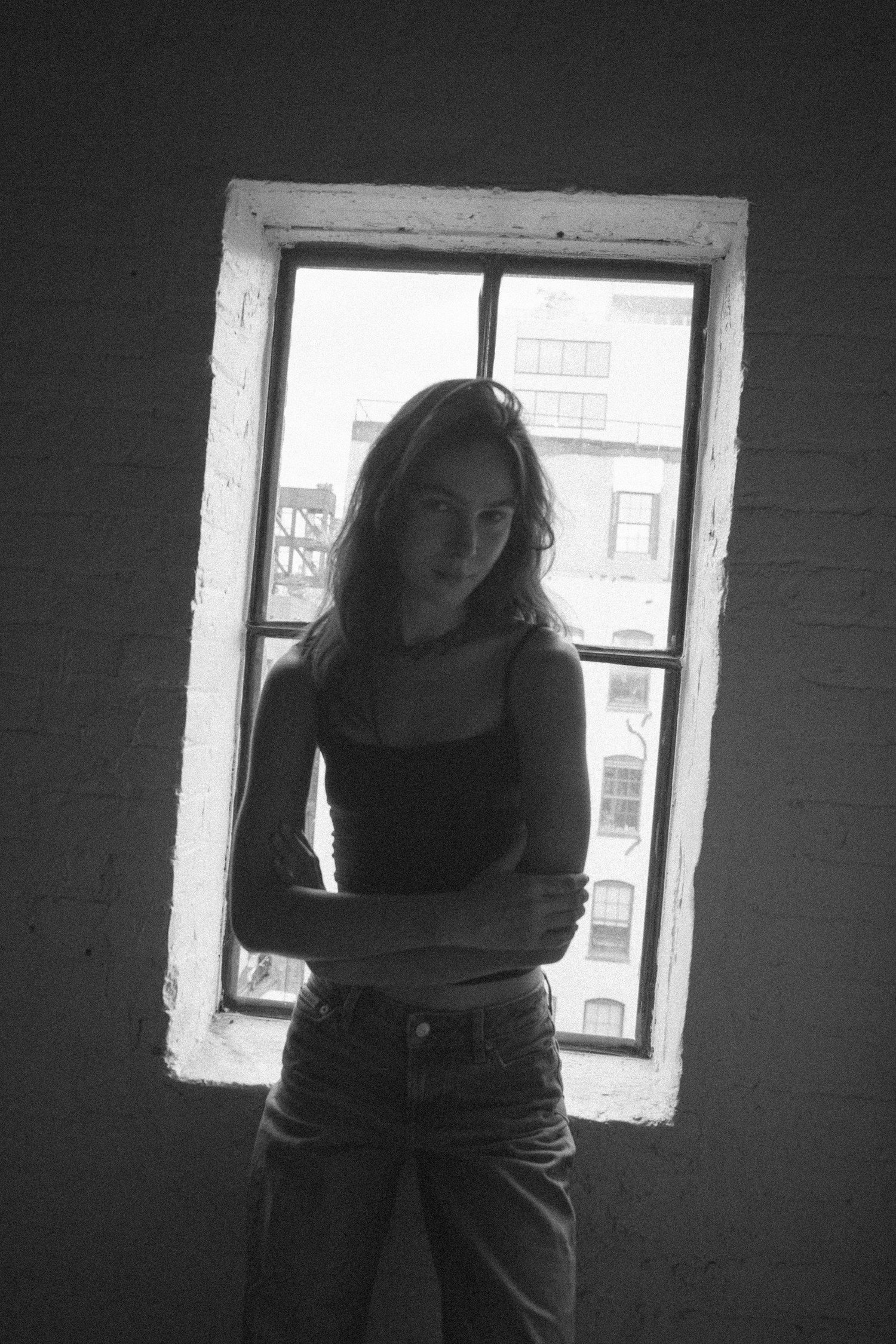
These two photographs show different uses of architecture from my own work. A stair rail creates a diagonal around Amanda; a window frames her silhouette. The lesson for location scouting is practical: look for the direction of the light and the shape around the person, then check whether that exact space is available to use. These interiors are visual references, not public-access recommendations.
4. Civic Center stone and colonnades


Public-facing exteriors around the Civic Center offer pale stone, deep doorways, steps, and repeating columns. Midday can create strong graphic shadow; overcast light emphasizes texture with less contrast. This works for tailored wardrobe, professional portraits with personality, and editorial symmetry. Identify the exact building or plaza owner first, because a visible facade does not make every stair, arcade, or forecourt City-controlled shooting space.
5. Roosevelt Island’s concrete and brick corridors


Residential brick, civic concrete, long walkways, and river edges can feel spare and cinematic without leaning on a postcard view. Open areas may be windy and exposed, while building canyons create cleaner shade. The setting suits minimal styling and graphic composition. Treat the island as several jurisdictions and properties, not one blanket permission; scout the precise path and backup before the session.
6. Brooklyn Heights Promenade and side streets


The promenade offers long horizontal lines and open sky; nearby blocks add brownstone color and tighter framing. The obvious overlook can be busy, so the better plan includes side-on compositions and quieter public sidewalks. It suits classic portraits that need a subtle sense of place. Do not treat residential steps, gardens, or building entrances as props simply because they are visible from the street.
Green spaces with a point of view
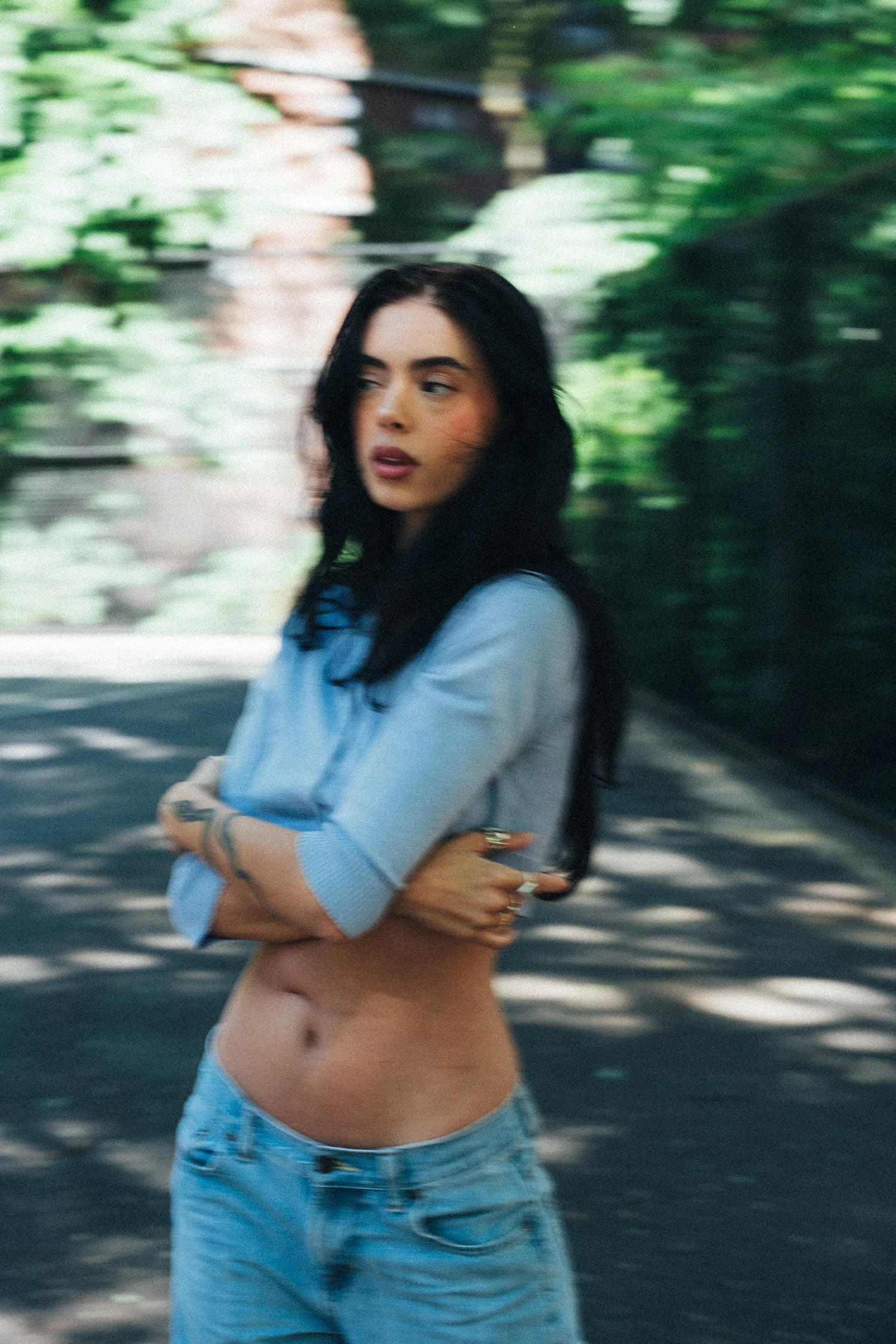
Greenery can function as color and texture rather than a catalog of identifiable plants. Hannahbeth's portrait uses the streaked green background to emphasize movement. That is one possible direction for a park session, alongside a quieter, sharper frame. This photograph illustrates the treatment of a background; it does not identify any of the parks in the following shortlist.
7. Central Park’s northern landscapes


Rock, woodland paths, water, and elevation offer more tonal variety than a single open lawn. Broken tree light can be beautiful or distracting, so timing and exact orientation matter. This suits movement, textured layers, and portraits that should feel removed from street noise. The Central Park Conservancy lists photography rules (https://www.centralparknyc.org/activities/guides/film-photo); confirm the precise landscape and equipment plan, and keep public paths open.
8. Fort Tryon Park


Stone walls, sloping paths, mature trees, and elevated views support portraits that feel romantic without requiring ornamental gardens. Elevation means wind and changing exposure between open overlooks and wooded paths. It suits longer silhouettes, coats, and deliberate walking sequences. Confirm current NYC Parks rules and route conditions rather than assuming every terrace or garden area follows the same access pattern.
9. Prospect Park’s quieter edges


Wooded entrances, meadow edges, bridges, and path transitions can create a natural story with less emphasis on a named landmark. Weekend activity, events, and changing foliage affect what is usable. This works for relaxed portraits and people who prefer movement to fixed posing. Choose one compact edge rather than crossing the whole park, and check current Parks guidance and scheduled activity before settling the route.
Waterfront with room for more than one picture
10. Hudson River Park piers

_078_-_Pier_45.jpg)
Long piers, railings, open sky, and reflected light can move from airy to dramatic as conditions change. The exposure is also vulnerable to wind, events, and unobstructed sun. This suits bold silhouettes and portraits that need breathing room. Hudson River Park says commercial photography and film shoots use its advance permit process (https://hudsonriverpark.org/visit/events/plan-your-event/obtain-a-film-or-photo-shoot-permit/), and a permit does not grant exclusive use.
11. Brooklyn Bridge Park away from the iconic angle


Industrial remnants, lawns, stone edges, planted paths, and water provide more choices than the most crowded skyline frame. Reflected light can be flattering, but visitors and programming remain part of the scene. It suits contemporary portraits with a clean city context. Review Brooklyn Bridge Park’s current photo-shoot guidance (https://brooklynbridgepark.org/about/faqs/); professional shoots may require a permit, without guaranteeing an empty view.
12. Rockaway boardwalk and beach approaches

.jpg)
Boardwalk geometry, pale sand, dunes, and neighborhood edges can feel spacious, graphic, or windswept. This is best for wardrobe that can move and a subject comfortable with visible weather. Travel time and exposure make a nearby sheltered alternative important. Check the City’s current beach status (https://portal.311.nyc.gov/article/?kanumber=KA-02566&os=); access to sand is not a promise that swimming or every section is open.
Color, street texture, and night
Johnny's red dress takes priority against a restrained industrial background. When clothing already carries strong color, the street does not need to compete. Compare this with the NYC street photography guide, where the photographs explain how light, background, and gesture work together.

13. Chinatown and Lower East Side storefront blocks


Layered signs, metal shutters, restaurant light, produce displays, and passing reflections can produce dense color without a constructed set. The visual field changes with business hours, deliveries, and foot traffic. It suits expressive styling and subjects who enjoy a lively environment. Photograph from public space, keep entrances clear, and ask before using a business interior or arranging anything against its facade.
14. Bushwick mural streets


Large color fields, painted textures, brick, and industrial scale can support energetic fashion or music portraits. Direct sun may make the color feel hard and graphic; open shade produces a quieter palette. It suits decisive wardrobe and simple posing that will not fight the wall. Murals and businesses are not interchangeable public sets, so identify the exact wall, ownership, current artwork, and sidewalk conditions.
15. Subway passages and station entrances


Tile, steel, fluorescent light, stairs, and moving trains offer real transit texture rather than a generic city backdrop. The constraints are the concept: work quickly, stay out of circulation, and expect people in frame. It suits compact, observational portraits with minimal gear. Current NYPD transit guidance (https://www.nyc.gov/assets/nypd/downloads/pdf/public_information/public-pguide2.pdf) allows photography only without ancillary equipment such as lights, reflectors, or tripods and without creating a safety or operational hazard.
A compact decision checklist
• Name the intended mood in three words.
• Choose one primary route with at least three usable angles.
• Confirm the owner or authority for every managed stop.
• Check the actual date’s sun, forecast, transit, and City event calendar (https://www.nyc.gov/site/cecm/support/find-an-event.page).
• Plan a nearby sheltered or visually different backup.
• Match shoes, layers, and bag weight to the real walking route; use the ideas in what to wear for a creative portrait session (https://heyzian.com/journal/what-to-wear-for-a-creative-portrait-session/).
• Choose an environment that reduces self-monitoring; if the camera itself is the worry, read how to feel comfortable and natural in photos.
NYC portrait-location FAQ
Do NYC portrait sessions need a permit?
There is no citywide yes-or-no answer. Equipment, commercial purpose, exclusive use, and the owner of the exact property matter. City sidewalks, City parks, MTA spaces, state land, conservancies, and private plazas can follow different rules. Confirm the actual plan with the named authority before booking.
What is the best time for an NYC portrait session?
The useful time depends on the route, building orientation, desired light, season, and event schedule. Choose the location first, then check sun and forecast for the actual date. A weekday can offer flexibility, but no hour guarantees an empty background.
What happens if it rains?
Build a second route before the forecast becomes urgent. That might mean a covered exterior, an approved indoor space, a studio, or a reschedule threshold agreed in advance. Rain can be a visual choice, but it should not be the only available choice.
Can I change outfits on location?
Yes, if the route includes a legitimate private changing option or the change is a simple layer swap. Public restrooms, businesses, vehicles, and building lobbies should not be assumed available. One substantial change is usually easier than carrying an entire wardrobe through several neighborhoods.
Can we combine neighborhoods in one session?
Sometimes, but transit time is part of the session plan. Two close visual zones often create more variety than two famous neighborhoods separated by a long ride. Combine areas only when the second setting adds a genuinely different purpose, not merely another pin on the map.
Turn two nearby backgrounds into a coherent session
Choose one background for a clear introductory portrait and another for context or atmosphere. Check that both are practical at the same time of day, then allow walking time between them. A nearby change in texture or distance can add more useful variety than crossing the city for a second landmark.
Explore NYC portrait photography and the NYC session planning guide. For light, compare outdoor portrait timing.
Plan portraits around your NYC location
Send your preferred date or range and your first two setting choices. Include the photographs you need, any confirmed access and how much walking you would enjoy. We can discuss timing and a compact route with useful variety.
Ask about your portrait session · Explore NYC portrait sessions
Continue planning with choosing the light for your outdoor portraits.