
Planning a NYC Rooftop Portrait Session
Thinking about portraits above the city? Explore my portrait work and session options. Tell me your preferred date and whether you already have permission to use a rooftop.
A rooftop can give a NYC portrait open sky, layers of buildings, and a sense of space that feels different from the street. The useful planning question is not only which skyline you like, but whether the actual roof supports the session you have in mind.
Confirm the roof before planning the photographs
If you have a rooftop in mind, ask its owner or property manager to confirm these details for the proposed session:
- Photography permission for your intended use, date, and group size.
- The areas we may use, plus any equipment or furniture restrictions.
- Entrance, stairs or elevator access, and a private place to change if needed.
- An approved indoor alternative if the roof is unsuitable.
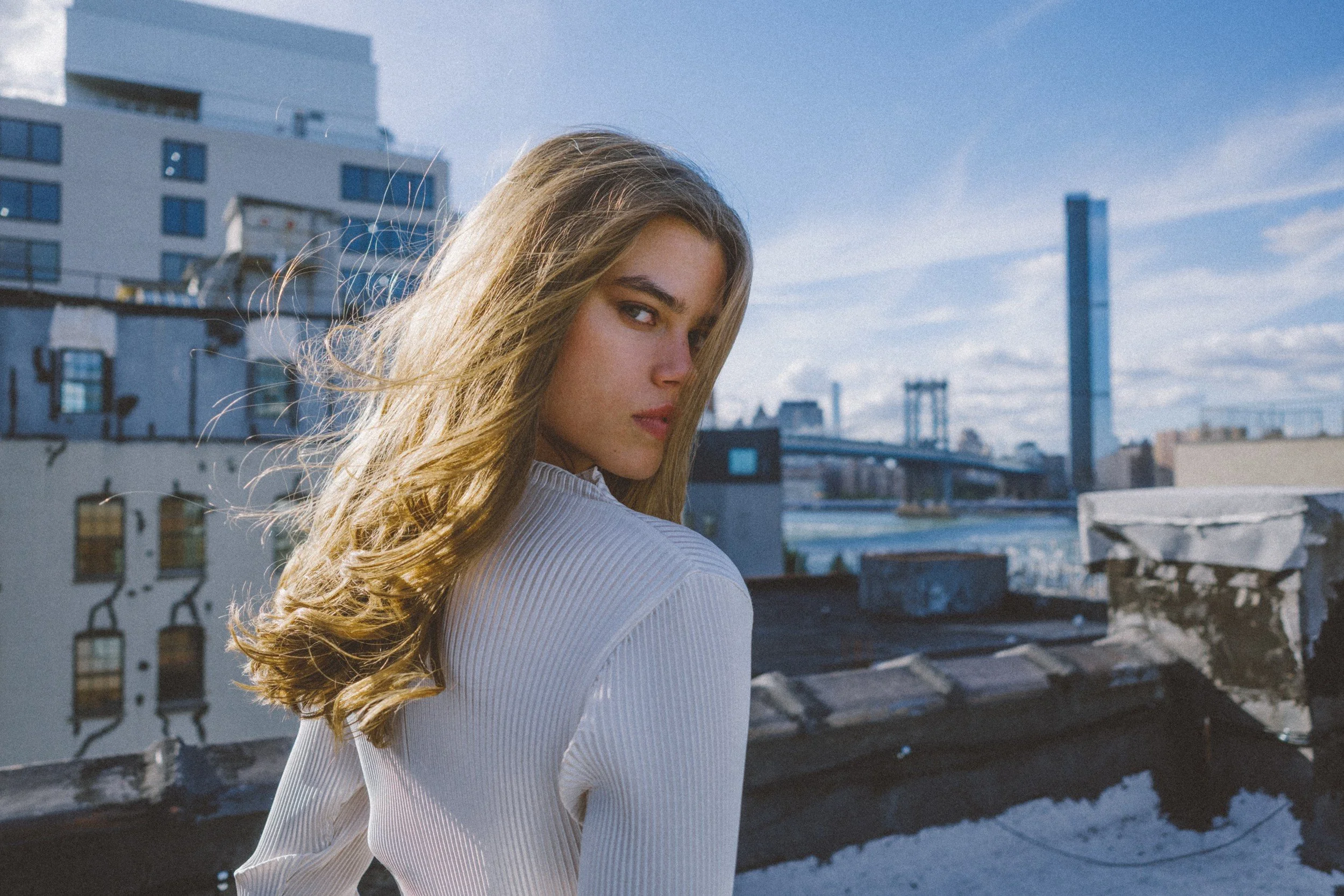
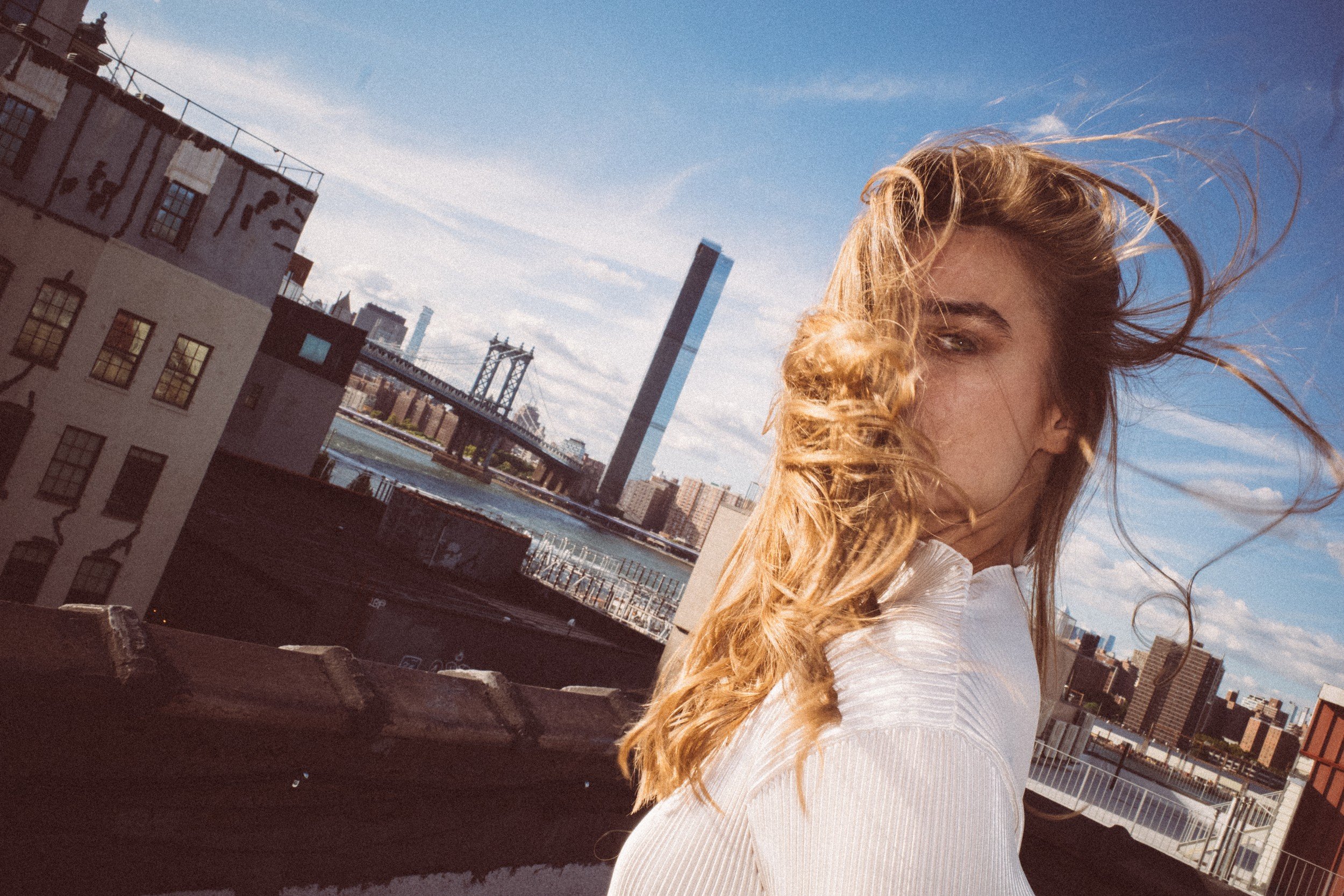
Share that confirmation when you inquire so we can plan around the space that is actually available. Guest access alone may not cover an organized photoshoot. The portfolio photographs below illustrate the look of rooftop portraits; access to the pictured roofs is not included.
Look at the background from the usable shooting area
A roof may have a dramatic view in one direction and mechanical equipment in another. Send a few wide phone photographs from the area where shooting is actually permitted. Include the route from the entrance and any nearby interior that might be relevant to the session.
The direction of the view matters as much as the height. A building that looks close in a photograph may be small from the available position, and the skyline can disappear behind a person in a tight crop. We can discuss whether you want recognizable architecture, a broad city atmosphere, or mostly open sky. That decision helps choose the lens distance and where you stand.
Choose the kind of light you want
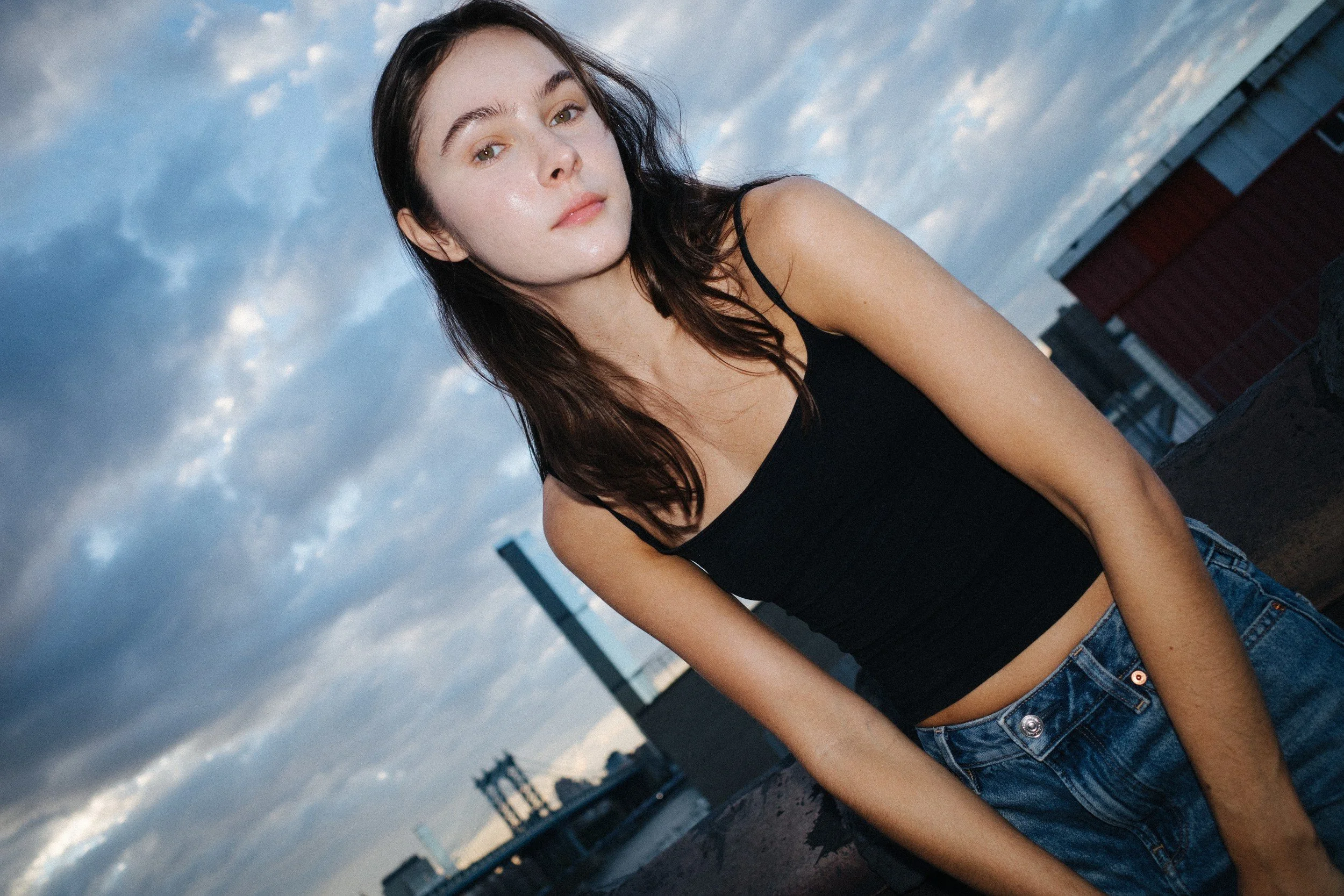
Bright sun can create a crisp, graphic portrait; softer light can make the skyline less contrasty; the transition toward evening can shift the balance between the face and the city. There is no single rooftop hour that produces every look. The building's orientation and the actual weather matter.
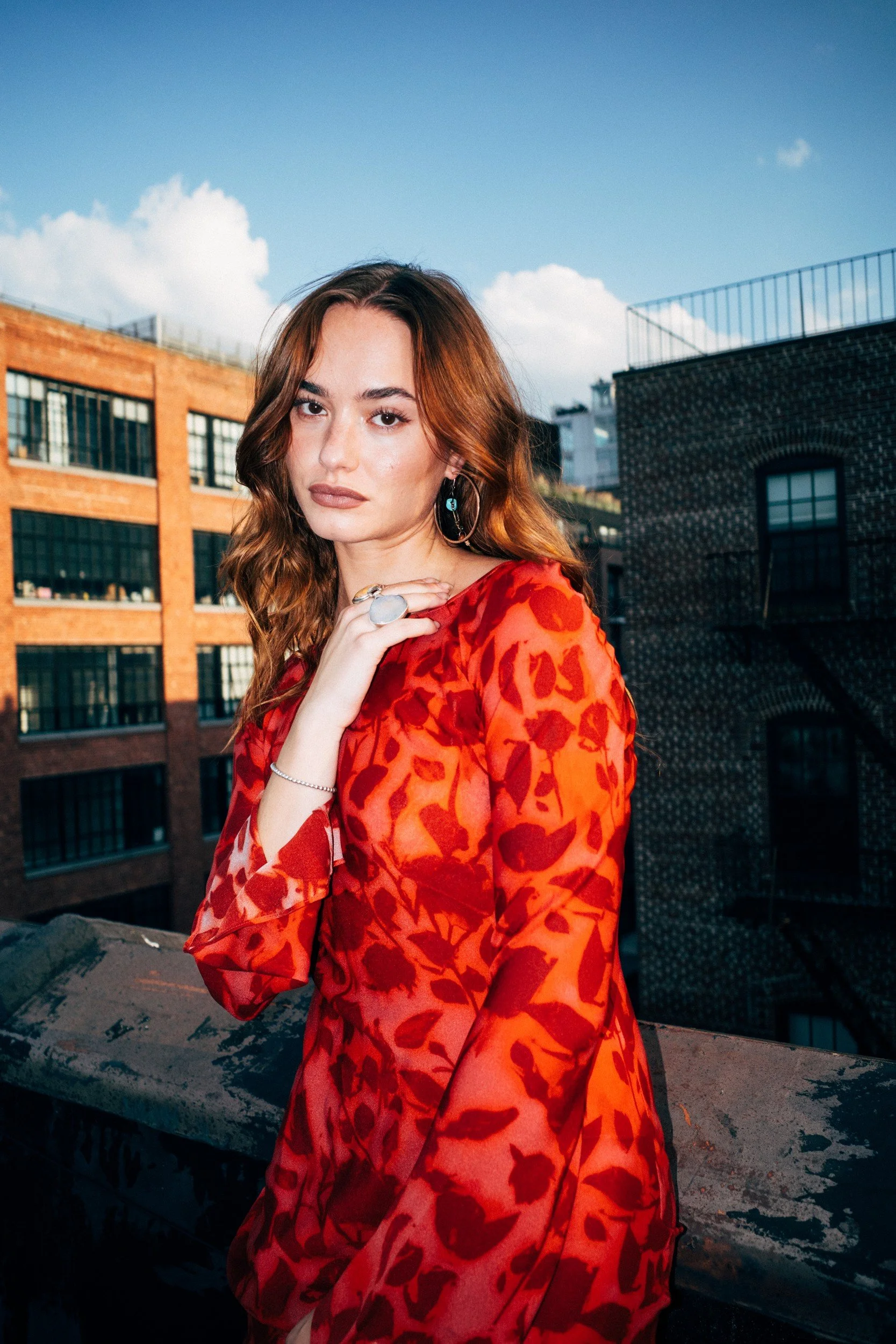
Amanda's low-angle portrait gives the sky a large role, while Johnny's red dress brings a strong color into a tighter urban composition. Bring references for both the face and the background rather than saying only “sunset.” The outdoor portrait timing guide explains the broader light choices; for a roof, we also need to know what blocks or reflects that light.
Treat wind as part of the styling plan
Hair, loose fabric, earrings, and lightweight accessories can all move differently on an exposed roof. Decide which kinds of movement you like and which would distract from the photograph. If you want a polished hairstyle with a precise silhouette, mention that early so the concept can account for it.
Bring layers that are easy to put on between frames, and choose shoes that let you move comfortably on the permitted surface. A rooftop portrait does not require standing near an edge or climbing onto a feature. We can make the skyline feel expansive through framing while keeping the session within the ordinary usable area. Comfort makes expression and posture easier.
Keep the sequence simple
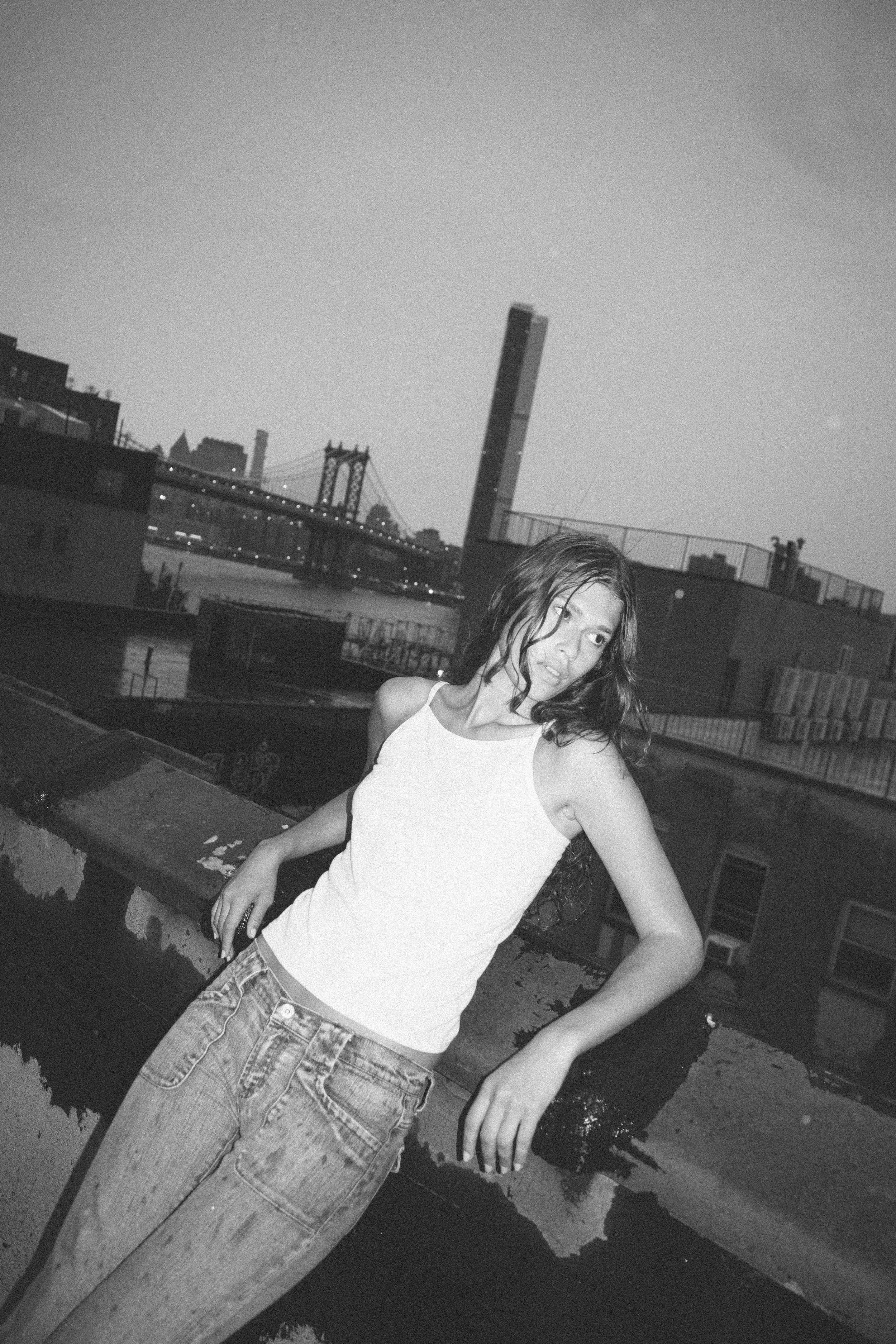
A short sequence can include a wider city frame, a closer portrait, a standing composition, and one movement-based idea. That already offers variation in scale and mood without repeatedly moving equipment or interrupting other people using the building.
Think about whether an outfit change is necessary and where it would happen privately. Keep bags together and identify who will look after belongings. If stairs or a slow elevator are part of access, include them in the schedule rather than treating arrival as the moment photography begins. A compact plan leaves more attention for the changing relationship between the person, wind, and light.
Agree on a real alternative
An indoor alternative needs its own permission and enough space to work; it should not be an imagined lobby we hope to use. A window portrait or a street-level sequence may preserve the mood even when the roof is unsuitable. If the skyline itself is essential, say so before the date is fixed.
Share your preferred look, the access information you already have, the people attending, and any deadline for the finished photographs. The NYC portrait session guide can help organize the rest of the brief. The strongest rooftop session starts with a clear visual idea and a location that can realistically support it.
