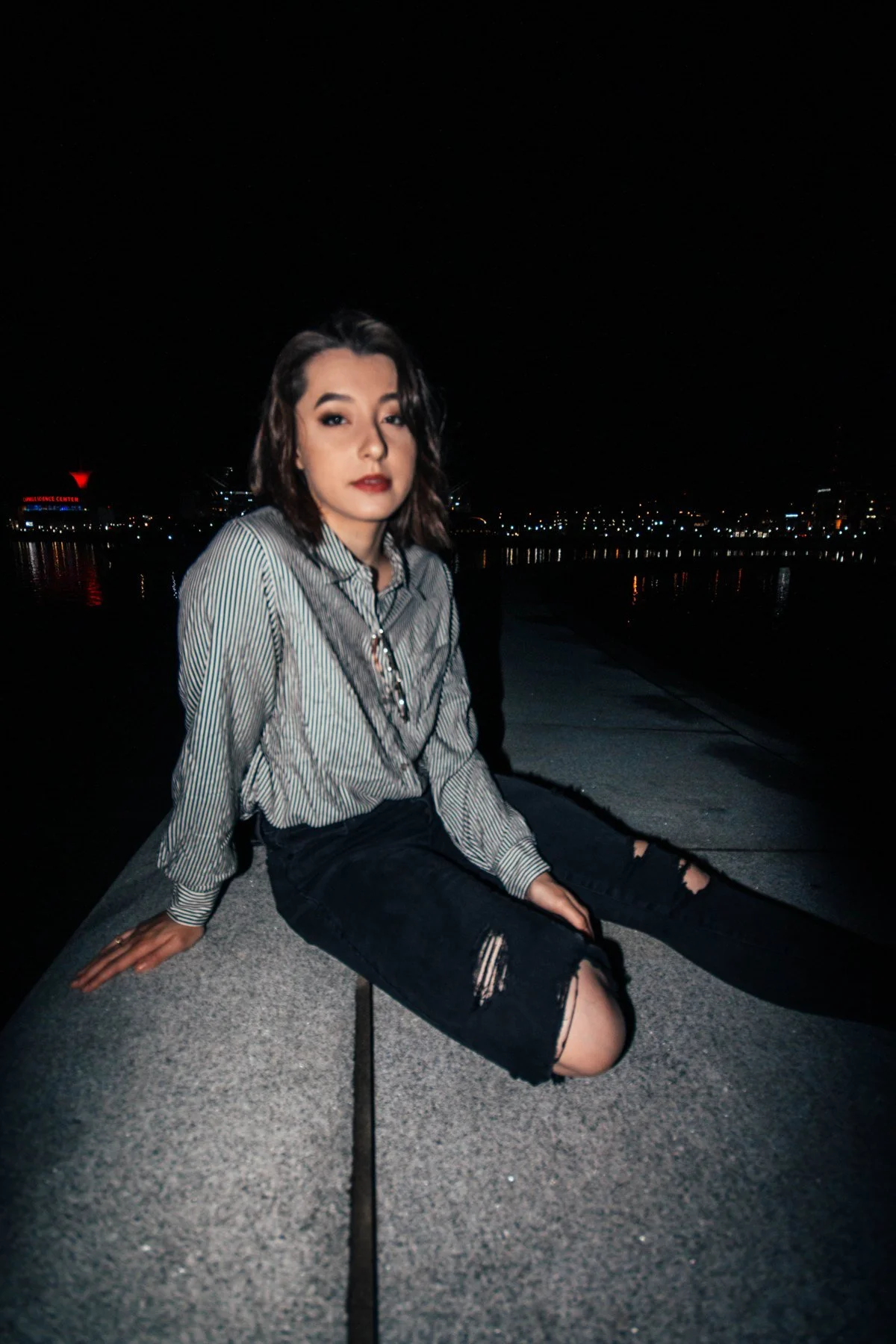
NYC Night Portraits: City Lights, Flash, and Atmosphere
A few glowing signs, a dark street, a face in the light. Night portraits start with the mood you want, then a short route that can support it.
Choose the look before the route:
- Storefronts and signs: color and atmosphere from the available light.
- Direct flash: a crisp, immediate face against a darker background.
- A mix of both: a clear portrait that keeps some of the city’s glow.
Send a few references and say which part you like: the color, shadows, expression, or surroundings.
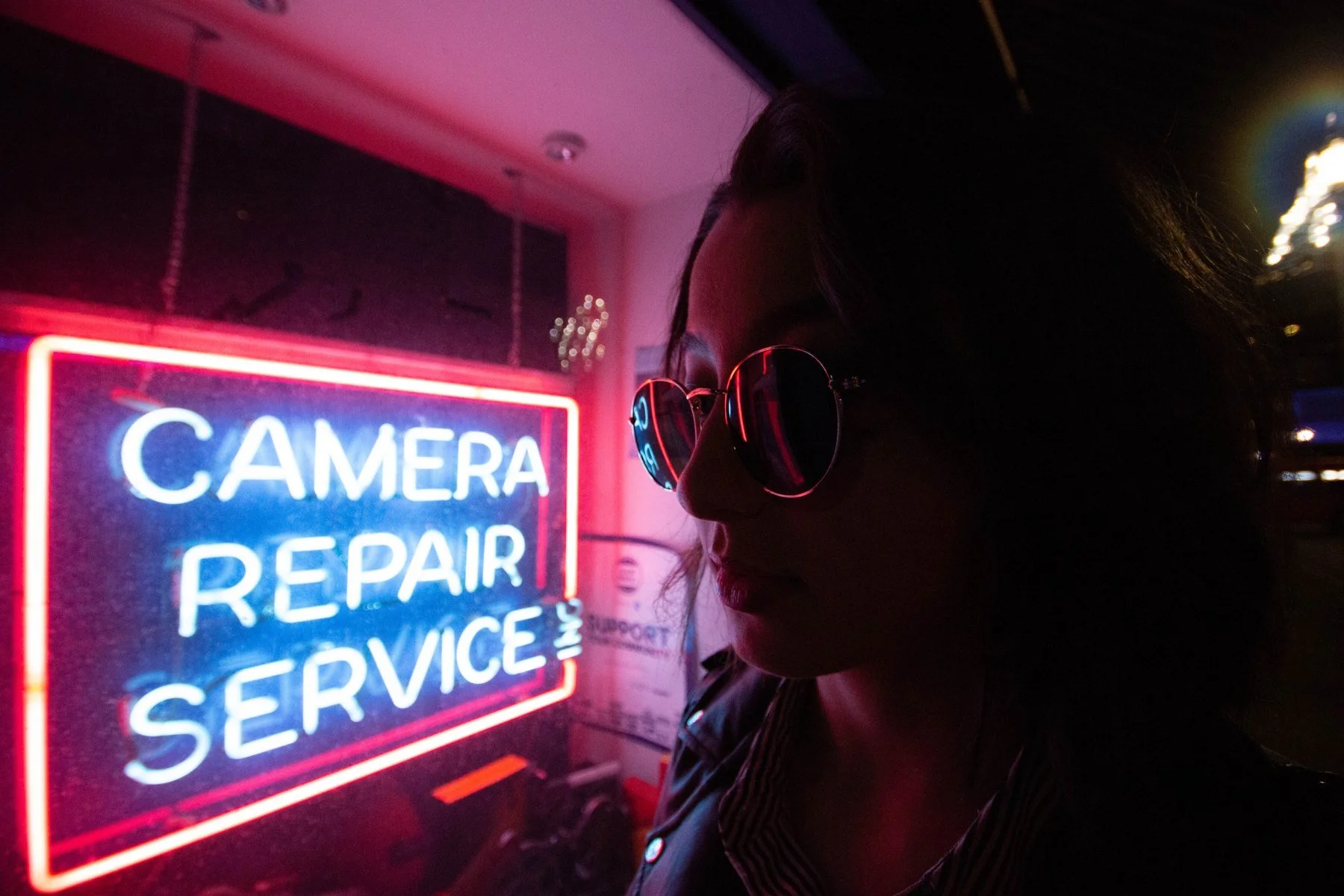
Choose a lighting direction before choosing a route
“Night photography” describes a time of day, not a single style. A portrait lit mainly by storefronts looks different from one where a flash becomes the strongest light. Deep shadows, soft blur, saturated color, and a clear face can appear in different combinations.
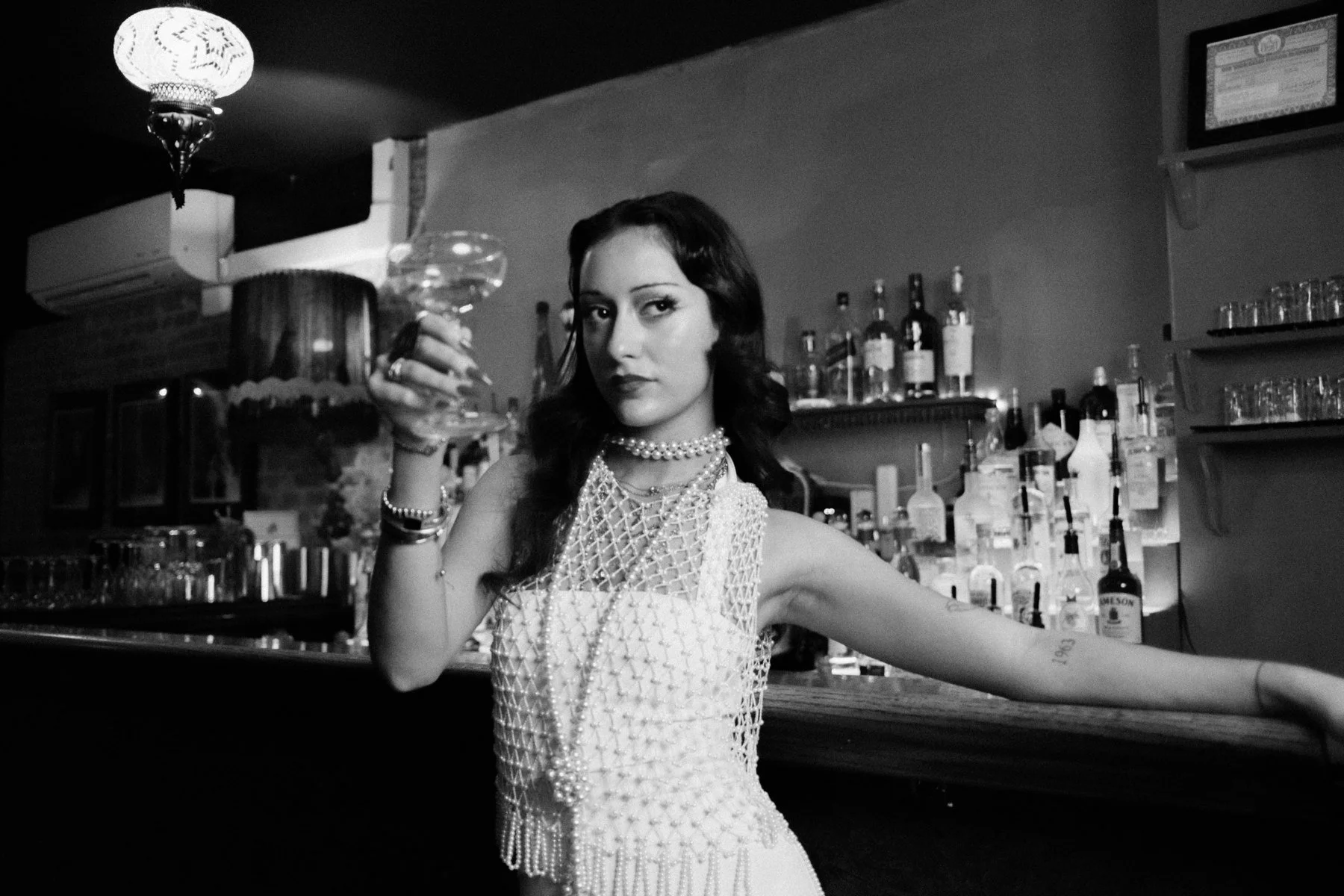
Send a small set of references and explain what attracts you to each. If one photograph is about red light and another is about a crisp expression, we can discuss whether they belong in the same session. The photographs here are examples from different portfolio sessions, including interiors. They illustrate lighting and composition, not a claim that every scene was photographed in NYC or at a publicly accessible venue.
Decide how much of the surroundings should remain
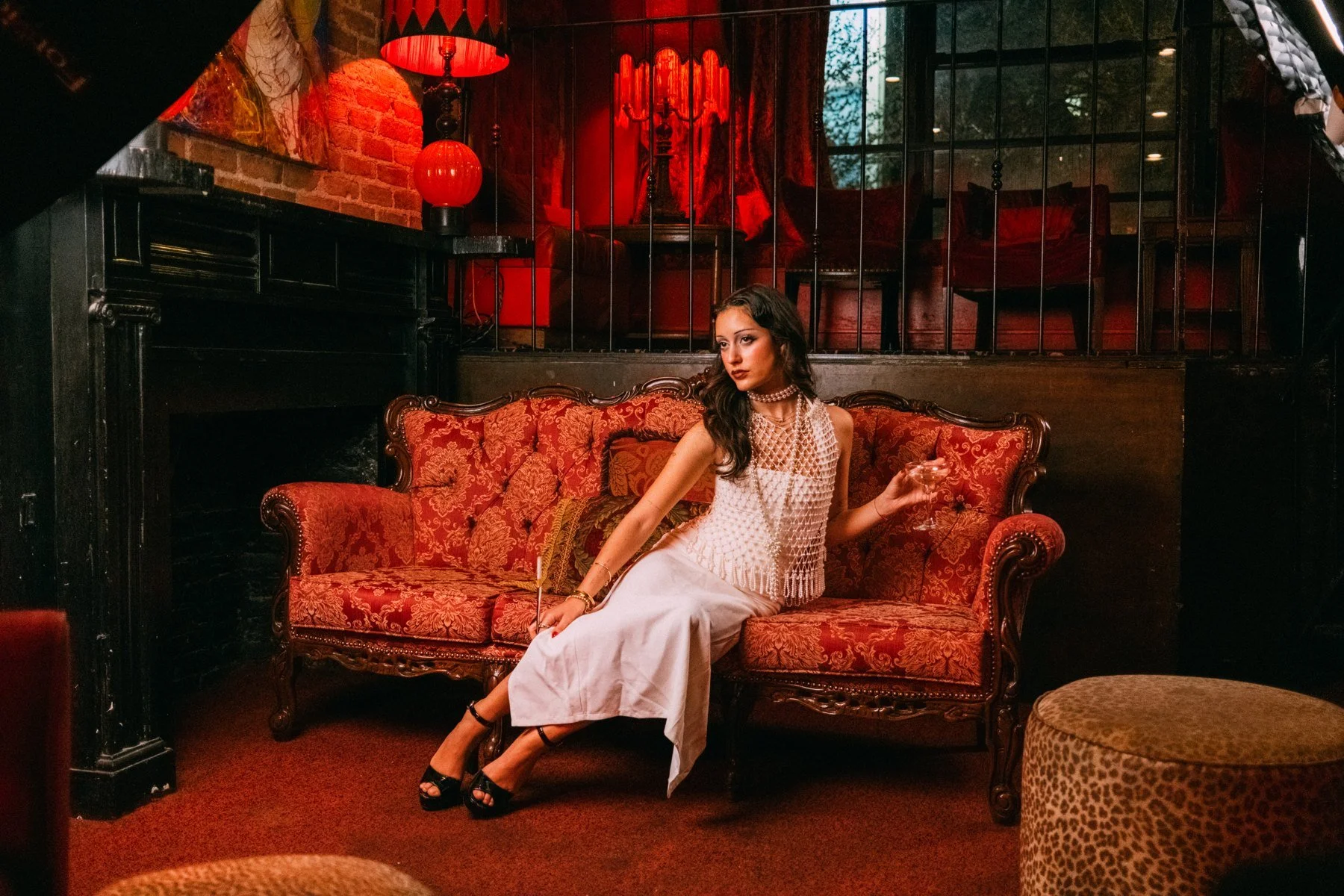
A close portrait can turn distant lights into a soft pattern. A wider frame asks more of the surroundings: signs, reflections, furniture, and other people may all become part of the picture. That wider view can be expressive, but it needs a location with enough visual order to support it.
Eden's lantern-lit interior is a useful example of environment carrying the mood. The closer bar portrait gives more attention to the face and glass. Neither approach is automatically more cinematic. The important choice is whether you want the viewer to recognize the room or street, or mainly to feel its light around you.


Talk about flash as a look, not just a rescue
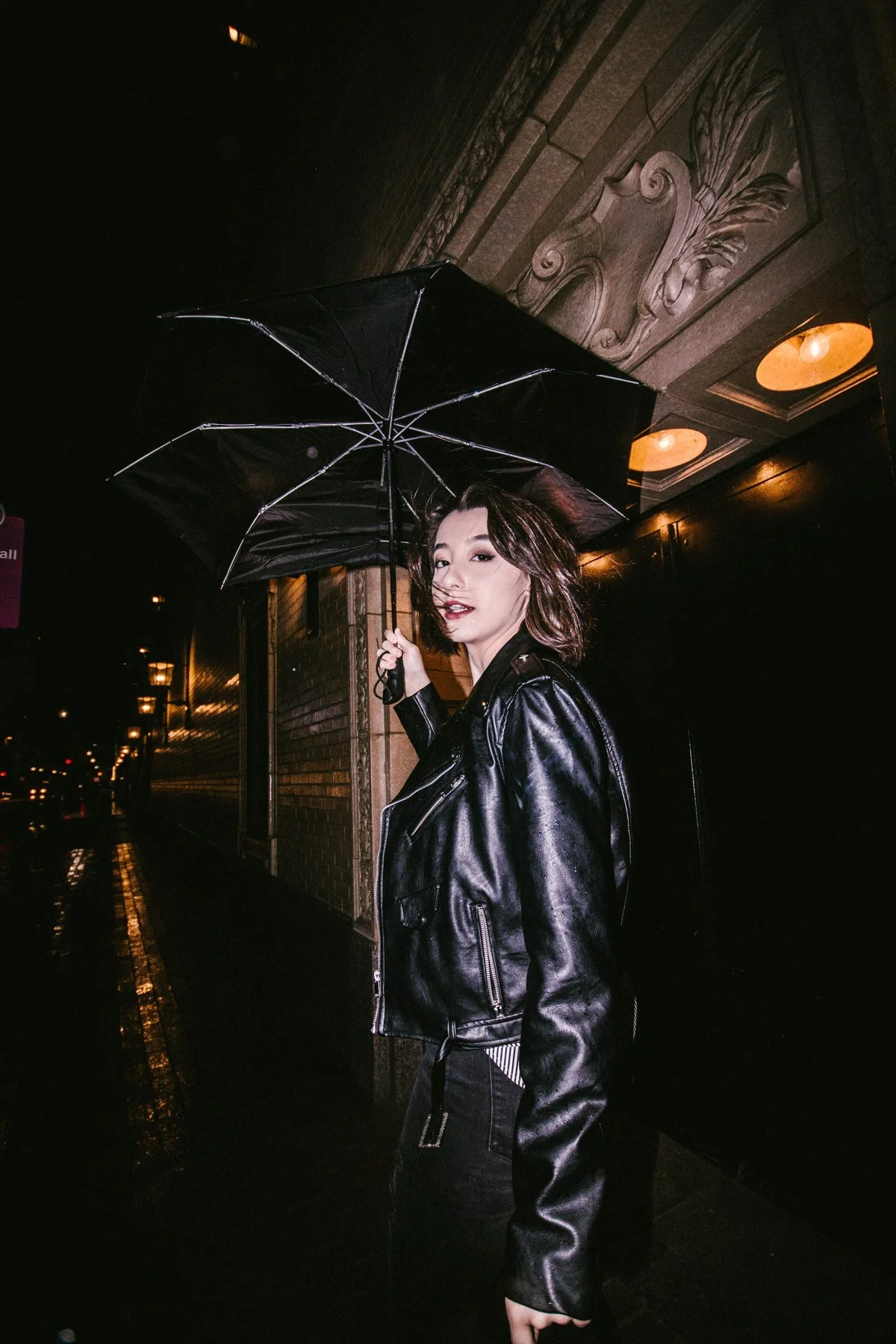
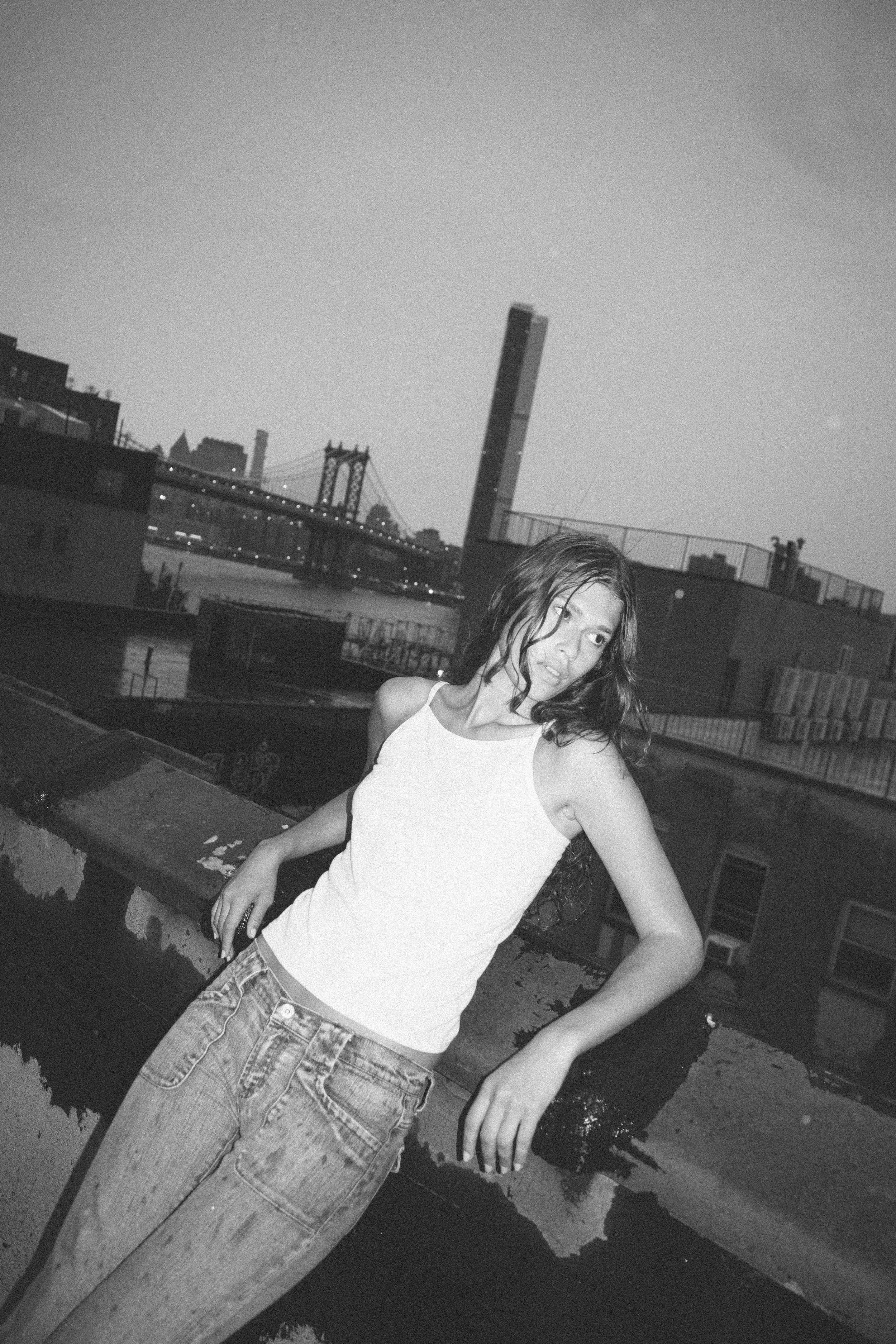
Flash can make the face feel immediate and create a clear separation from the background. Available light can preserve the color and softness of the setting. They can also be combined. A bright face against a darker city and a softly lit face surrounded by glowing signs are different creative decisions.
If you dislike the appearance of direct flash, say so when sharing references. If you love its candid energy, include an example. We can then plan a direction instead of discovering halfway through that the desired mood is different. Some interiors restrict lighting equipment, so any location-dependent approach must fit the permission actually available.
Keep the route short and the meeting point clear
At night, several promising locations can become a frustrating schedule if they are far apart. Choose a small area with a few usable variations rather than expecting a tour of the whole city. Confirm the meeting point, how you will get there, and how you plan to leave after the session.
If you want to include a bar, hotel, or other interior, arrange photography access with the venue in advance. Being a customer does not by itself answer whether an organized session is welcome. We should also account for other guests and staff. The interior photographs here are visual references, not a recommendation to arrive unannounced and recreate them.
Test the outfit against the intended mood
A dark outfit may become part of a silhouette, while a pale top can draw attention strongly under a small light source. Reflective fabric, jewelry, and glasses can be beautiful, but they also change how highlights appear. Try the outfit under a lamp or in a dim room to notice details you might miss in daylight.
Bring a comfortable layer for waiting or walking, and keep any change simple. The creative portrait wardrobe guide covers outfit planning in more detail. For a night session, the extra question is how much of the clothing needs to remain visible once the lighting becomes more selective.
Leave room for stillness as well as movement
Some night concepts work best with a brief pause, a small turn, or a seated position. Others benefit from a little movement or a less polished frame. You do not need to perform constantly. We can start with a comfortable posture and let the light guide the next variation.
For the brief, share the mood you want, any venue access you already have, whether flash is part of the idea, and where the photographs will be used. The editorial portrait ideas guide can help translate a reference into a visual direction. A thoughtful night session is built around a few workable lighting situations, leaving you space to settle into them.