
Planning an Album Cover Photoshoot in NYC
Have a sound that needs a visual world? Explore my work and session options. Tell me about the release, artwork format, and deadline so we can discuss the shoot.
An album-cover session begins with the world of the record. The photograph needs a strong idea, but it also has to survive a small thumbnail, a square crop and the decisions your artwork designer makes later.
Start with the record, then the photograph
Before choosing a location, describe the music in concrete terms. Is the project intimate, restless, spare, playful or theatrical? Which colors, objects or places connect to it? A short description and a few tracks are more useful starting points than a large collection of unrelated pictures. They help us decide what belongs in the frame.
My music work includes photographs for Avery Lynch's single Feed the Fire and Zack Keim's album Battery Lane. Those projects offer different approaches to connecting a portrait with a release. Explore the music portfolio for the broader work; the photographs below are session examples, not a claim that each was selected as final cover artwork.
Find one idea strong enough to vary
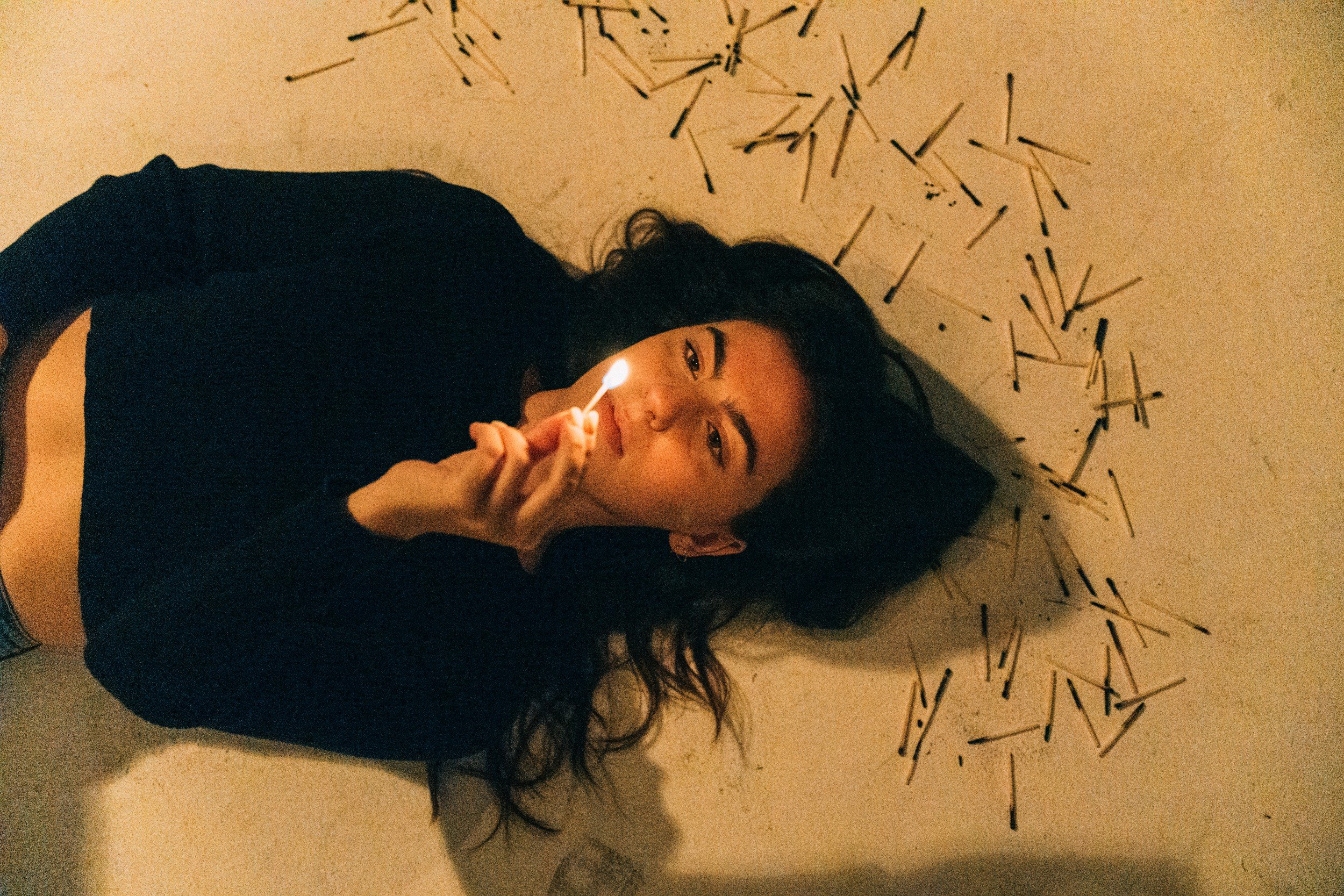
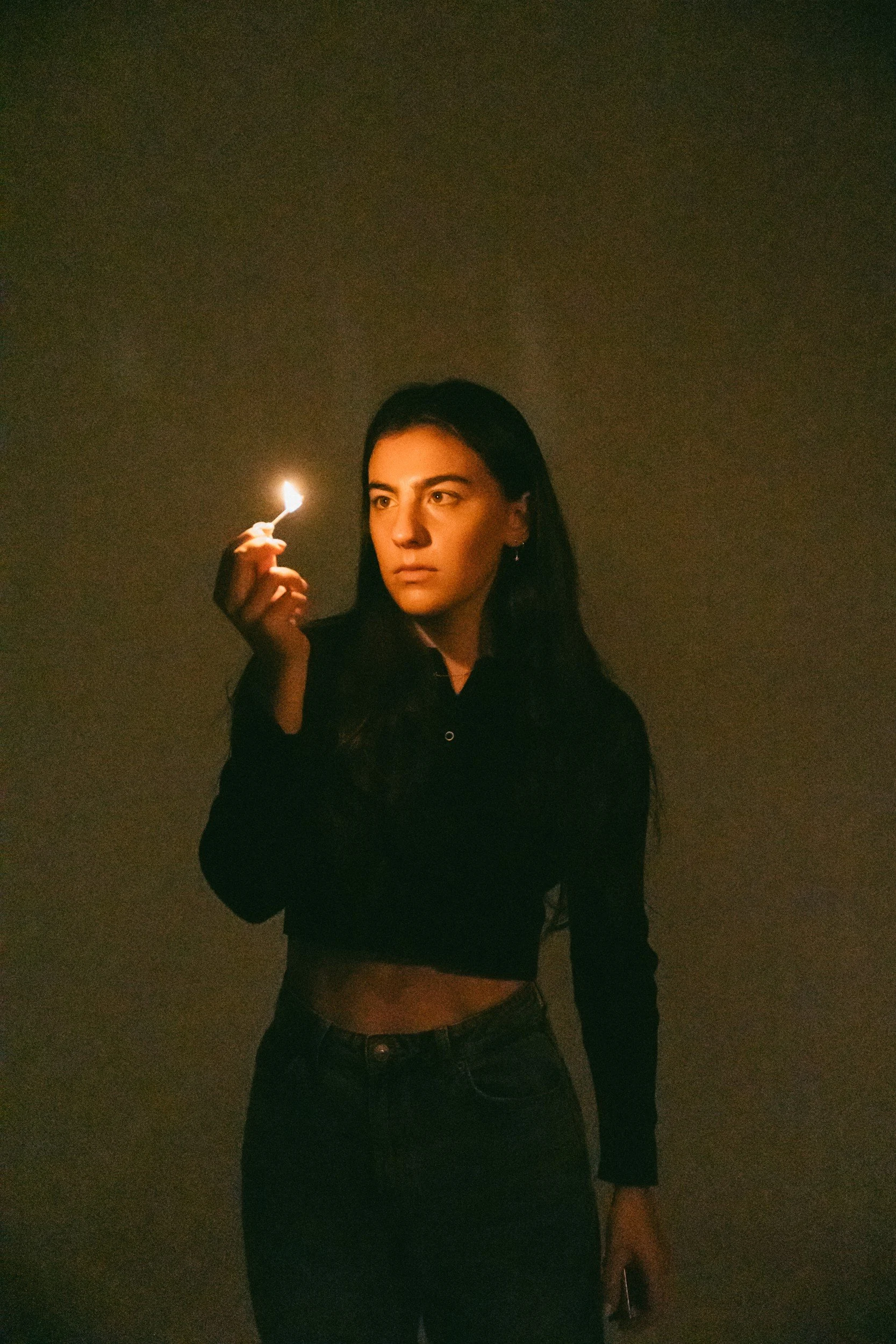
The matches around Avery create repetition, while the small flame becomes a point of attention. In a darker portrait from the session, the surrounding information falls away. The same central idea works at two distances. That is valuable during a cover shoot: we can explore a concept without relying on a single composition.
For your own project, write one sentence connecting the image to the music. If the explanation depends on several props, locations and costumes at once, simplify the first setup. Additional ideas can become supporting images. Any practical effect needs an appropriate plan for the space and people involved; a reference photograph is not an instruction to recreate its production conditions.

Photograph for the crop you actually need
A square cover and a tall portrait are different compositions. A photograph that works vertically may lose an important hand or instrument when cropped. We should consider the intended square while shooting, then make additional frames that allow a designer some flexibility.
Spotify currently specifies a 1:1 aspect ratio for cover artwork and advises against upscaling. Read its cover-art requirements alongside your distributor's instructions before preparing the final file. Print packaging introduces its own layout requirements, so a vinyl sleeve or booklet should be planned with the actual design template, not assumed from a streaming thumbnail.
Decide how much setting the album needs
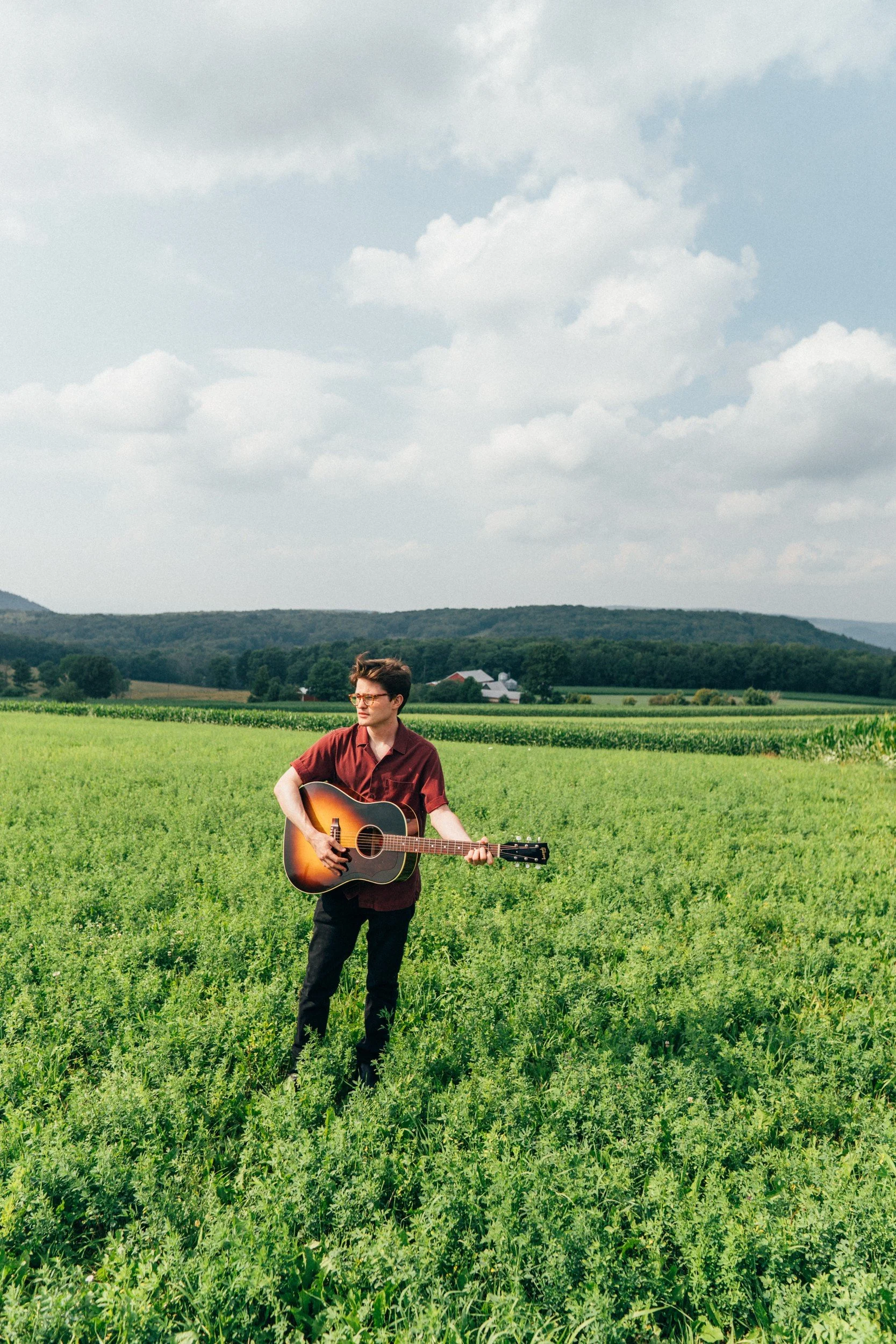
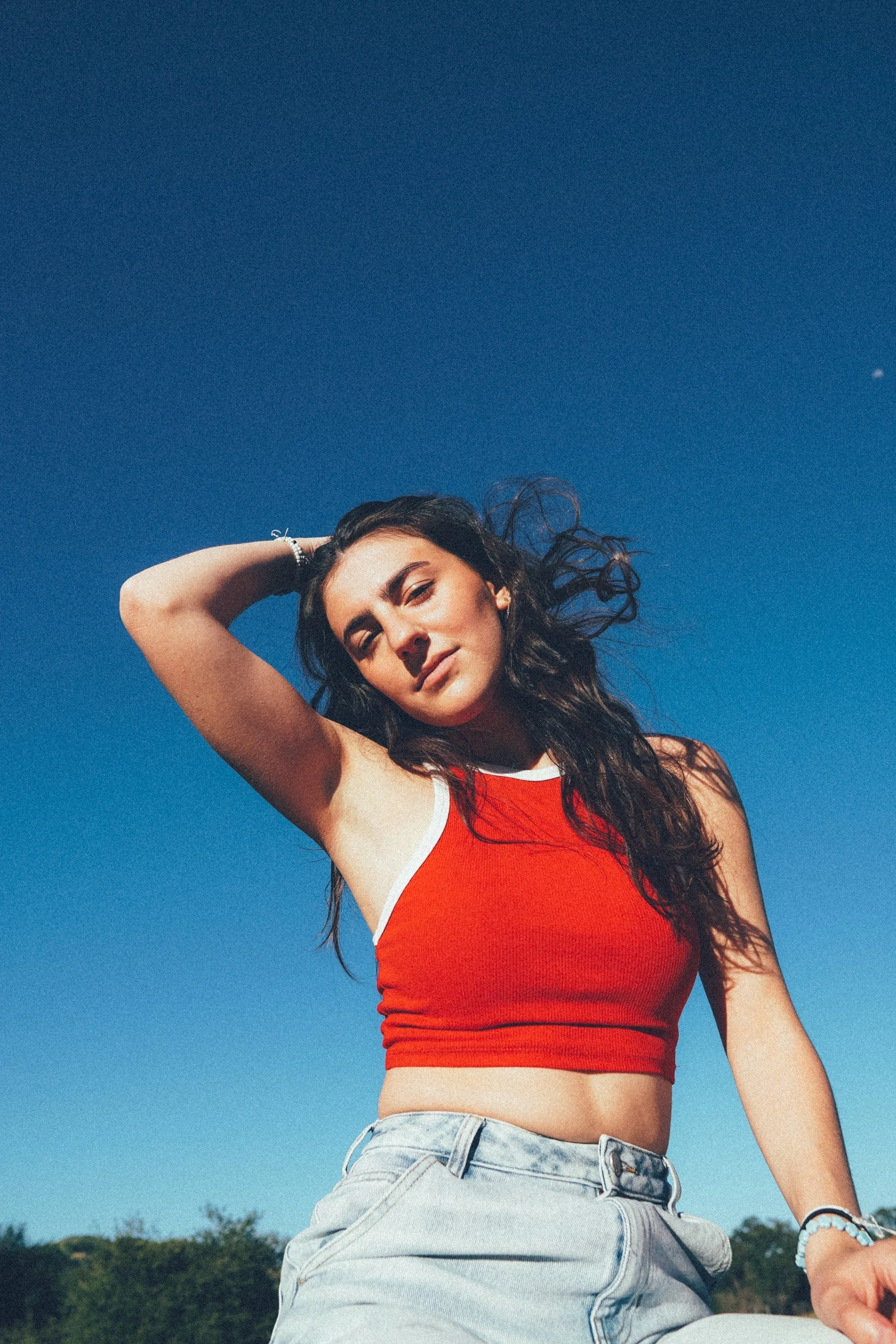
Zack's field portrait gives the sky and landscape a large role. The instrument keeps the musical connection visible, while the open space changes the pace. Avery's sky portrait reduces the setting to blue behind a red top. Those images come from different projects, but both show how a restrained background can leave a clear place for the artist. The useful question is which kind of space belongs to your record.
For a NYC album-cover session, the city can be obvious or almost absent. An interior, a patch of reflected light or a plain wall may fit better than a landmark. If a particular property matters to the concept, establish access before building the shoot around it. The examples from my archive demonstrate visual choices; they are not all presented as NYC locations.
Bring the designer into the conversation
If the artwork will include typography, discuss its likely position before the shoot. Space above a head is not necessarily usable space: windows, branches or high-contrast lines may make lettering difficult to read. Bring an early layout if one exists, and distinguish confirmed design decisions from experiments.
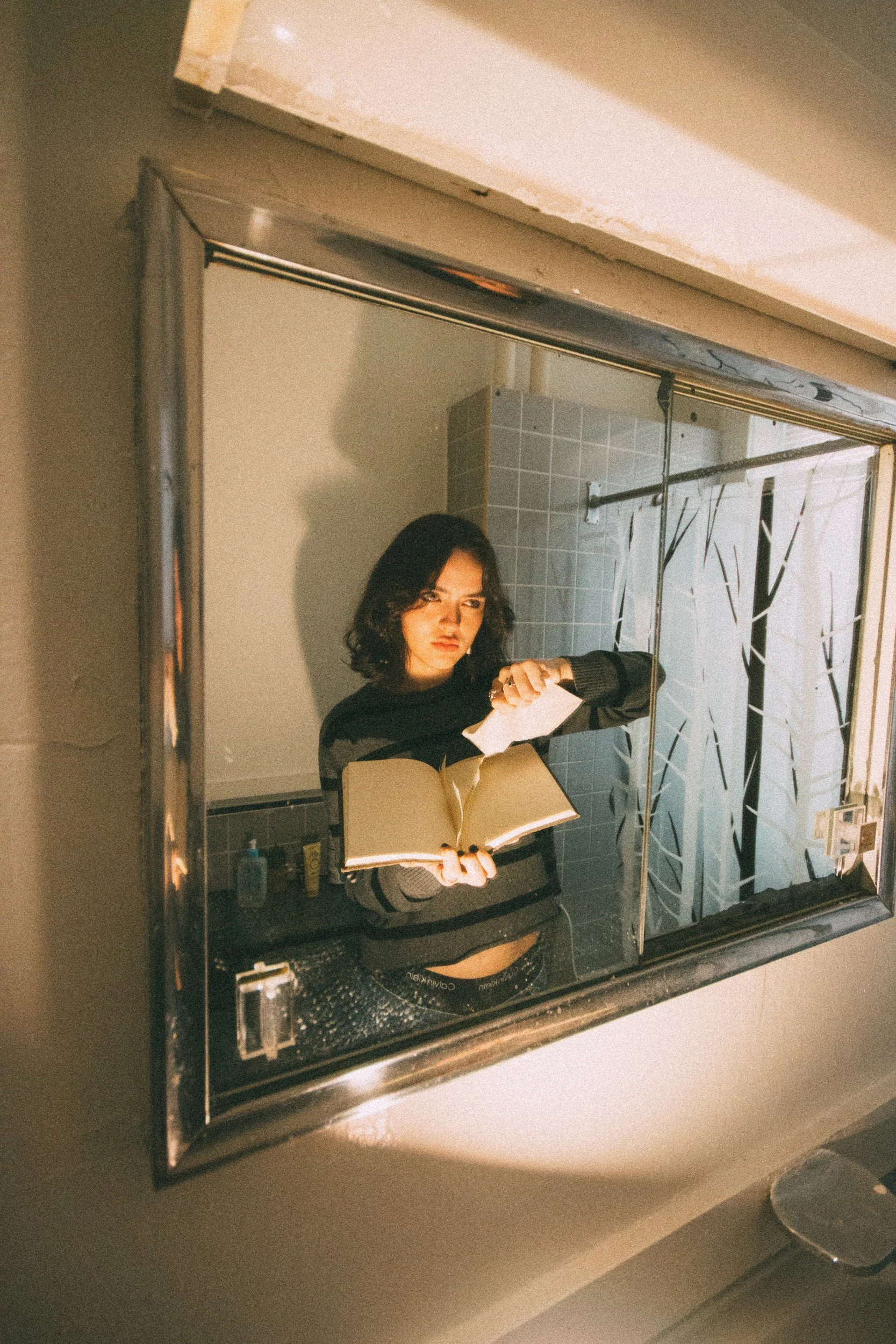
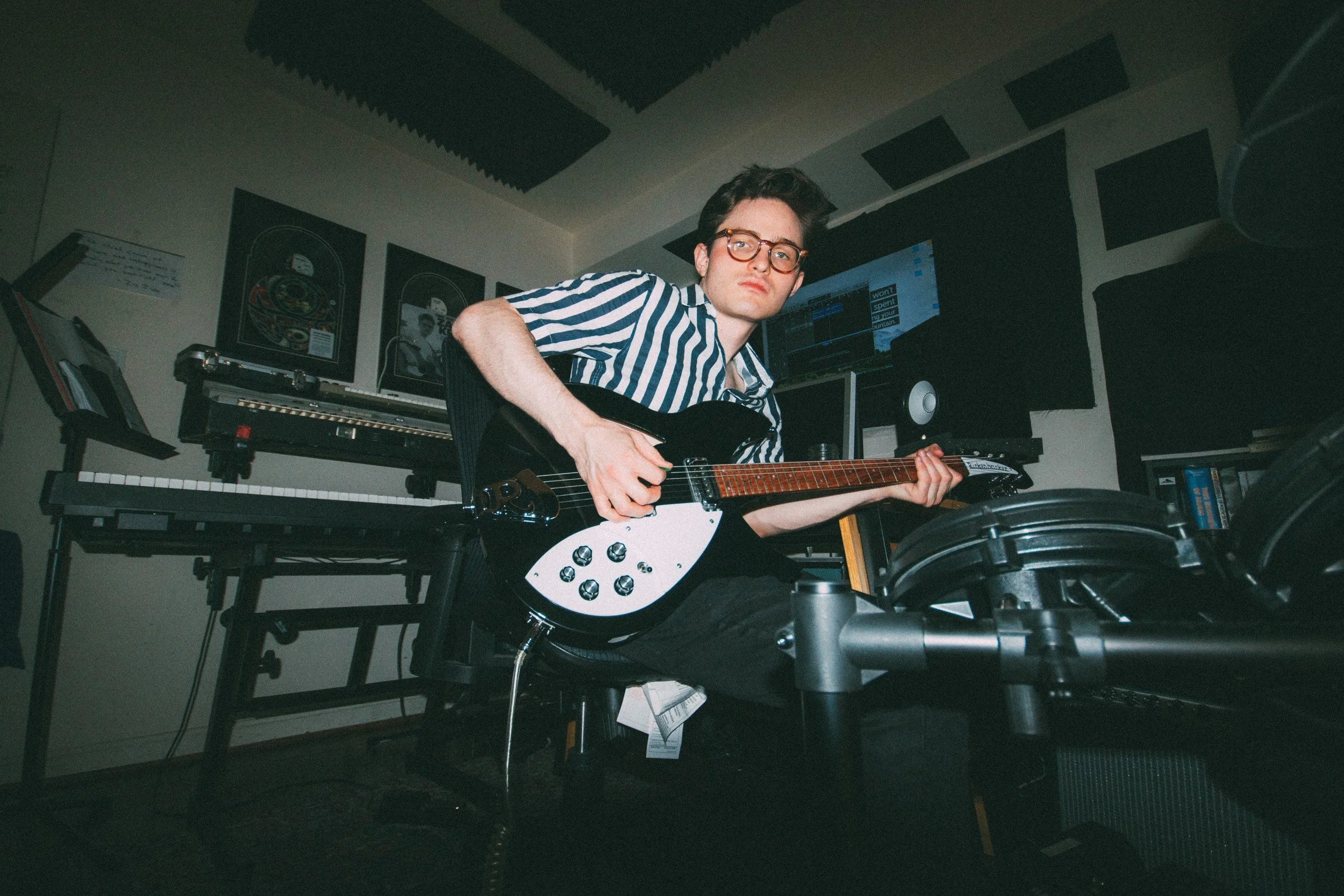
Jenna's notebook photographs offer another kind of visual structure. The action is carried by her hands and the paper, with the room contributing texture. A text-heavy artwork treatment could compete with those details. A designer may choose a quieter companion frame instead of forcing a title over the busiest image. A contextual portrait, such as Zack with his guitar in the studio, can also support the wider campaign without carrying the entire cover concept.
Plan beyond the cover without losing focus
The cover may be the priority, but a few related portraits can support interviews, artist pages and announcements. Reserve that work in the agreed shot list rather than adding a full campaign at the end. Ask which images should share the cover's styling and which need a clearer view of your face.
When enquiring, send the music, concept, intended release date, artwork deadline and planned digital or print uses. Identify who approves the final choice and whether a designer is involved. My photography brief guide helps organize those details; the artist portrait journal offers more examples of a connected visual sequence.