
Music Photography: Portraits for Singles, Albums & Artists
Planning photographs for your next release? Explore my work and session options. Share your music, release date, and where the images will appear.
Music photography gives a project a face, a setting, and a feeling before anyone presses play. These photographs from my work with musicians show how a small flame, a guitar, a notebook, or a change of expression can shape that first impression.
My work with musicians
I've photographed Avery Lynch for her single Feed the Fire, Zack Keim for his album Battery Lane, and Jenna Doe for music projects including Diary Entry. I've also photographed singer Devon Gabriella. These collaborations are part of my portrait work: photographs built around an artist, their presence, and the visual world around them.
Here, I'm sharing frames from six sessions with those four artists. Some are built around a clear object or setting; others depend on expression, color, or movement. Together, they show several ways to approach music photography, whether you're planning single artwork, an album photo session, or a fresh set of artist portraits.
You can also explore my music photography portfolio to see selected release artwork alongside these session photographs.
Avery Lynch: giving a single a visual theme
Listen to Avery Lynch's Feed the Fire on Apple Music.
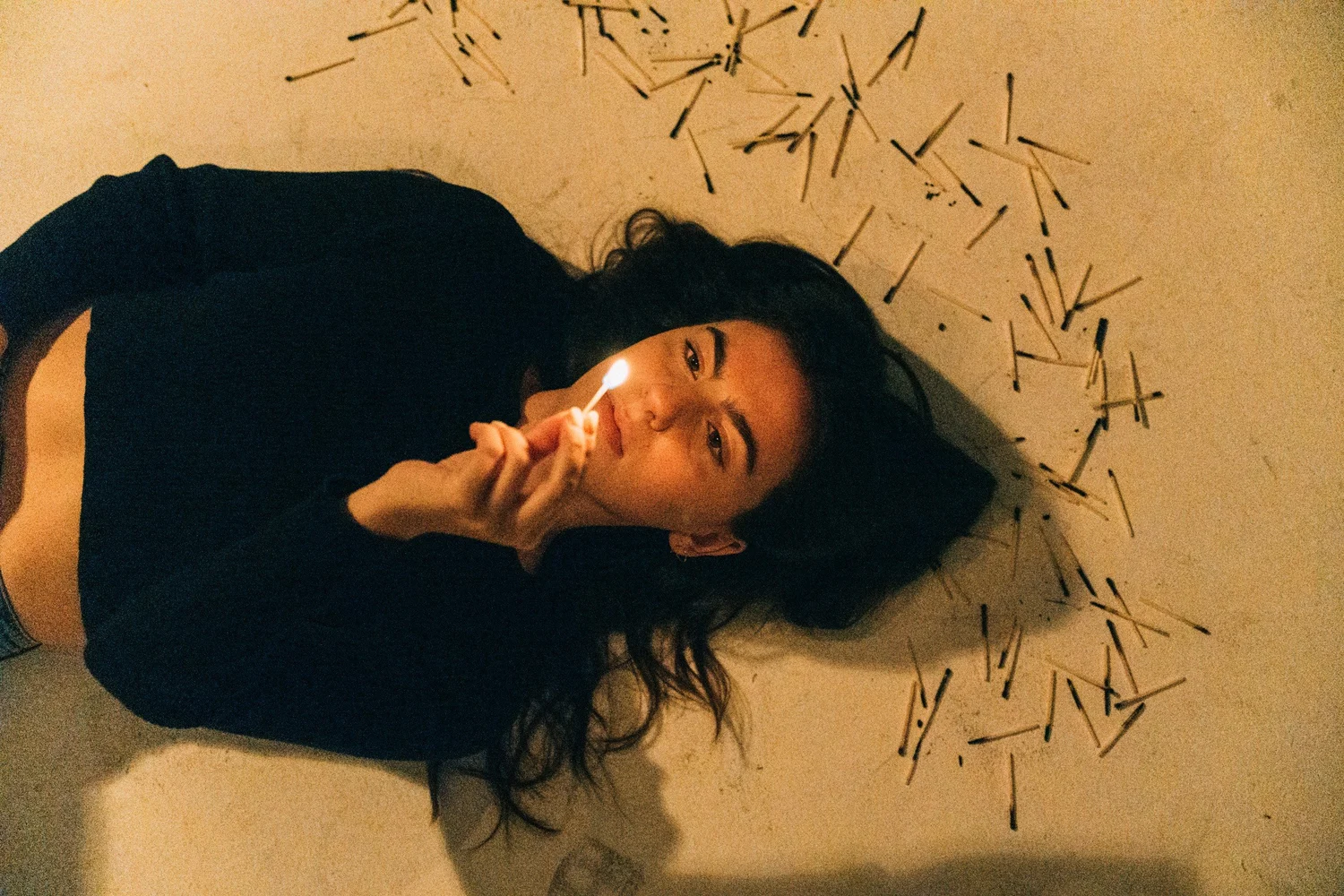
For Avery's Feed the Fire session, the matches give the photographs an immediately recognizable subject beyond the portrait itself. In the opening image, their scattered lines surround her head, while the flame sits close to her face. The warm background, dark clothes, and small bright point all belong to the same palette.
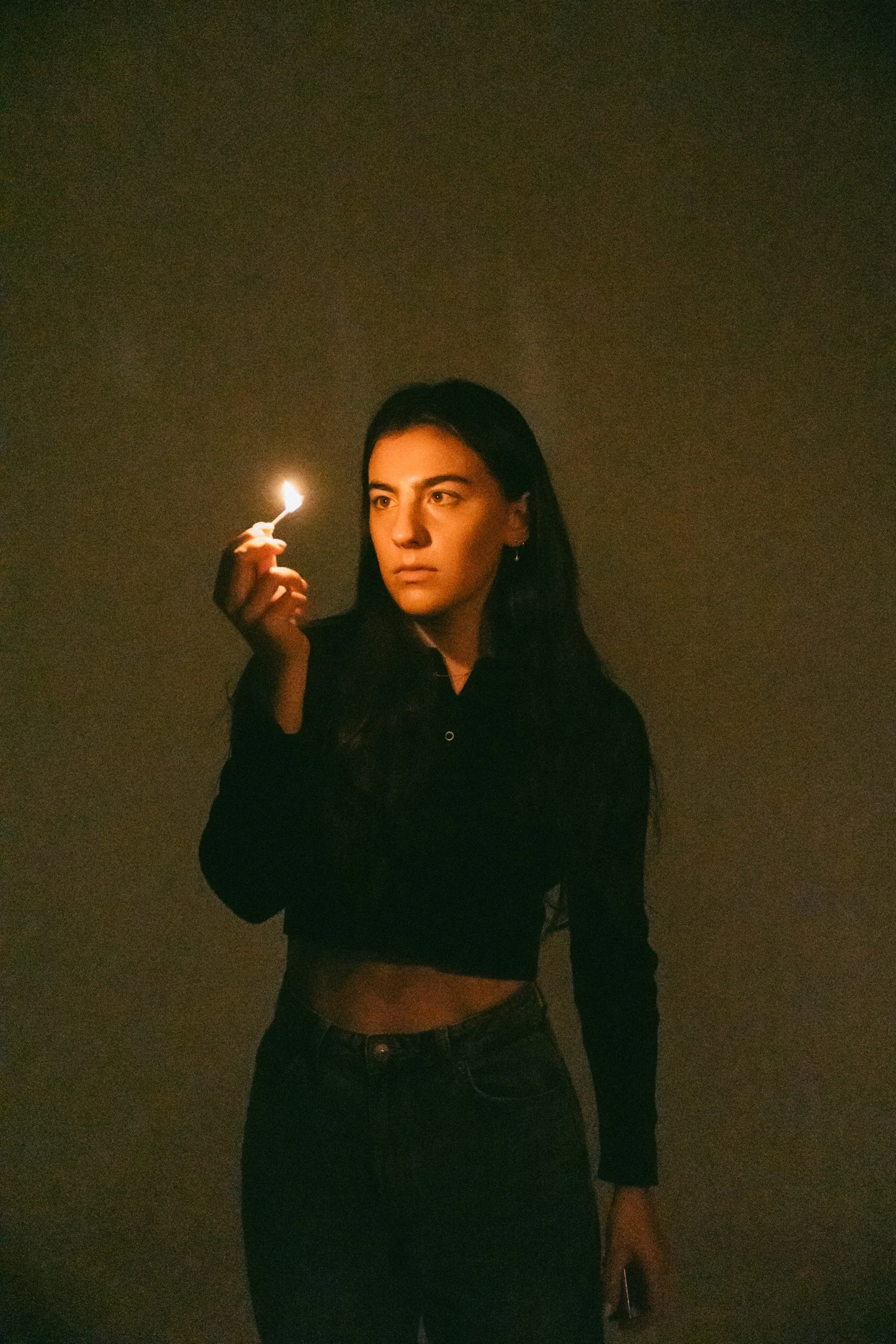
The second photograph changes the balance. There is less information around Avery, so the flame and her gaze take more of your attention. These are different compositions connected by one clear visual idea.
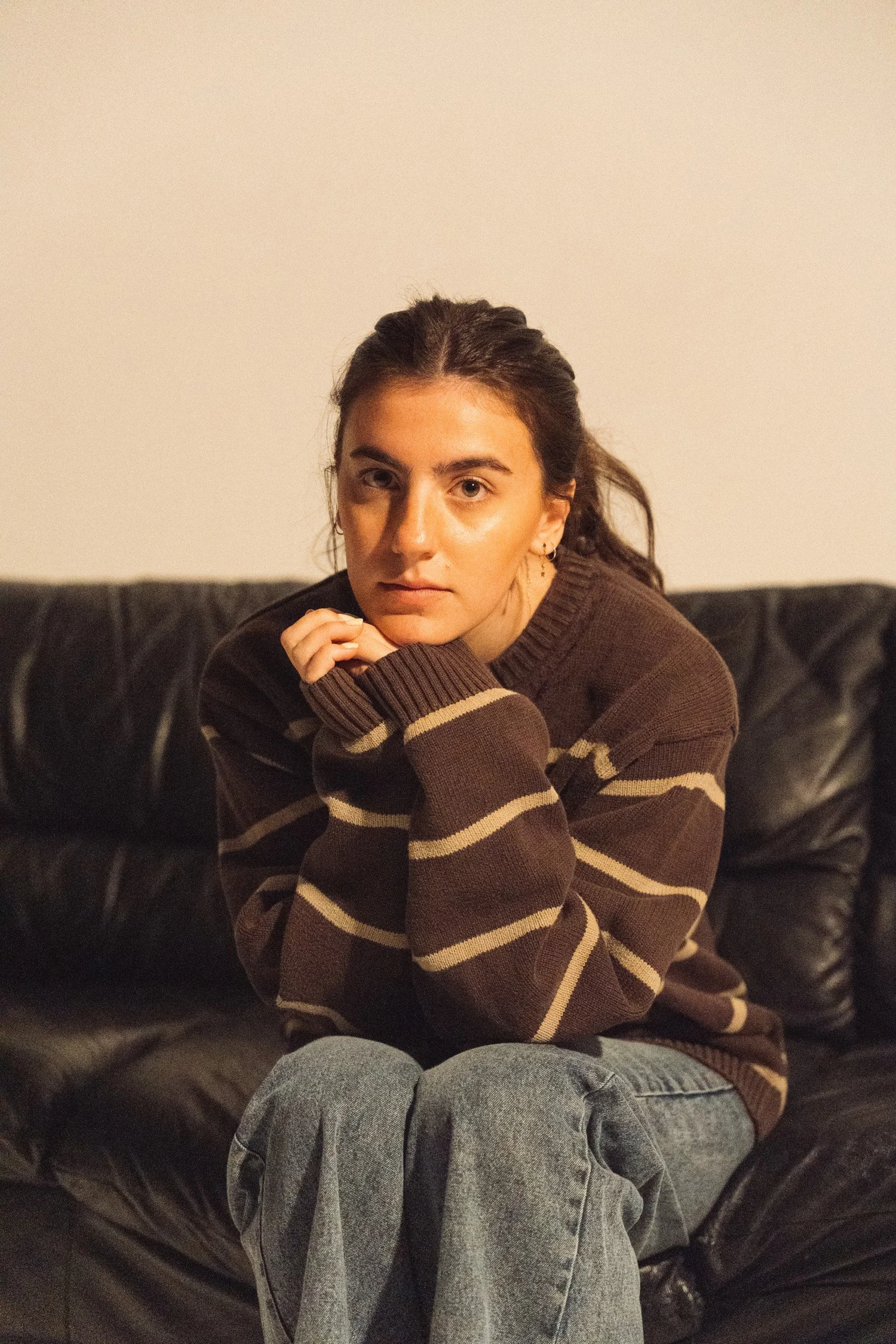
The couch portrait introduces a quieter option from that session. The striped sweater, folded hand, and direct eye contact carry the photograph without the central prop. I like having this kind of variation in an edit: a distinctive concept frame alongside a portrait that lets you spend more time with the person.
For your own single, start with a few visual decisions you can describe clearly. What color belongs to the project? Does it need an object, or would an expression say enough? A strong idea should leave room for several photographs, rather than relying on one pose.
Zack Keim: an album portrait can include an artist's surroundings
Listen to Zack Keim's Battery Lane on Bandcamp.
The photographs I made for Zack's album Battery Lane move between a room full of instruments, an open landscape, and nighttime light. In the studio portrait, the guitar is close to the camera. Keyboards and acoustic panels fill the edges, making the setting part of the picture.
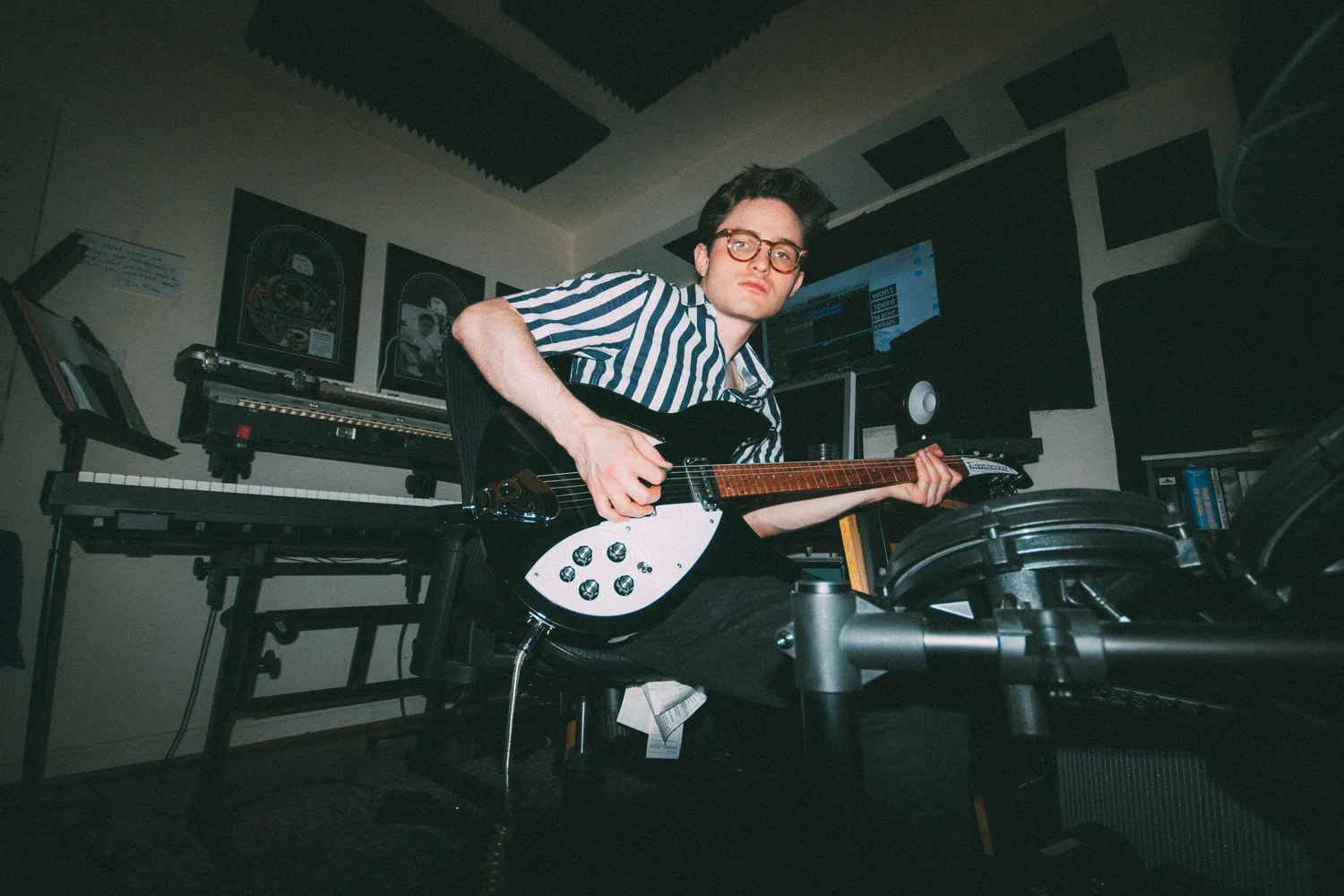
Compare that density with the field portrait. The guitar remains, but the space around Zack changes dramatically. The broad sky and low horizon slow the image down. In the nighttime frame, the illuminated shelter gives his face and instrument a much smaller area of light.
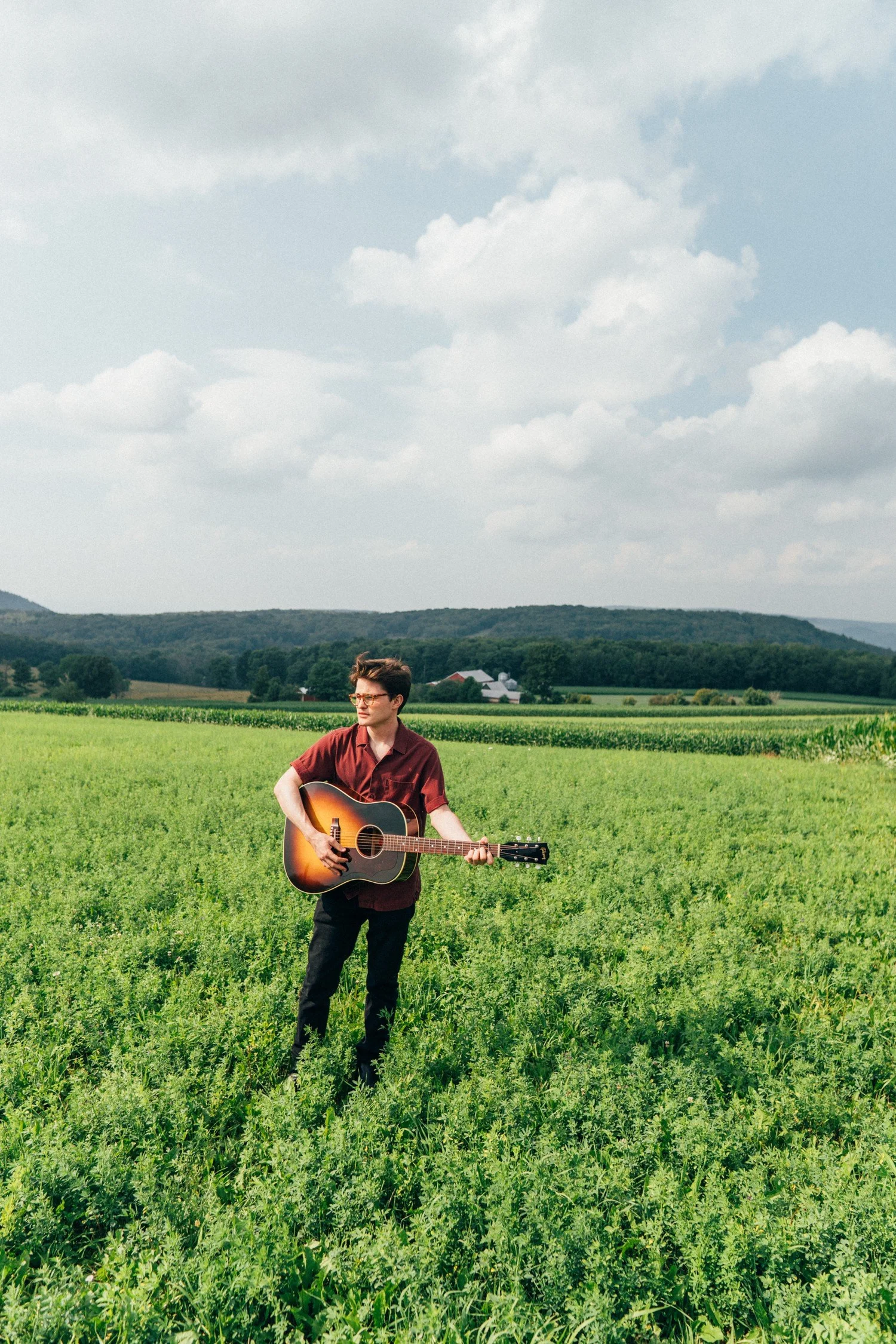
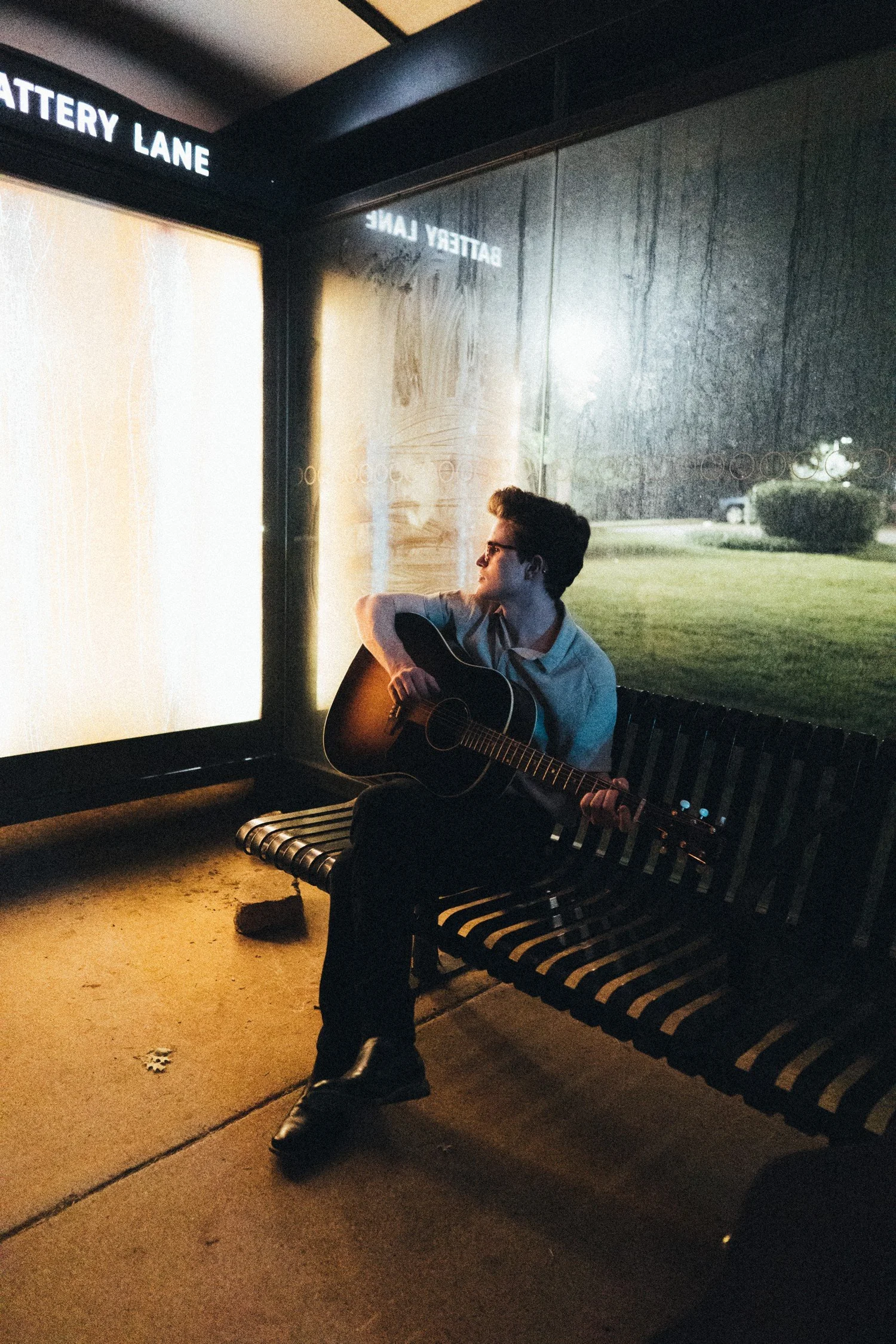
An album session can benefit from that range. A close portrait introduces the artist; a wider photograph adds setting; a different light gives the sequence another mood. The connection does not have to come from making every background identical.
When planning musician portraits, think about whether an instrument belongs in the photographs. It can provide context and a natural action for the hands. It should still feel like part of your life, rather than an object added only to announce that you make music.
Jenna Doe: objects, gestures, and a recurring visual story
Listen to Jenna Doe's Diary Entry on Apple Music.
My work with Jenna includes Diary Entry and other music projects. Across these sessions, I photographed both expressive portraits and scenes with recognizable everyday objects.
In the bedroom photograph, an open notebook and torn paper make the action specific. Jenna reaches toward the camera, and the close viewpoint brings her hands into the foreground. The patterned bed and decorated wall give the portrait a lived-in setting.
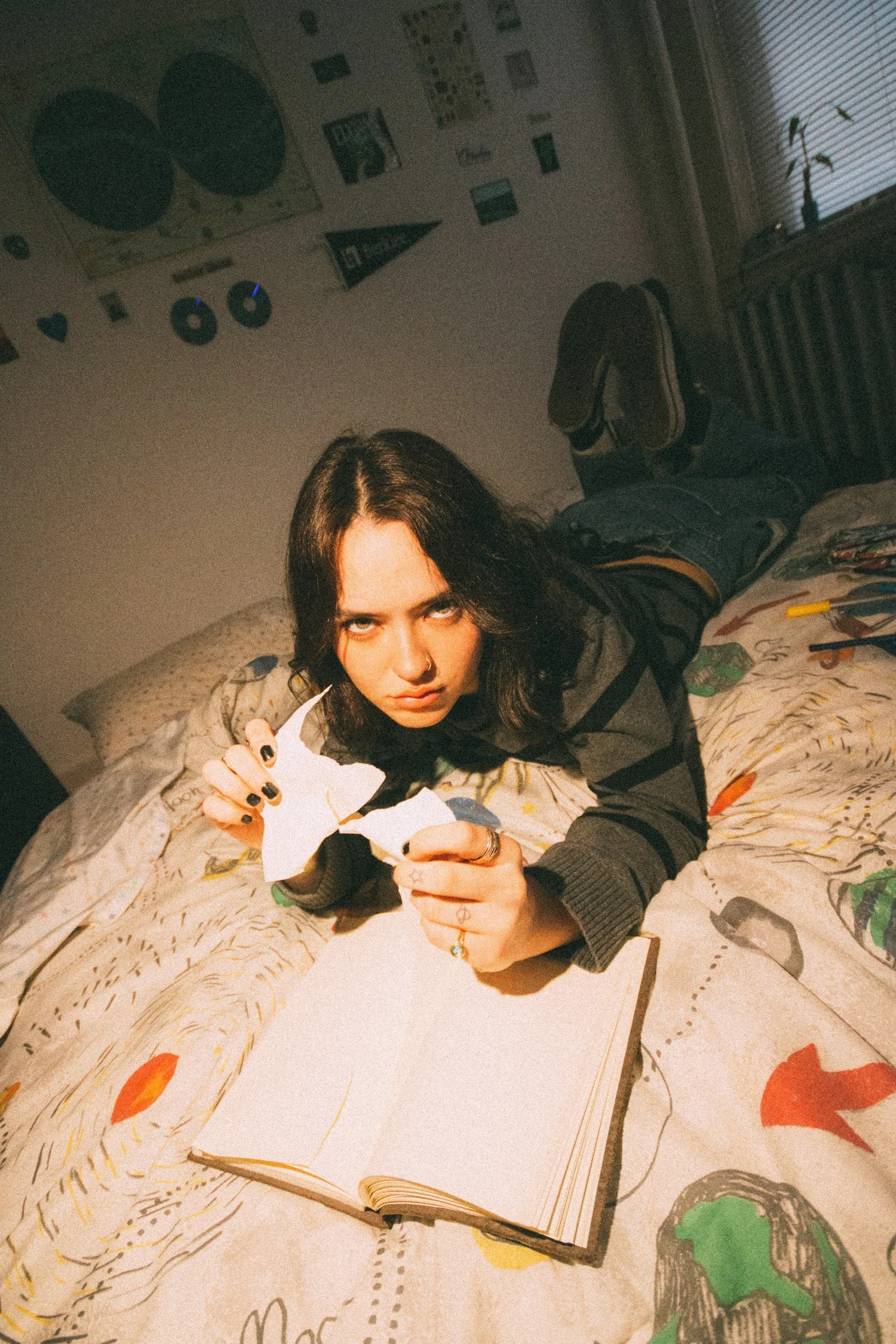

The mirror photograph keeps the notebook and paper but changes how we see the scene. Repeating an object can connect a set of photographs while letting the framing evolve. That is useful when you want a sequence to feel related without publishing several nearly identical frames.
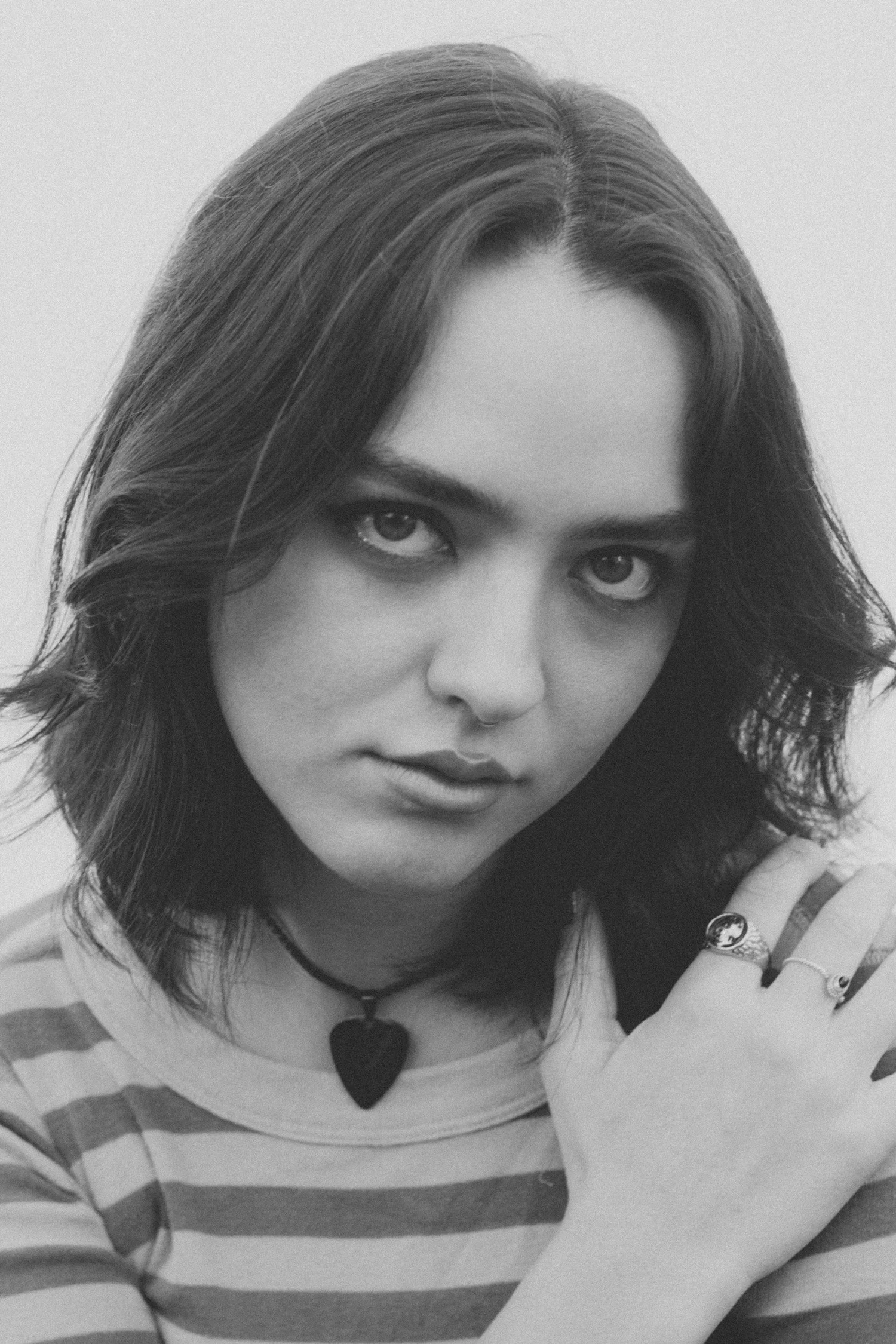

Other photographs from my work with Jenna take a different approach. The black-and-white close-up centers her expression; the shop portrait brings green stripes and rows of colorful bottles into the composition. One simplifies the frame. The other uses its surroundings.
For an artist shoot, a familiar room or ordinary errand can offer more character than a generic backdrop. Choose a setting you can use comfortably, then pay attention to the details that actually contribute to the photograph.
Devon Gabriella: make room for more than one expression
Listen to Devon Gabriella on Apple Music.
Devon's photographs show how much the feeling of a session can change without a complicated set. In the moving portrait, her hair travels across the frame, her hands are lifted, and the tilted view adds energy. The quieter tree portrait gives her face a calmer place in the composition.
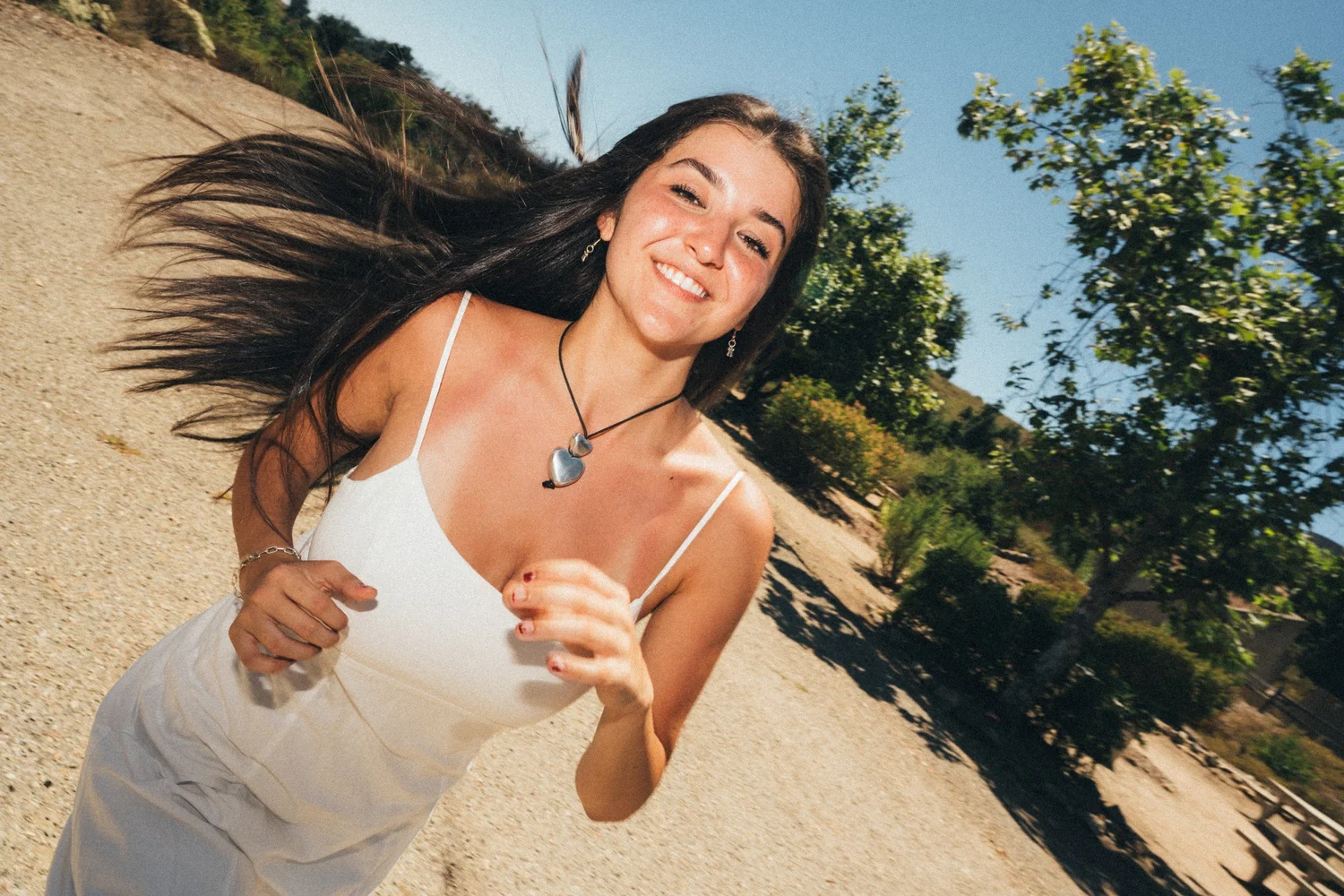
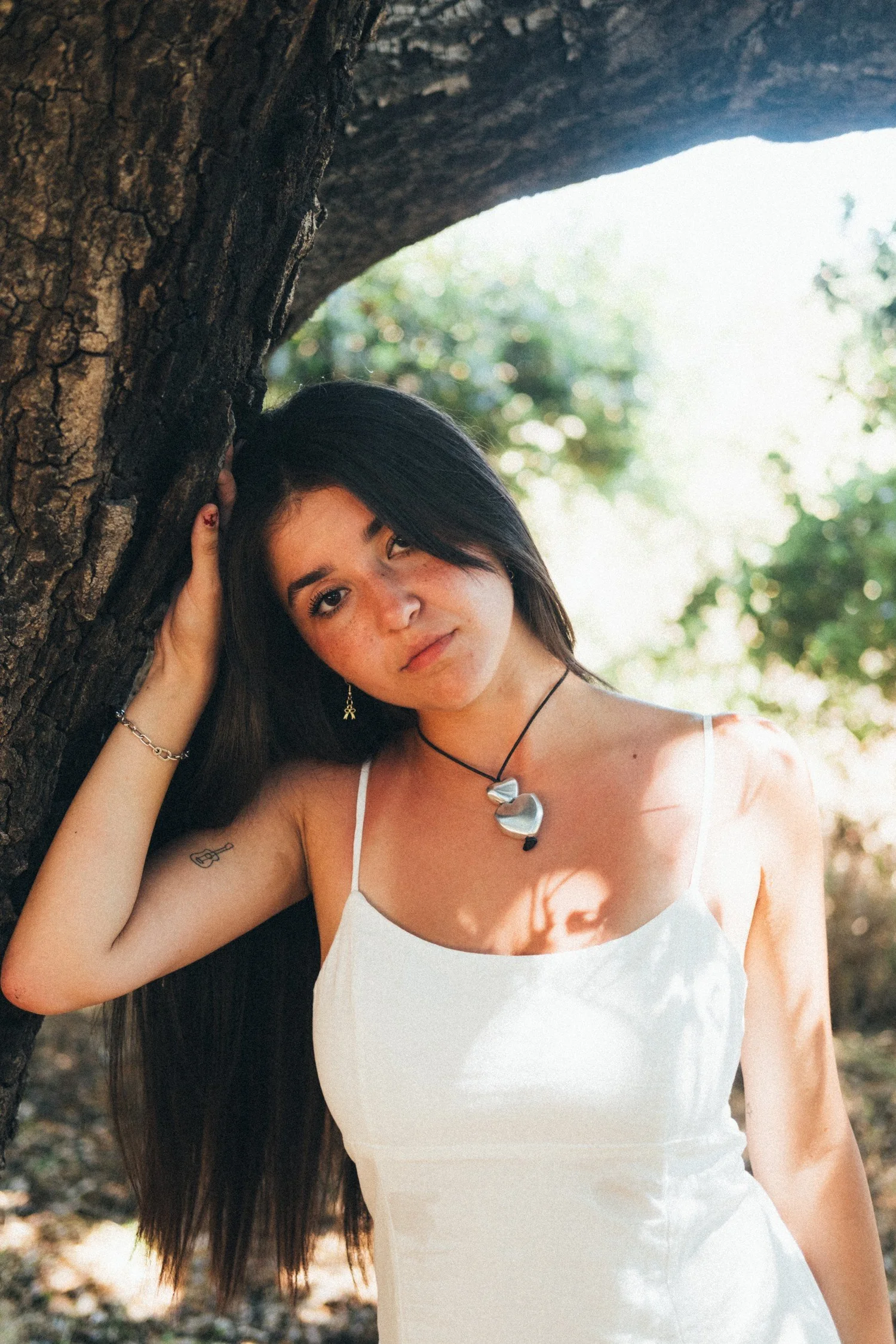
Both belong in a conversation about artist portraits. You may want one image that feels immediately open and another that leaves more room for interpretation. I look at that balance when building a sequence: constant intensity can become repetitive, just as a whole set of restrained expressions can feel too uniform.
Try describing the range you want before your shoot. “One direct portrait, something playful, and something quieter” gives us more to work with than a long list of poses.
A new session can reveal another side of the same artist
These earlier portraits of Avery have a very different palette from the Feed the Fire photographs. Green grass, blue sky, red fabric, and an outstretched hand change the feeling while keeping her presence at the center.
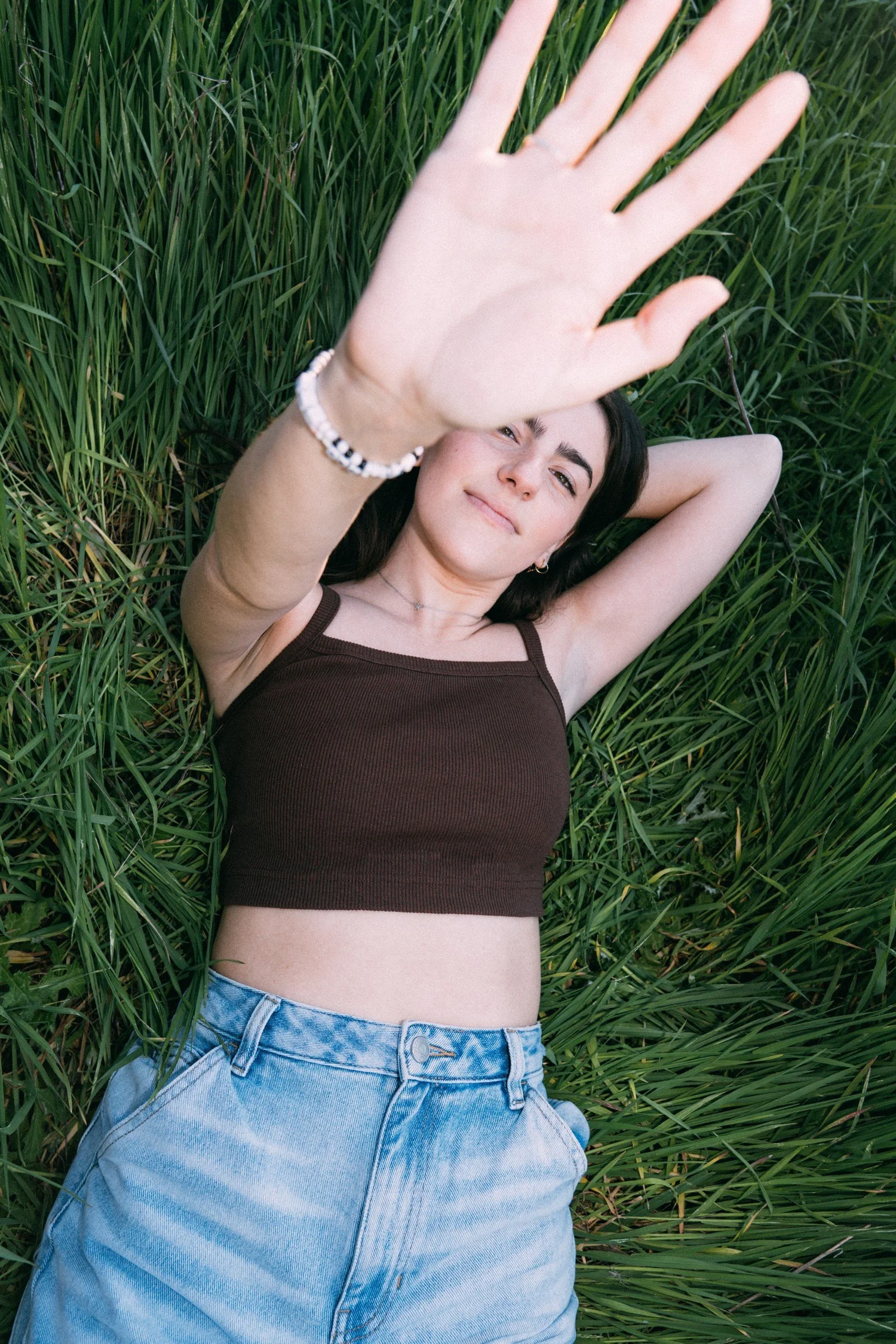
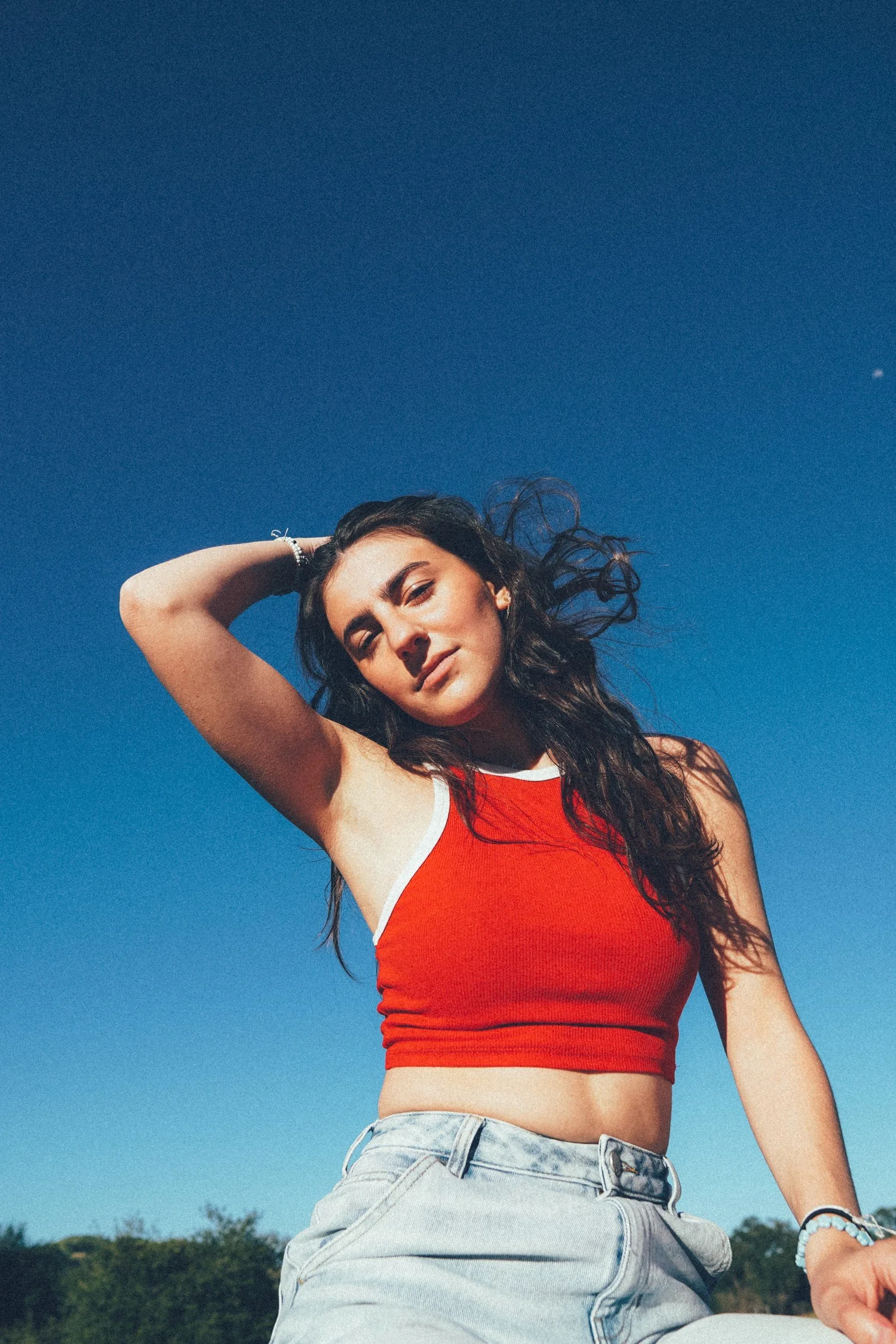
An artist's photographs do not need to freeze one look forever. A release can have a specific visual direction, while a broader portrait session explores other expressions and settings. Choosing what belongs together matters more than forcing every photograph into the same treatment.
Planning your music photography session
Before we photograph, it helps to know what you need the images to do. Bring the project context and any existing visual references, along with a short list of intended uses. A square artwork layout, a vertical promotional post, and a wide website banner can need different framing.
We can discuss close portraits, environmental frames, room for typography, and which visual ideas deserve their own setup. If you're still narrowing the direction, my portrait session guide covers preparation, and my guide to choosing final portrait photos explains how to build a varied edit.
For a city-based direction, see my NYC street photography guide for examples of using backgrounds, light, and gesture. The music photographs here come from different sessions and settings; your own NYC session can take its direction from your project.
I'm based in NYC and photograph artists as part of my portrait work. Tell me about your music, the photographs you need, and the feeling you're looking for, and we can start planning.