
Black-and-White Portrait Photography: Light, Shape & Expression
Without color, small choices become easier to see: the edge of a shadow, the shape of a gesture, the space around a face. These portraits show what makes black and white work.
What remains when you take color out of a portrait? Light, shape, expression, and the space around a person become especially important. These photographs show how I think about black and white, and what makes it useful for a particular image.
Look at what happens when color is absent
Black-and-white portrait photography brings light, shape, texture, and expression into a different relationship.
That change can strengthen a photograph, but it can also remove information that made the color version work. I judge monochrome as a choice for a particular image. These ten photographs from my portrait work show what I look for: useful separation, deliberate space, expressive faces, and a reason for the treatment.
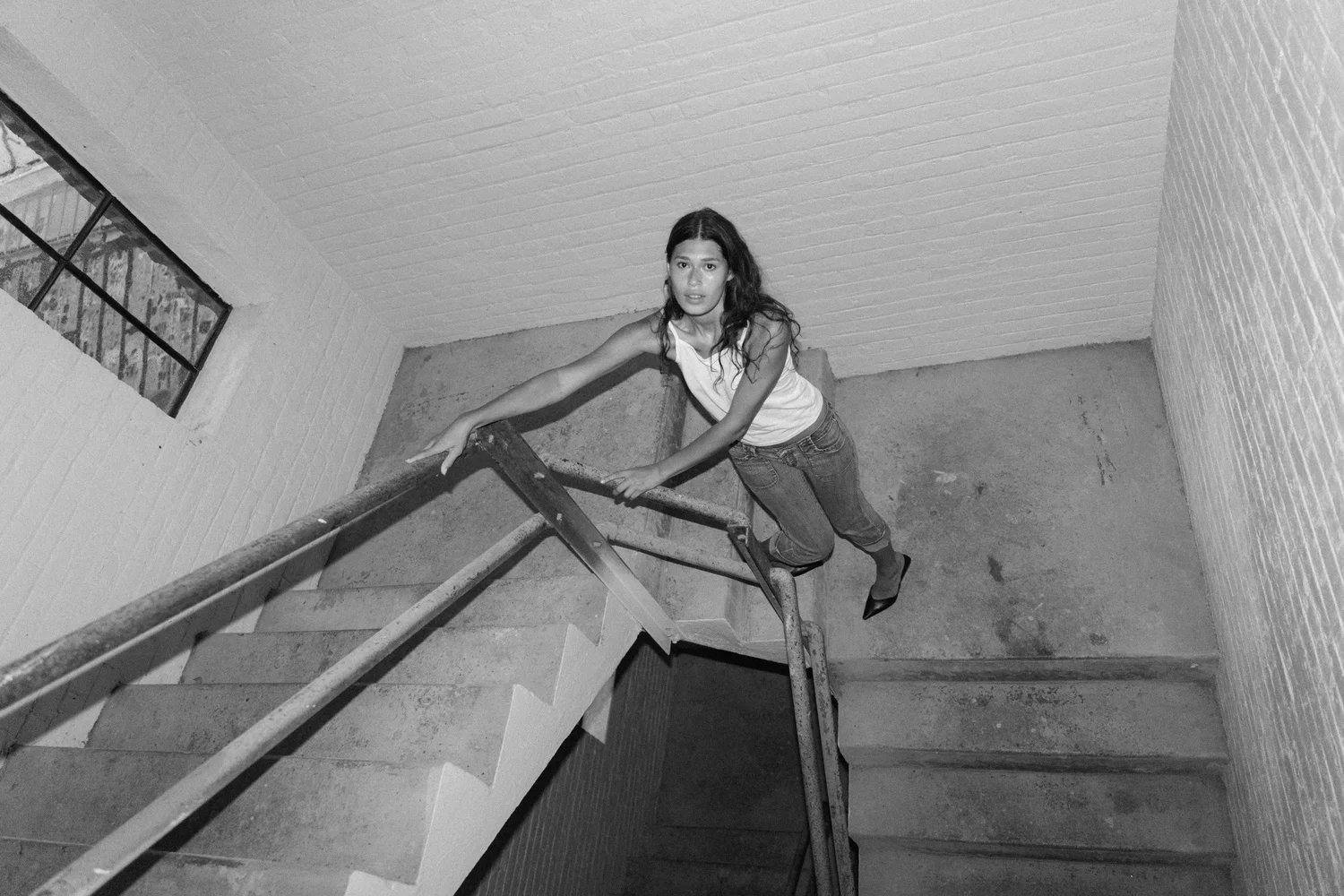
In Tara's staircase portrait, the pale walls and dark railings make the structure clear. The diagonal lines lead through the frame toward her. There is plenty to read in the image before color enters the conversation.
Watch the relationship between the face and the background
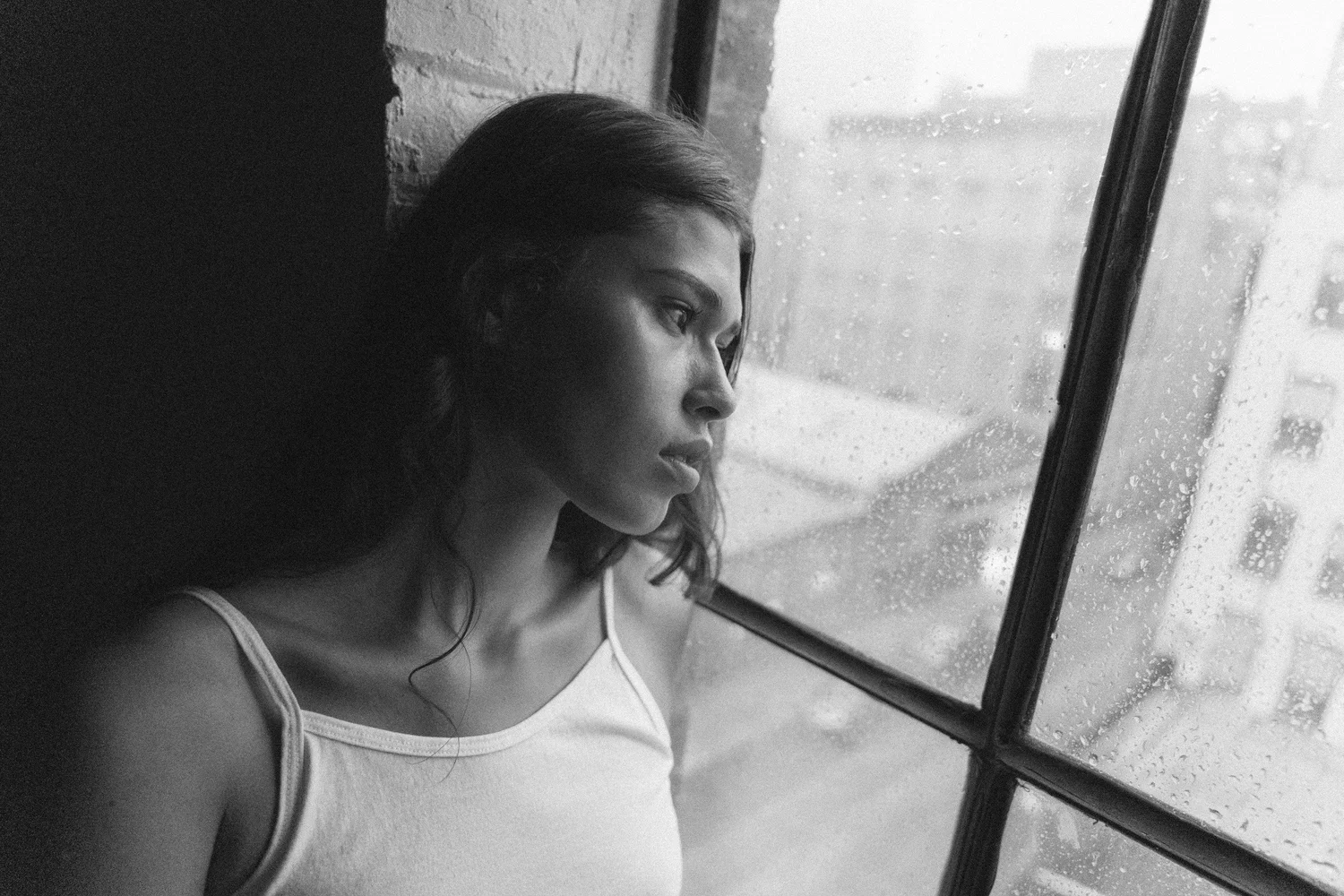
The window portraits of Tara and Amanda use brightness in different ways. Tara's white top and the light across her face separate her from the darker room. The window remains visible, but her profile gives the photograph its direction.
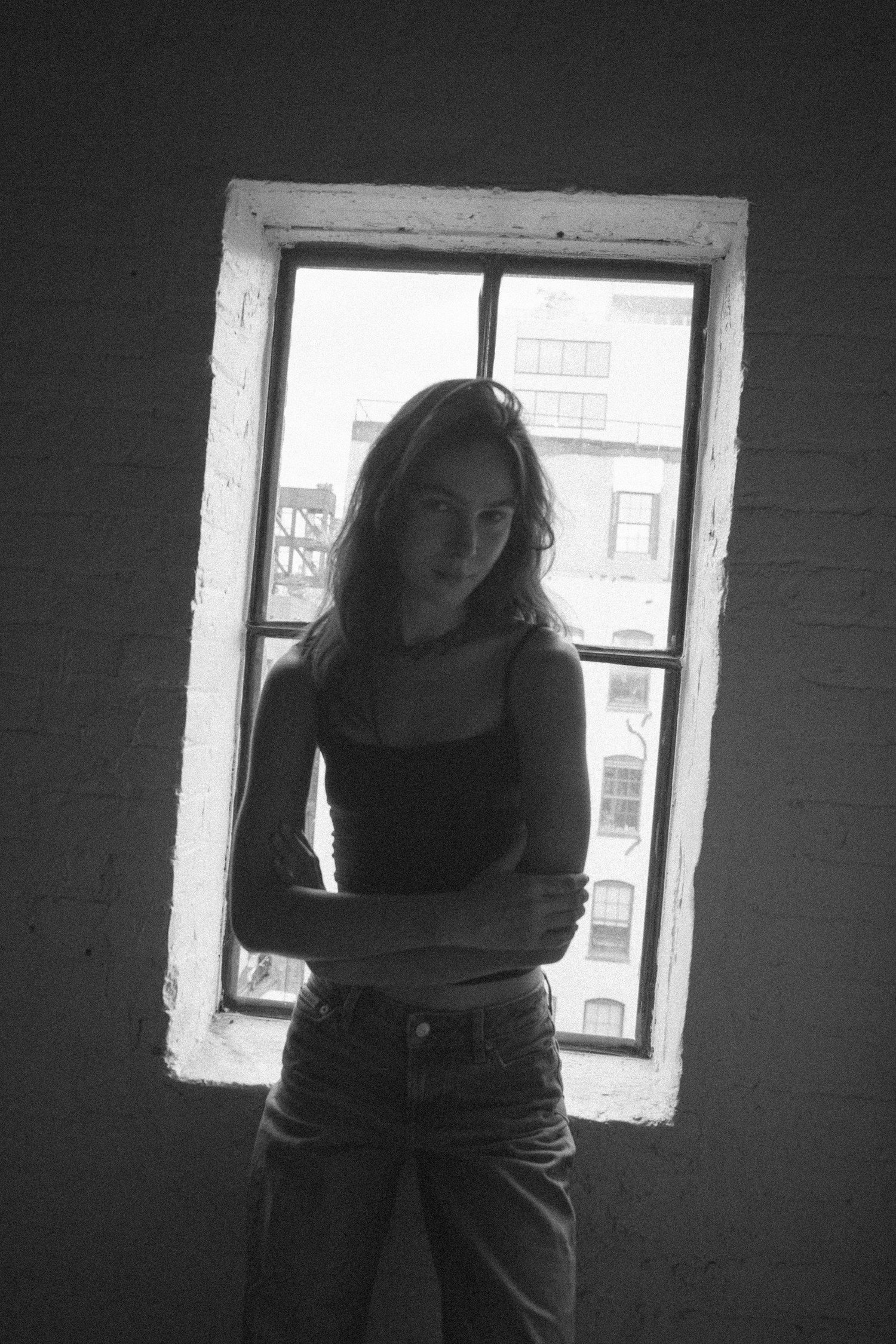
Amanda stands in front of a bright window, so the figure is much darker than the rectangle behind her. The picture depends more on her outline, folded arms, and position in that frame. It asks you to spend time with shape rather than expecting every facial detail to be equally bright.
Neither approach is a rule for flattering portraits. The choice changes the mood and the information available to the viewer. When preparing a session, it helps to describe whether you want a clear, open face or are also interested in deeper shadow and a more restrained reveal.
Preserve the details that make an expression specific
A close crop puts pressure on small details. In Tara's portrait, the angle of her eyes and the loose strands of hair are important. The bright circles behind her add a softer texture, but they do not replace the face as the main subject.
Johnny's close portrait has a different expression and a gently graded background. The detail around her eyes and hair helps the photograph feel particular to that moment.


A strong black-and-white edit does not require pushing every dark area to black or every highlight to white. Too much contrast can lose the very details that carry a person's expression. I look for enough separation to guide the eye while keeping useful detail in the face.
Decide how much of the setting belongs in the portrait
In Johnny's bridge portrait, the background remains recognizable but becomes a set of darker shapes beneath a broad sky. Light on her face gives the eye a reason to return to her, even with a strong landmark in the frame.
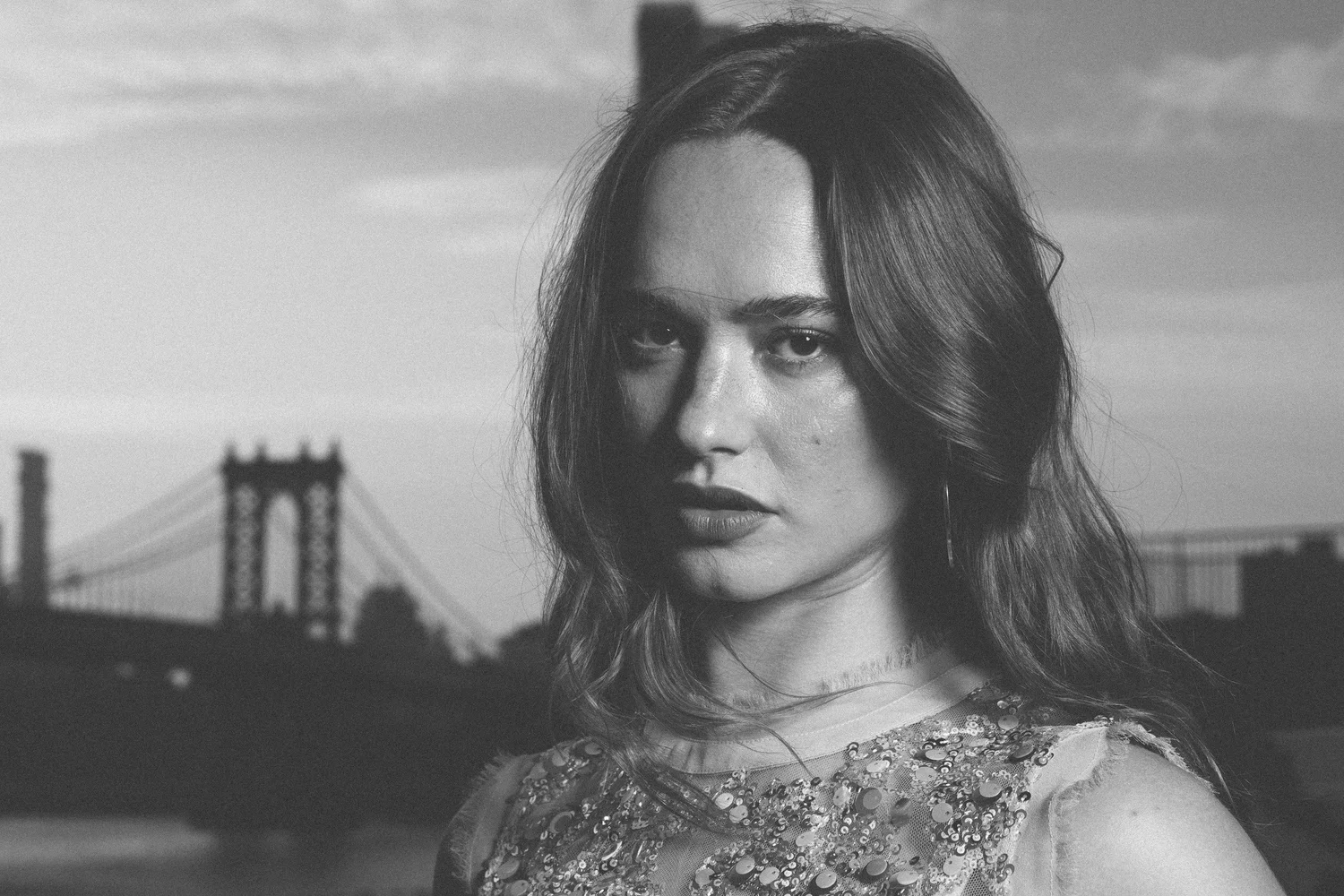
An environmental portrait can still work in black and white when the surroundings contribute scale or structure. The question is whether the background helps the photograph. A familiar place alone does not guarantee a useful composition.
This is also where color may deserve to stay. If a particular outfit, painted wall, or color contrast is central to the image, removing it may weaken the relationship. My editorial portrait ideas include examples where styling and color do substantial work.
Give empty space a purpose
Amanda's sky portrait places her face low in the frame. The large light area above her creates a very different feeling from the tightly cropped faces earlier in this article. A small airplane gives that space a secondary point of interest.

Empty space is still part of a composition. It can suggest openness, change the scale of a person, or simply let the eye pause. Cropping close is not automatically stronger. Before trimming a photograph, consider whether the surrounding space is part of what made you respond to it.
Notice where texture helps and where it competes
Johnny's brick-wall portrait includes several distinct surfaces: masonry, glass, fabric, and skin. Her light top separates from the building, and her raised arm creates a line that belongs with the architecture around her.
Marley's waterfront photograph introduces a different collection of textures. The pale skirt, darker denim, rippled water, and straight metal railing each behave differently in monochrome.
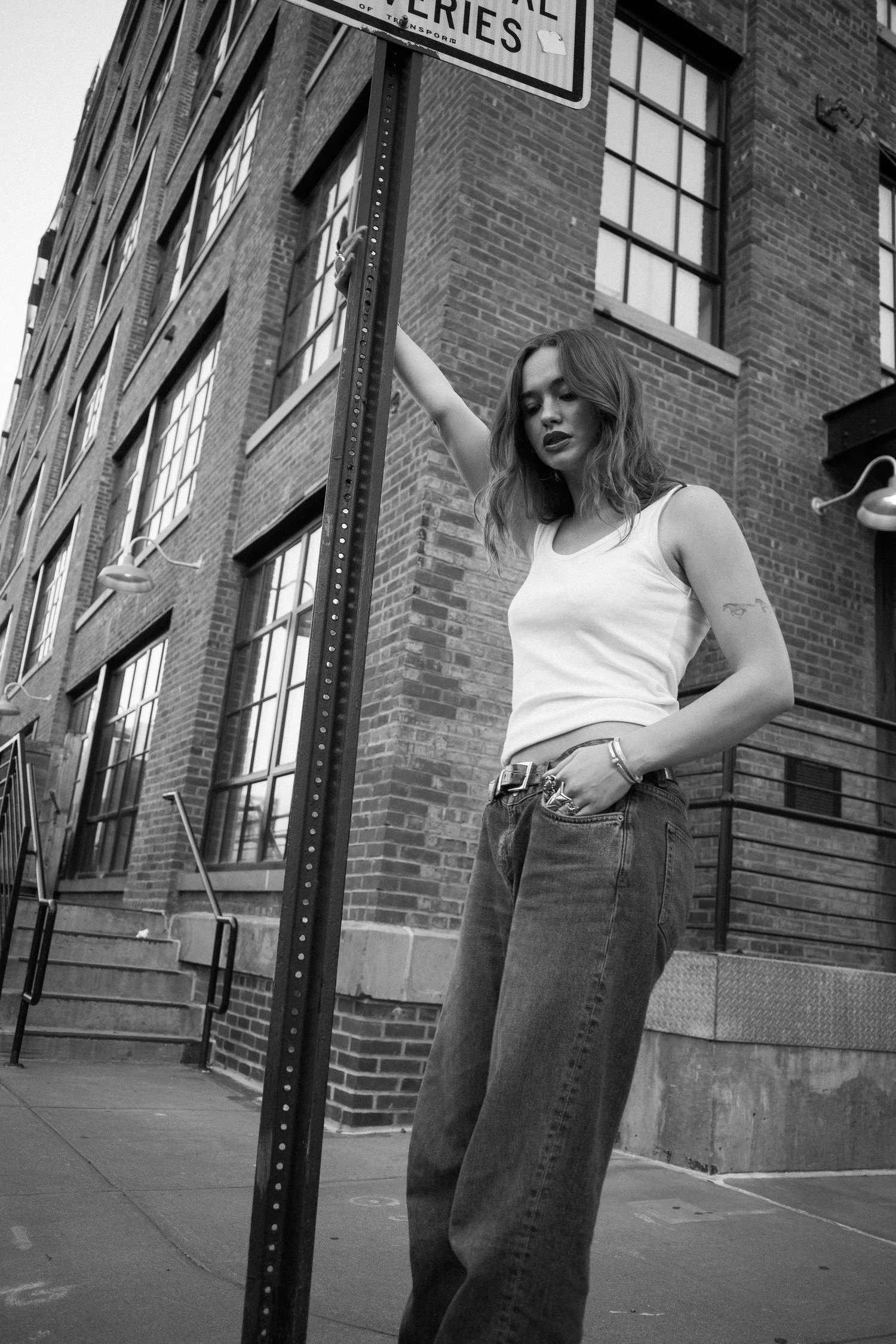
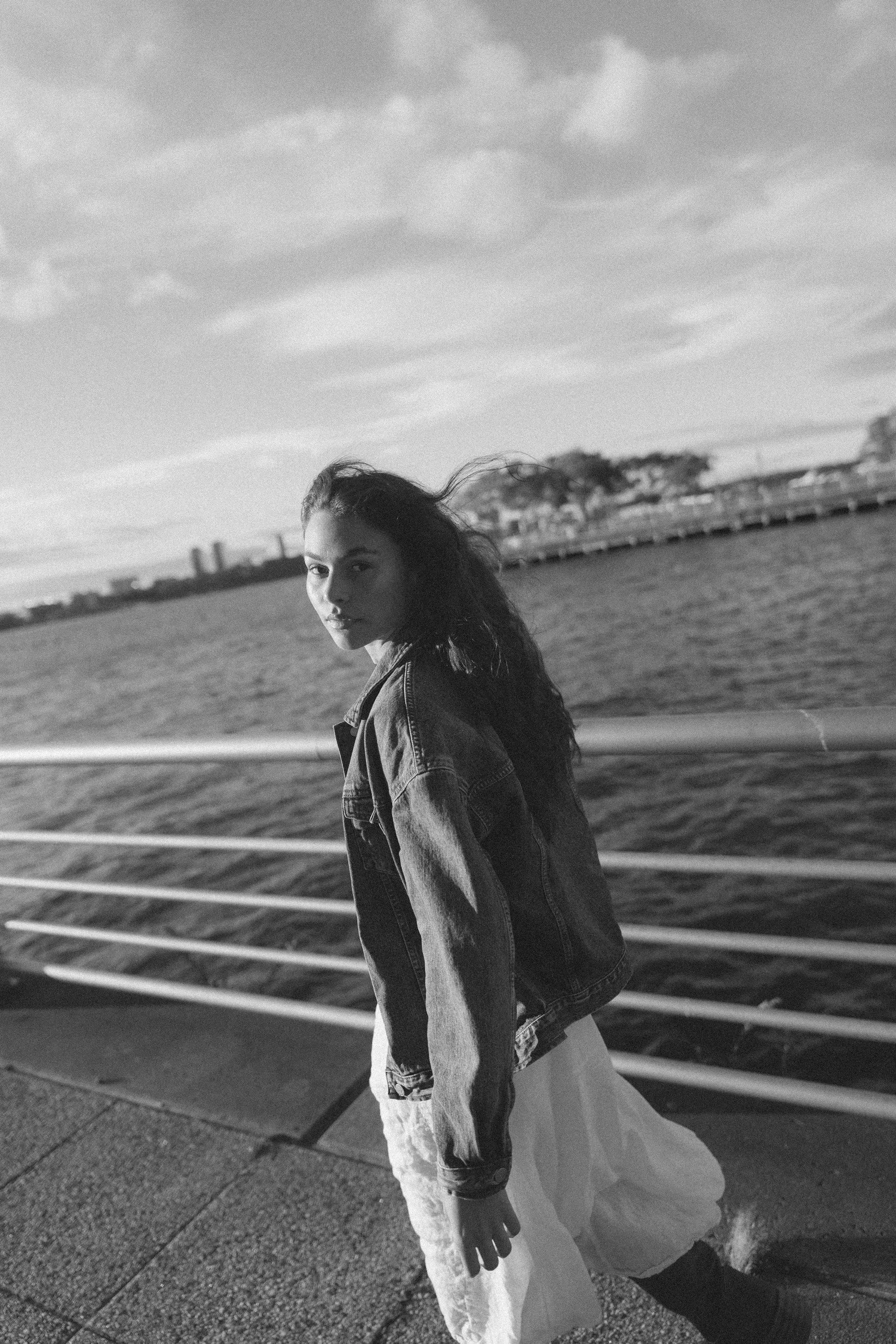
Texture can add depth, but too much detail everywhere can divide attention. I look at where the strongest contrast falls and whether it supports the person. The most detailed part of the background should not accidentally become the subject.
If you are planning an outfit for black-and-white portraits, shape and fabric matter alongside color. A pale shirt may separate clearly from one background and disappear into another. The setting and light complete the decision.
Black and white can still feel warm and relaxed
Stefano and Maddy's bench portrait is built around closeness and shared expression. Their light clothes stand apart from the darker surroundings, but the photograph's warmth comes from the way they sit together and smile.
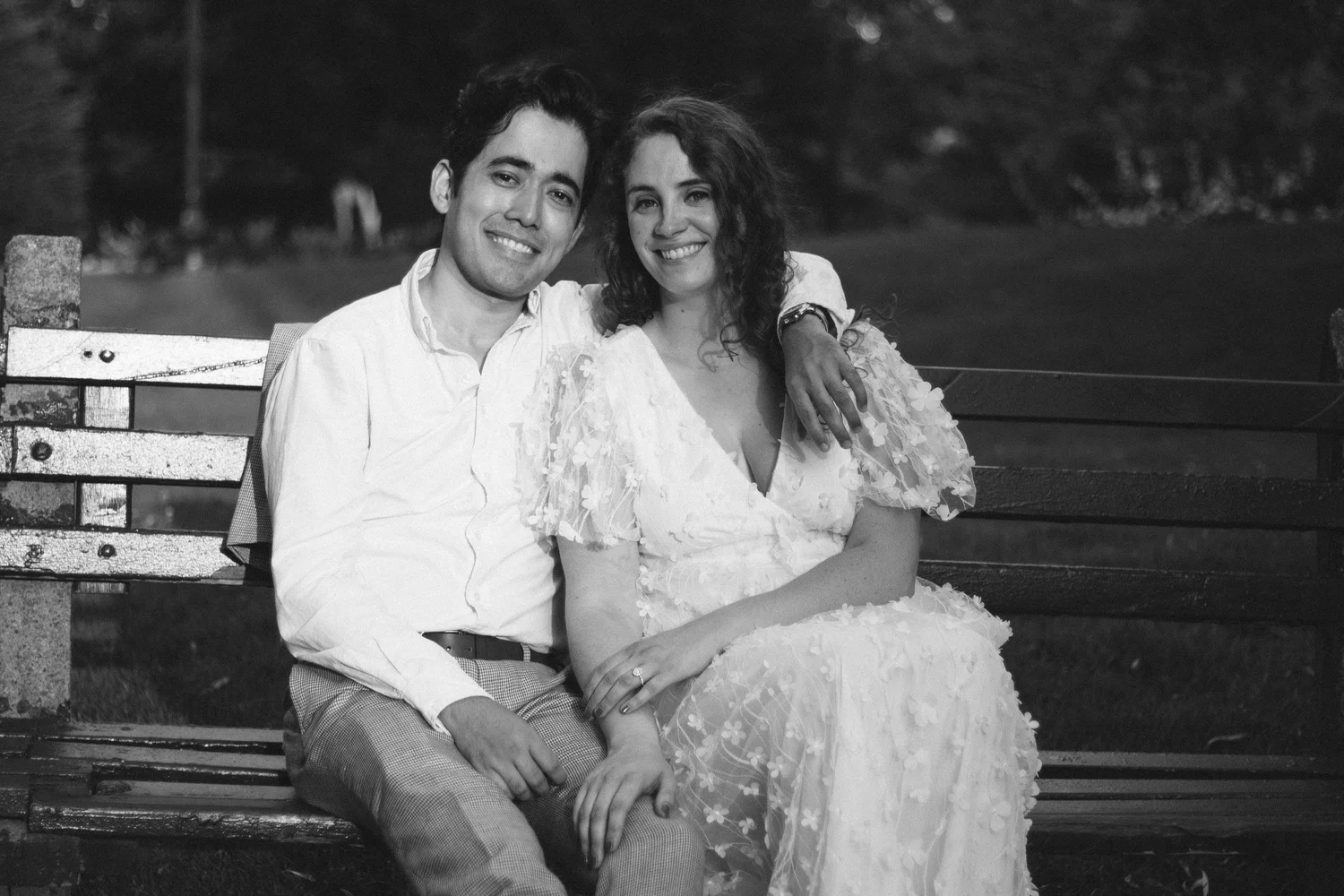
A monochrome photograph does not need a serious face or a dramatic atmosphere. It can be playful, affectionate, or quiet. Expression and the relationship between people remain important whether a photograph is in color or black and white.
Plan a portrait session with room for both
If you are drawn to monochrome, bring a few examples and explain what you like about them. It may be the deep shadows, the open sky, the texture, or the directness of a close portrait. Those details help us plan more effectively than the treatment alone.
For a NYC session, we can explore light and settings that give the photographs a clear structure. The final edit can include color and black-and-white images when each choice has a purpose. My guide to choosing final portrait photos can help you compare that range, and the portrait session guide covers preparation.