

The best time for LA engagement photos—and why sunset isn’t always best
Sunset is one option. Start with the light you like and the place you can comfortably reach, then choose a time that gives both room to work.
Planning couples or engagement photographs in Los Angeles? Choose the feeling of the light first, then ask about your dates and travel availability. Explore Los Angeles couples photography or ask about la dates and travel.
The best time for LA engagement photos depends on the setting and the kind of light you like. Before choosing sunset by default, compare warm backlight, open shade, direct sun, and an approved interior through these photographs from my couples work.
The short answer
The best time for LA engagement photos depends on the chosen setting and mood. Sunset gives warm, directional light, but coast cloud, inland heat, architectural shade, traffic, access, and seasonal sunset shifts can make sunrise, midday, or blue hour stronger. Choose the environment first, check current conditions, and build a schedule with a real backup.
Timing follows location, not a universal rule
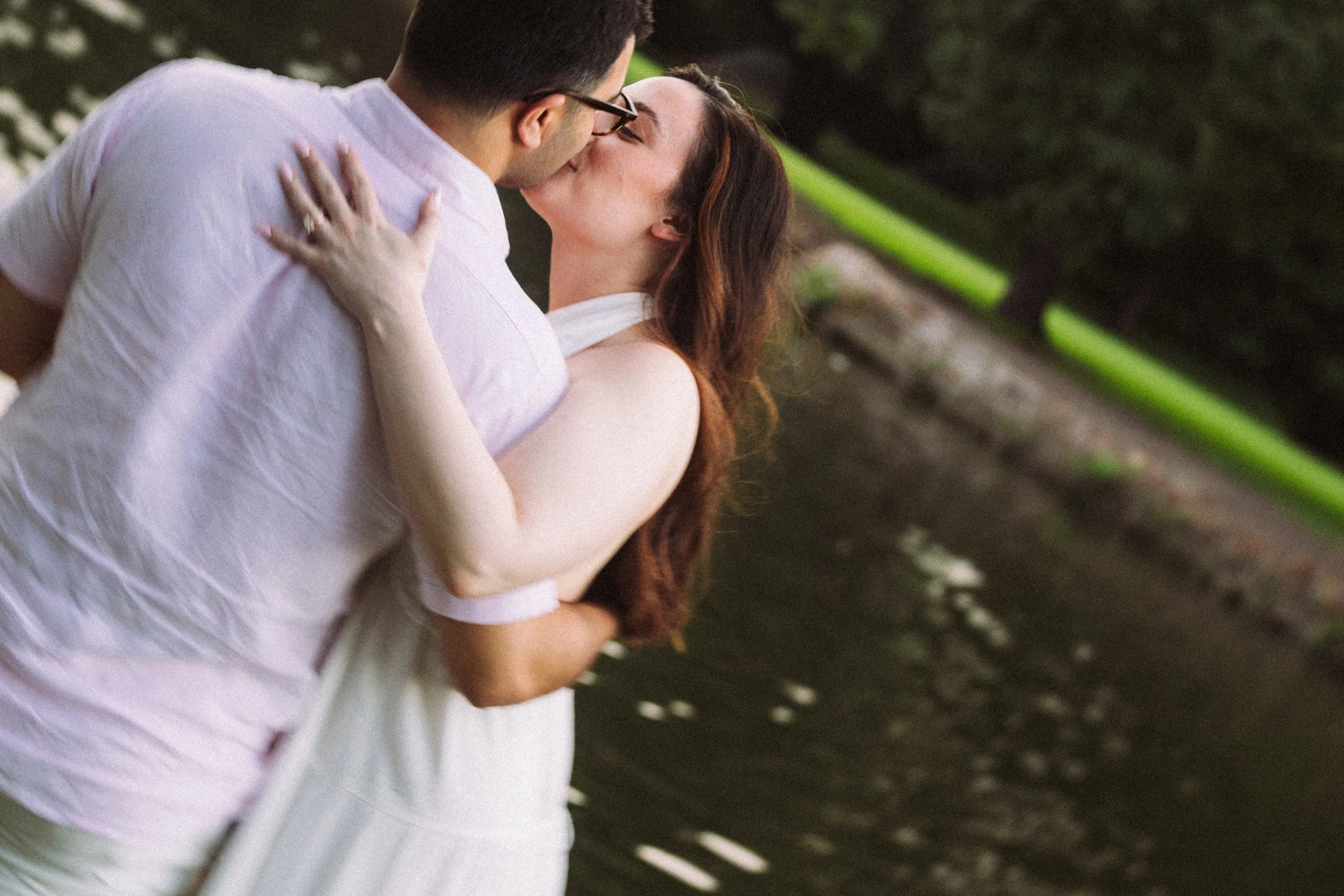
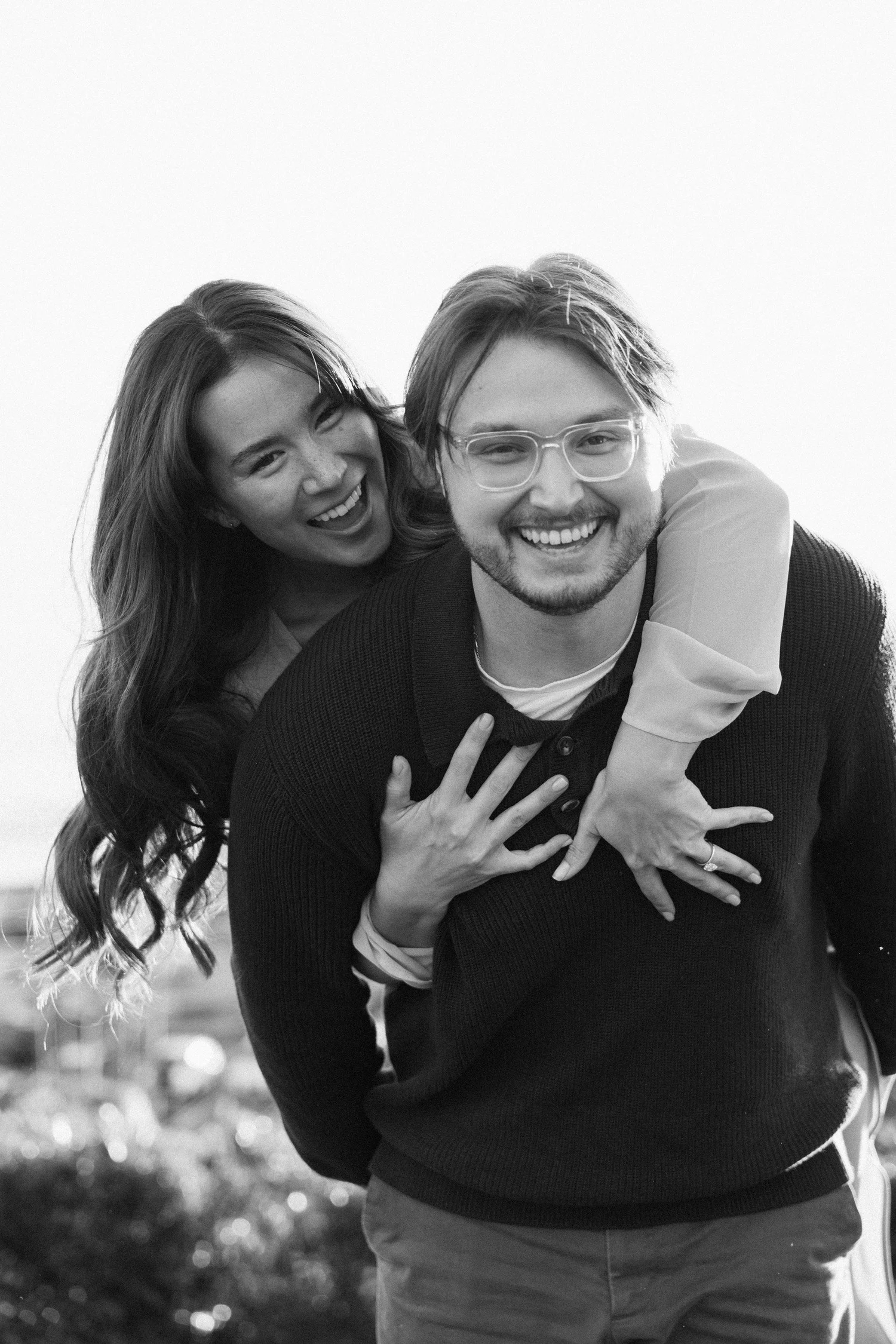
You can describe the light you want without guessing the exact hour. In the running photograph, direct sunlight makes the couple's shadows part of the composition. In the closer portrait, the softer background leaves expression to lead. These are lighting references from my portfolio, not photographs identifying a specific LA location or time of day.

“Golden hour” is useful language for a low sun angle, not a complete plan. Before selecting a start time, decide whether the photographs should feel airy, graphic, quiet, kinetic, warm, cool, polished, or private. Then identify the exact place and how the sun reaches it. A west-facing beach sees light differently from a downtown canyon; a hillside can lose direct sun before the published sunset; a home may have one good window for twenty minutes.
Access comes first too. A beautiful hour is irrelevant if a park, beach, private home, studio, or rooftop is not approved then. City, County, State, municipal, and private rules differ across the region. The comparison of Los Angeles couples-photo settings explains those ownership and travel decisions before the calendar enters the conversation.
Coast and inland LA can behave like different plans
At the coast, low cloud can soften contrast, mute the horizon, and remove the visible sunset even when the sun technically sets on schedule. That can produce beautiful, quiet photographs; it simply is not the warm direct-light promise people often attach to “sunset.” The National Weather Service explains that California marine-layer clouds are most likely from April through August, with coastal advection especially likely in May and June. This is a tendency, not a forecast.
Inland areas may be clearer and considerably warmer on the same date. Exposed hills also hold more wind and offer less shade. Use the current NWS forecast for the exact location, then compare the relevant station in the NWS Los Angeles climate plots. A coastal reading cannot stand in for a valley route. The plan should work if cloud stays, clears, or arrives differently than expected.
What softer light looks like in a real photograph
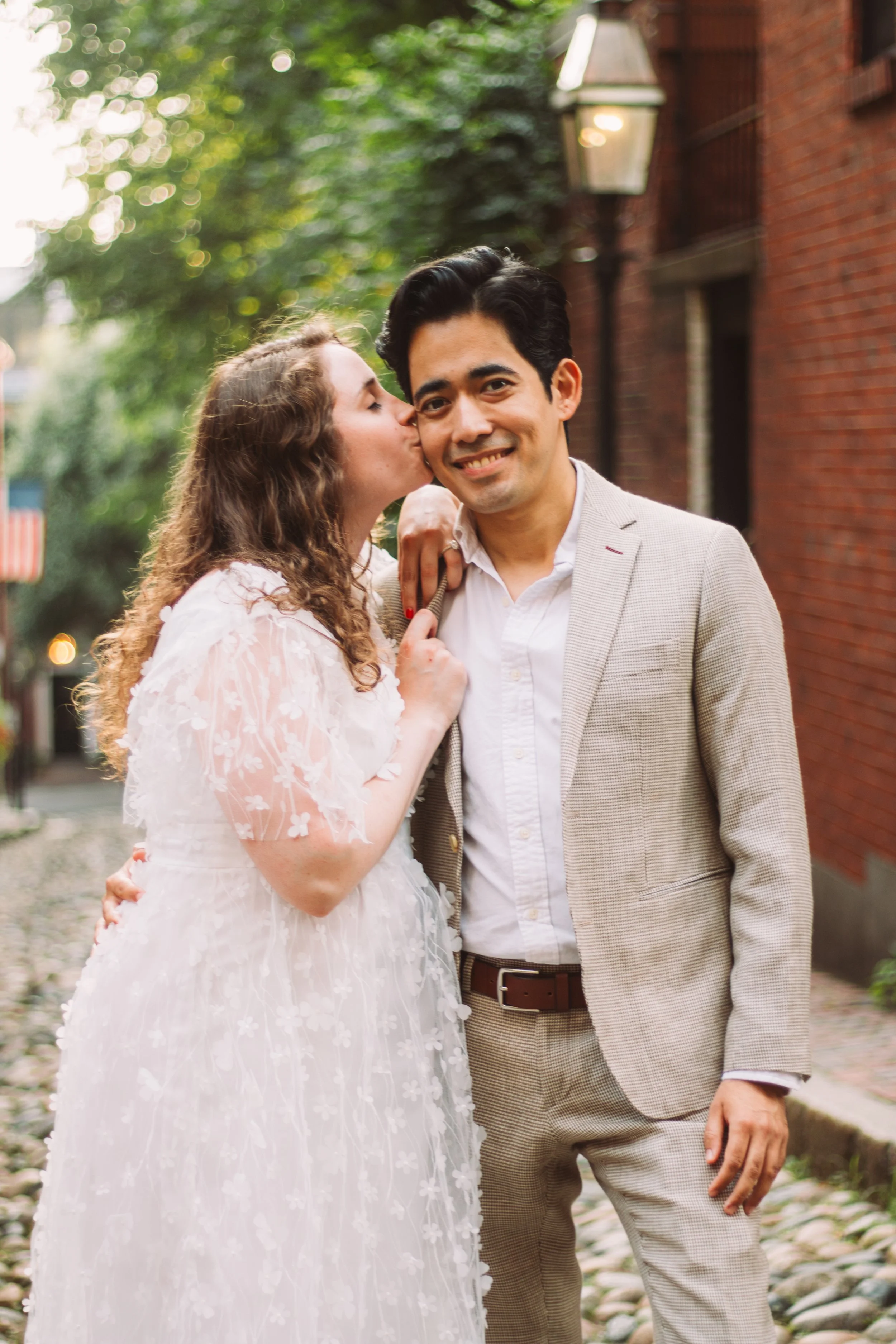
From Maddy and Stefano’s Boston session. This is a lighting and composition reference, not an LA location example.
Notice the gentle transition from light to shadow across their faces. The greenery and brick provide a sense of place, but neither competes with the expression. A photograph like this does not depend on showing a sunset or a glowing horizon.
For your LA session, use the reference to describe the result you want: readable eyes, softer contrast, and enough background to feel connected to the setting. Then ask which part of your chosen location offers that light on the day. A sheltered street, a shaded edge, or a change in camera direction may serve that brief better than an exposed viewpoint.
Choose your priority before choosing your hour: warm backlight, gentle facial light, a quieter background, or dramatic color after dark. Pick one as essential and one as a bonus. That makes a weather backup a creative choice instead of a disappointing substitute.
Sunset is beautiful—and comes with constraints
Warm backlight can make an image feel luminous, but the important element is the direction of the light relative to the people. Hannah and Garrett's window frame demonstrates that quality indoors. A photograph can show the kind of glow you like without serving as proof of an exact capture time.
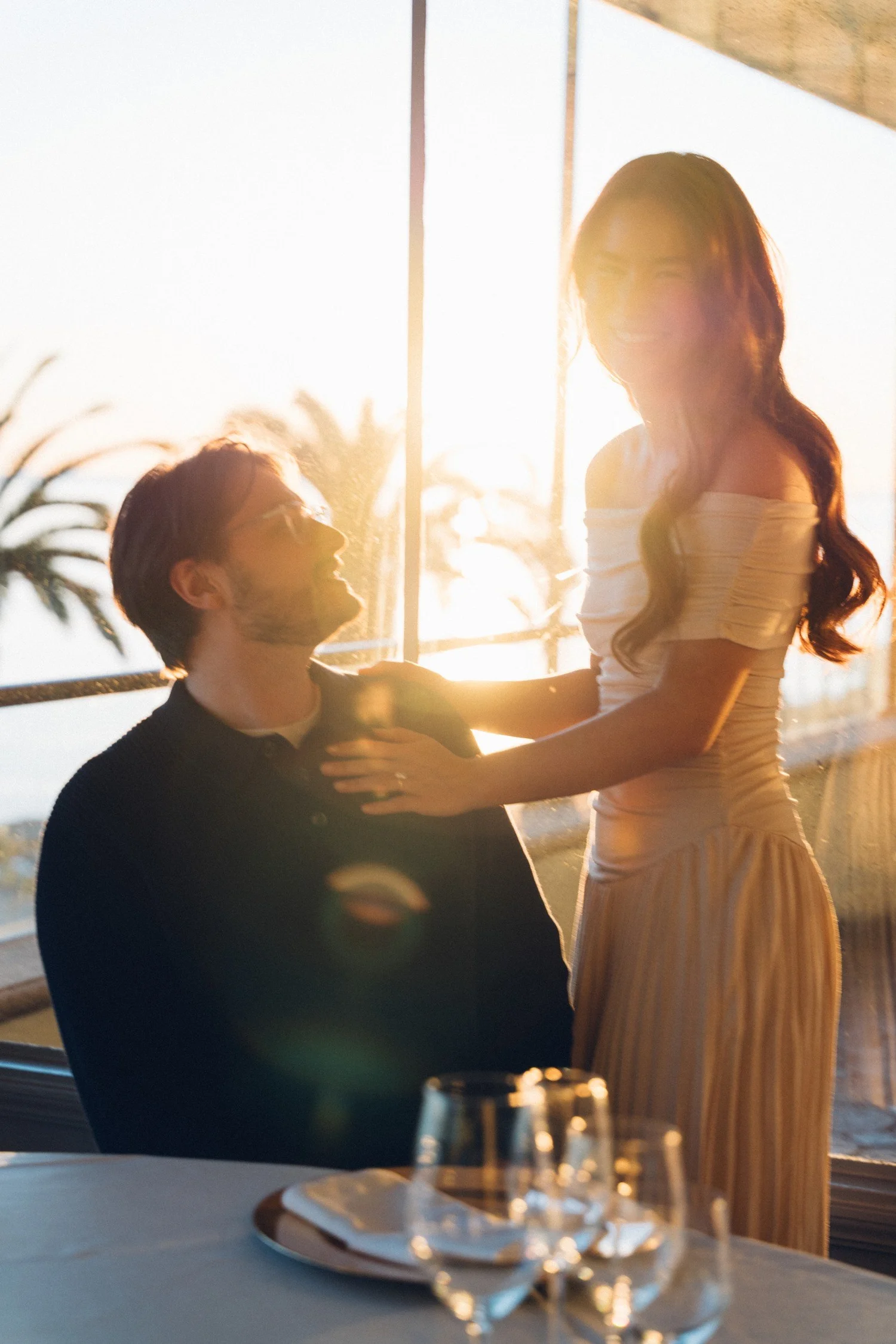
Low evening sun can create warm skin, long shadows, flare, and a gradual transition from bright frames to quieter silhouettes. It is a strong choice when those qualities fit the setting. Its trade-off is compression: traffic, parking, walking, a delayed start, or a wardrobe change can consume light that will not return. Popular public locations may also remain busy, and no weekday or hour guarantees an empty background.
Schedule the photographs you care about most before the final minutes. If direct sun matters, allow time to find the intended angle rather than arriving at published sunset. If the session includes two nearby environments, place the less time-sensitive one first and the horizon or exposed view second. Sunset shifts through the year. Check the date and place in the U.S. Naval Observatory’s one-day Sun and Moon service; buildings, hills, and access still determine usable light.
Sunrise trades warmth for breathing room
Sunrise can reduce heat and give a route more schedule after the best light rather than before it. It may suit open coast, hills, or east-facing architecture, especially when the couple enjoys early mornings. It is not automatically empty, clear, or permit-free. Coastal stratus can remain, park gates may not be open, private properties need an approved arrival time, and State beaches often define ordinary access around regular park hours.
The personal cost matters. If waking before dawn makes both people tired and rushed, quieter streets will not create relaxed expressions. Build dressing, travel, legal parking, and a buffer before the first frame. Sunrise is a good decision when its light and pace serve the couple—not a workaround imposed because it sounds efficient.
Midday works when the idea uses shade or hard light
Direct sunlight does not have to be avoided in every frame. It can make color feel vivid and create a graphic shape around people. The tradeoff is that faces, clothing, and background brightness need deliberate attention. If you prefer gentler light on your face, include a shaded alternative within the same route.
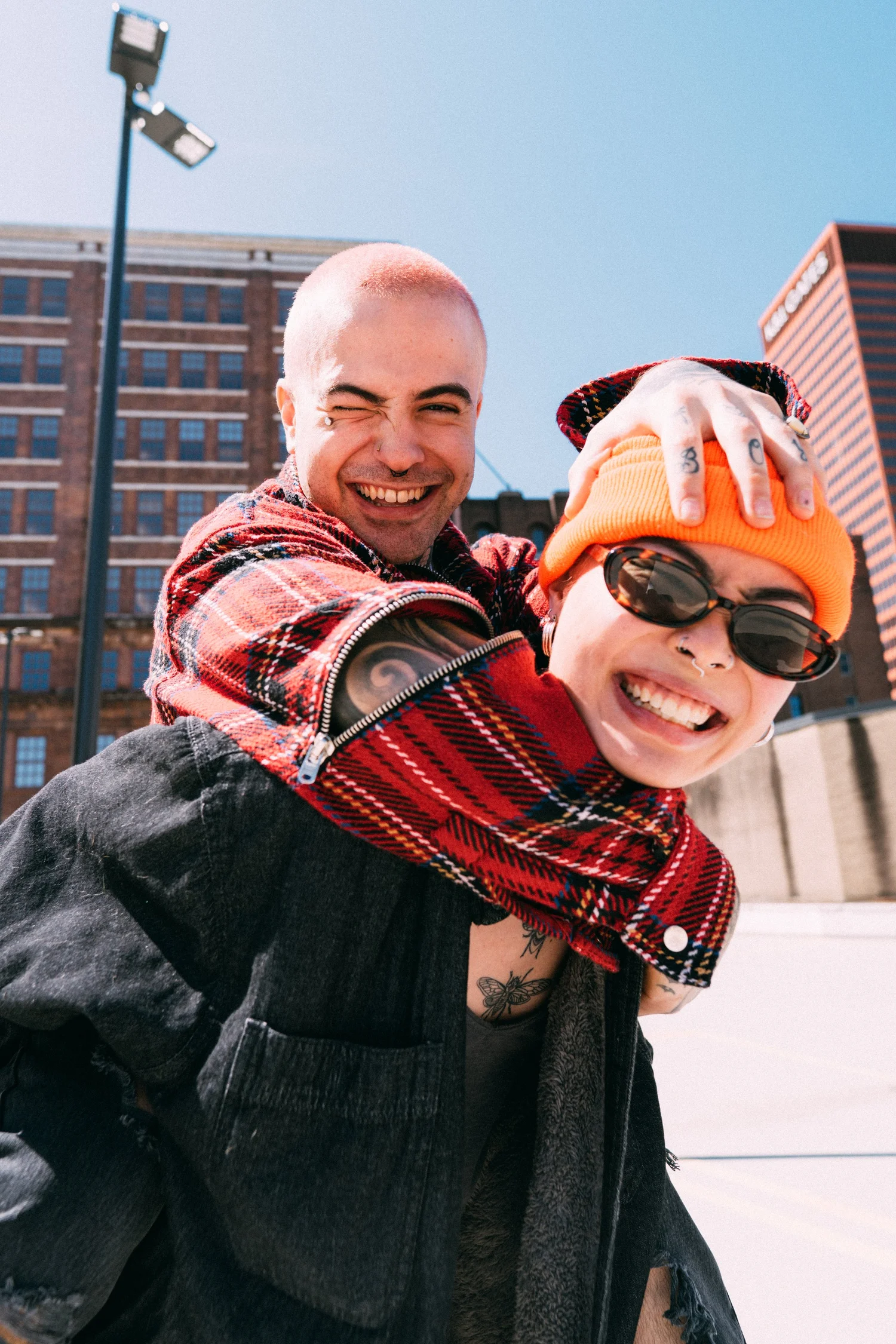
Midday is often dismissed because overhead sun can create deep eye shadows and high contrast in open space. In architecture, that same sun can make defined shadow shapes, saturated color, reflections, and bright graphic frames. A north-facing wall, arcade, overhang, or tall building may provide stable open shade while the street beyond remains luminous. Scout the exact block at the intended hour; photographs from another season can misrepresent the current sun angle.
Midday also offers more schedule on both sides, making it useful for an approved interior plus a nearby exterior. Heat and reflected pavement remain constraints. Shorten exposed segments, carry water, choose breathable wardrobe, and move into shade before discomfort appears. Direct sun is not a technical mistake when it is chosen for energy and contrast. For a broader comparison, see the outdoor portrait timing guide.
Blue hour changes color, equipment, and pace
Blue hour—the dim period around twilight—can balance cool sky with street, window, or city light. It fits cinematic downtown frames, reflective surfaces, and a slower pace. The useful window is short, and exposures become more demanding as light falls. Movement may need to become smaller, while handheld technique and available light determine what is practical.
Do not build a blue-hour plan around a private facade, beach, park, or rooftop without confirming access for that exact time. State and managed properties may close at or before night, and some permits distinguish ordinary hours from night work. Blue hour is a planned chapter, not spare time after a sunset session.
Weekdays help only when the whole route works
A weekday can offer more flexibility at some locations, but workday traffic, commuter activity, deliveries, events, school schedules, and permit rules can replace weekend crowds with different ones. LA County Parks currently limits filming activity to Monday through Friday, which may decide the day before aesthetics do. Check the official calendar or manager for the exact property rather than claiming Tuesday is always quiet.
Travel deserves its own buffer. Read posted parking rules; LADOT notes that signs can impose restrictions regardless of curb color. If transit is part of the route, check live arrivals and service alerts, but do not build a minute-perfect session around them. Two nearby visual zones are safer than coast-to-downtown ambition during a narrow light window.
A timing decision matrix
Beach + warm and kinetic: begin before sunset with enough margin for parking and walking; accept wind and verify whether marine cloud changes the light. Backup: a sheltered, approved coastal exterior or a reschedule threshold.
Beach + quiet and muted: overcast coast or early morning can support soft tones; do not promise cloud. Backup: work with direct light using a different angle and simpler wardrobe palette.
Architecture + graphic and bold: scout midday sun and shadow on the actual facade. Backup: open shade on the same compact block, not another neighborhood.
Downtown + cinematic and cool: move from late daylight into blue hour near legal parking. Backup: an approved interior or earlier ambient-light version if weather or access changes.
Hills + expansive and warm: start early enough to walk safely and photograph before terrain blocks the sun. Backup: lower, sheltered ground or a clear reschedule plan for heat, wind, or poor visibility.
Home + intimate and calm: study the best window at the session hour and let routine drive the pace. Backup: controlled lamps or a prepared second room, provided the visual mood remains coherent.
Protect the pace from lateness and weather
Allow the session to change pace. A seated portrait and a small detail can follow an active sequence without needing a move across town. That gives the gallery variety while protecting the time available for the light you chose. For setting choices, compare the Los Angeles couples location guide.


Set an arrival time and a photography start time; they are not the same. The gap holds parking, walking, a restroom stop, and a breath before direction begins. If one partner runs late, keep the highest-priority scene first and simplify the route. Do not race across LA to preserve every planned backdrop. A shorter, settled session makes stronger photographs than anxious location collection.
Weather decisions should be explicit: which conditions remain workable, when the forecast will be checked, what the backup location is, and when to reschedule. Heat, wind, rain, marine cloud, wildfire smoke, or unsafe access can all alter a plan. The forecast is evidence, not a guarantee. Once timing is sound, review movement and direction for relaxed photographs; a calm schedule gives attention room to replace performance.
LA engagement-photo timing FAQ
Is sunrise or sunset better?
Sunrise can mean cooler temperatures and more schedule after the best light; sunset can offer warm direction and an easy transition into twilight. Neither guarantees clear sky or privacy. Choose by location orientation, access hours, the desired mood, and whether you genuinely function well early.
Will the marine layer ruin our photos?
No. Low cloud can create soft, quiet light and reduced contrast. It changes a warm direct-sun concept, but it does not make photography impossible. Check the coastal forecast close to the session and choose a palette and backup angle that can work with cloud or sun.
Should we choose a weekday?
A weekday may provide more flexibility, and some managed properties permit professional activity only then. It does not guarantee empty streets or easy travel. Check property rules, events, commuter patterns, and parking for the actual day instead of relying on a universal crowd claim.
What time should beach engagement photos start?
There is no fixed answer. For warm evening light, begin early enough to park, walk, and photograph before sunset rather than arriving at it. For morning or muted light, confirm access and current coastal conditions. Exact beach ownership and permit hours can control the schedule.
Can engagement photos work in direct sun?
Yes. Direct sun can create strong color, crisp shadow, flare, and energetic movement when it is intentional. The photographer needs to choose angles and exposure for that look. If you want softer faces and more flexible directions, open shade or lower sun may fit better.
What happens if we are late?
Protect the most important scene first, reduce outfit changes, and remove a transfer before rushing. Sunset and blue hour cannot be paused. A late arrival may change the gallery’s light and variety, so build a travel buffer and agree in advance on how the route will simplify.
Turn the light preference into a session plan
Choose two references from Hannah and Garrett’s Los Angeles gallery: one for the light and one for the interaction. Their golden backlight and black-and-white portraits show how mood can change within a series. Write down which photograph matters most, then plan arrival, walking and outfit changes around it.
Explore Los Angeles couples and engagement photography, and compare the LA location guide before settling on a time.
Plan the light for your Los Angeles session
Share your preferred dates, location shortlist and two examples of the light you like. I am based in New York and open to travel. We can discuss availability and a realistic route before you commit to sunset, sunrise or an interior.
Ask about LA dates and travel · Explore Los Angeles couples photography
Continue planning with choosing your Los Angeles couples-photo setting.