
Fujifilm X100VI Review: Great Photos, but Not My Pocket Camera
I own the Fujifilm X100VI, and I think it is a great camera. But it doesn't quite fit the role I want it to play. I want something I can put in a pocket and take to a concert without thinking much about carrying a camera. For my style, the X100VI is too big. The Ricoh GR III comes much closer to what I want.
The photographs still make a good case for it
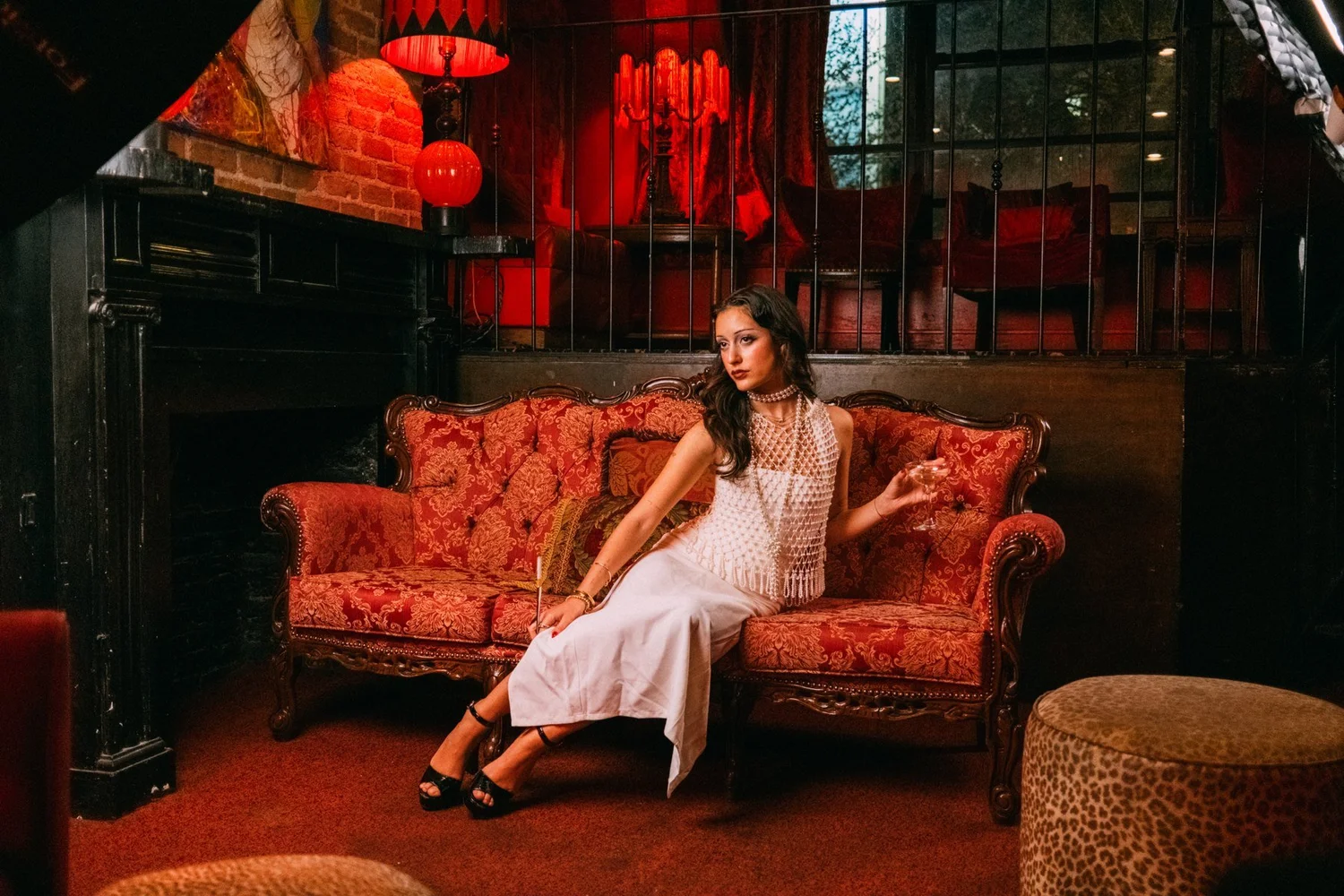
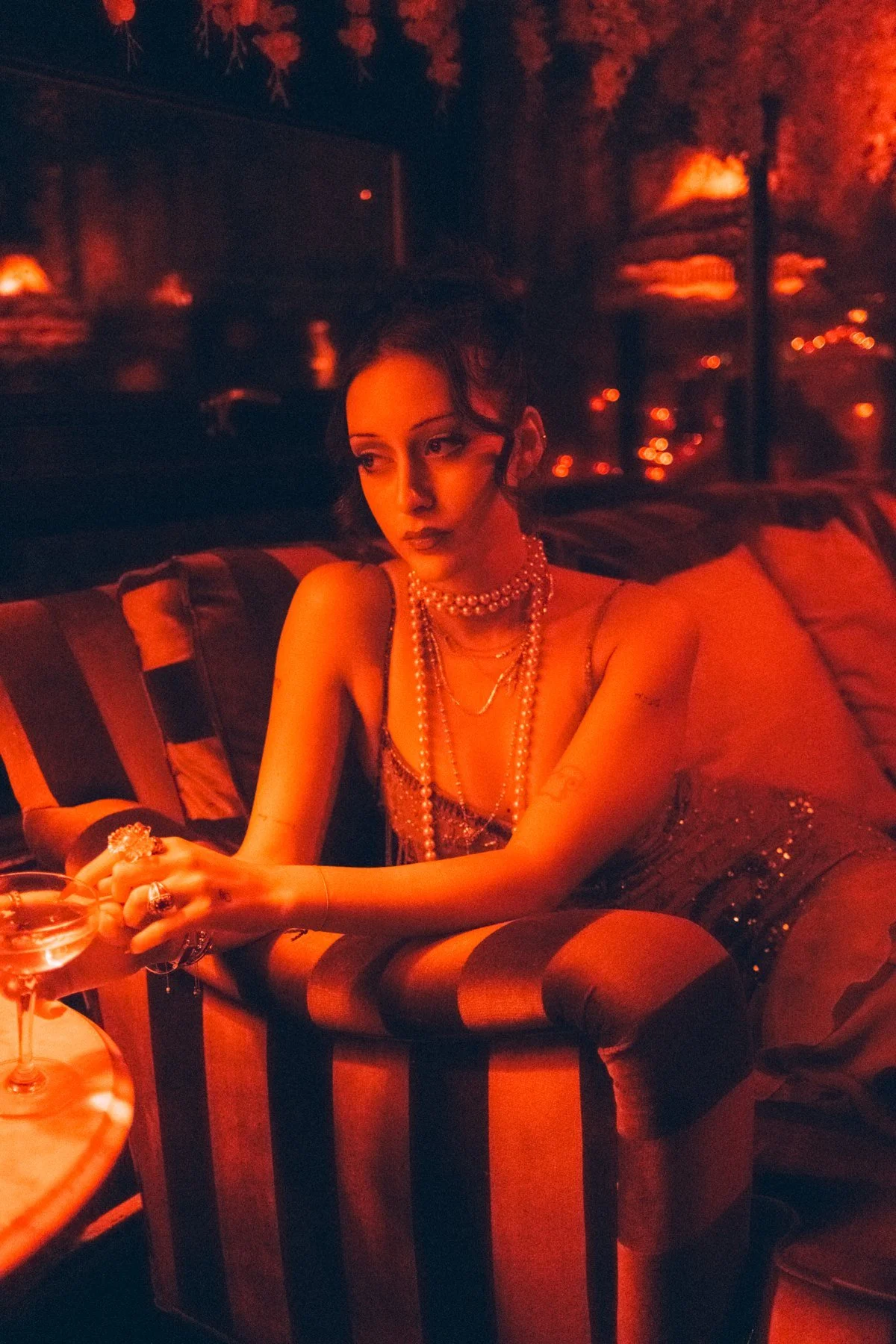
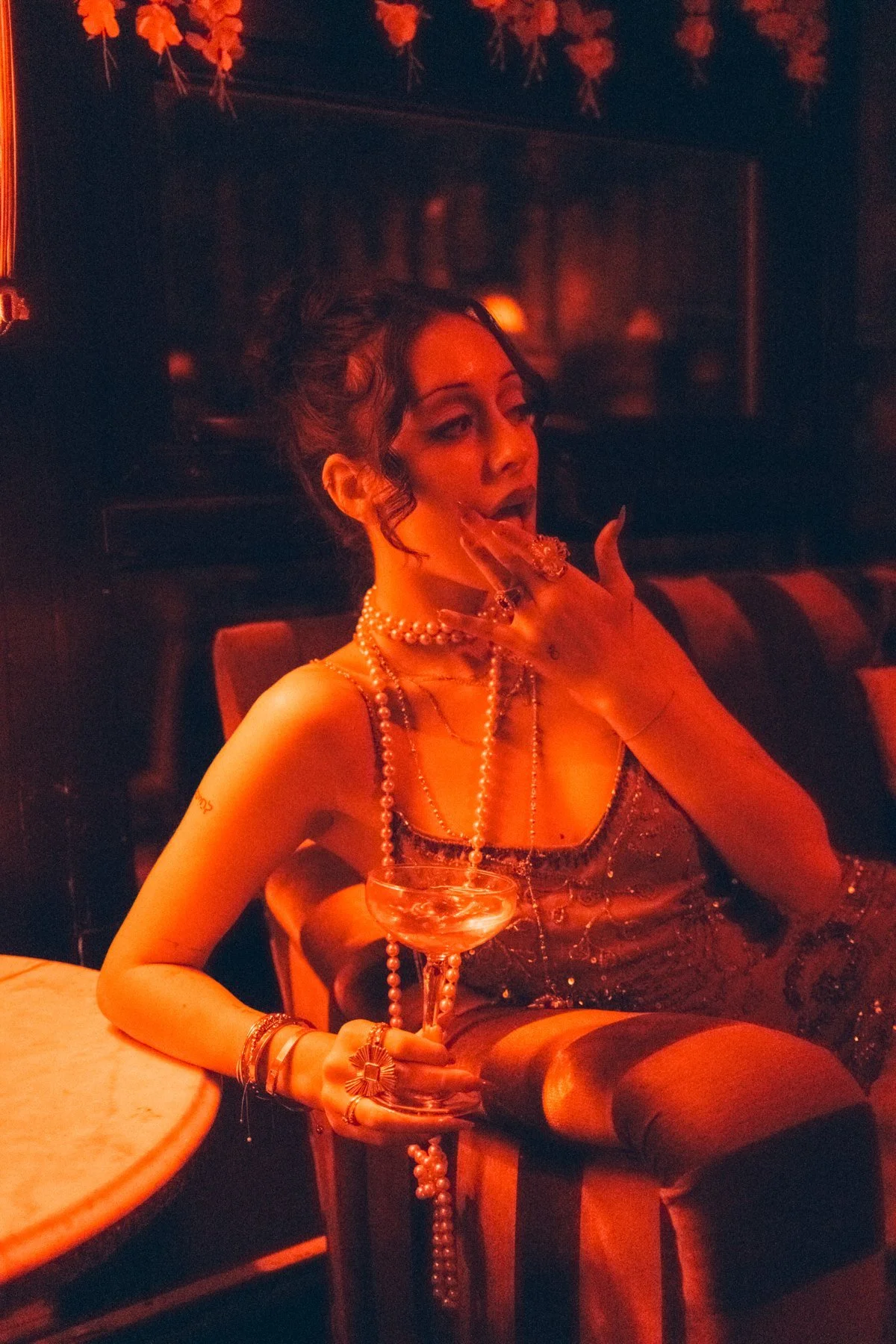
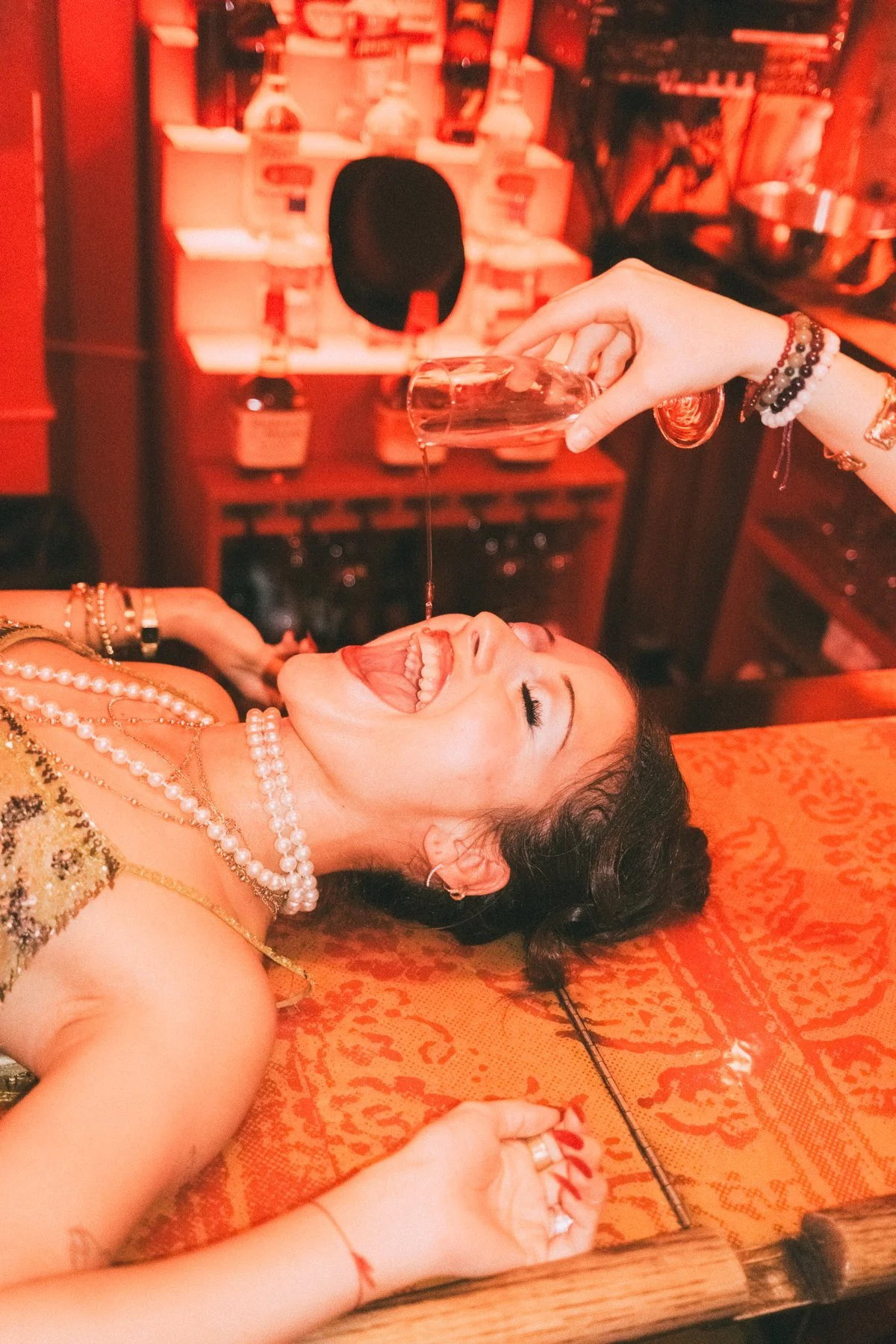
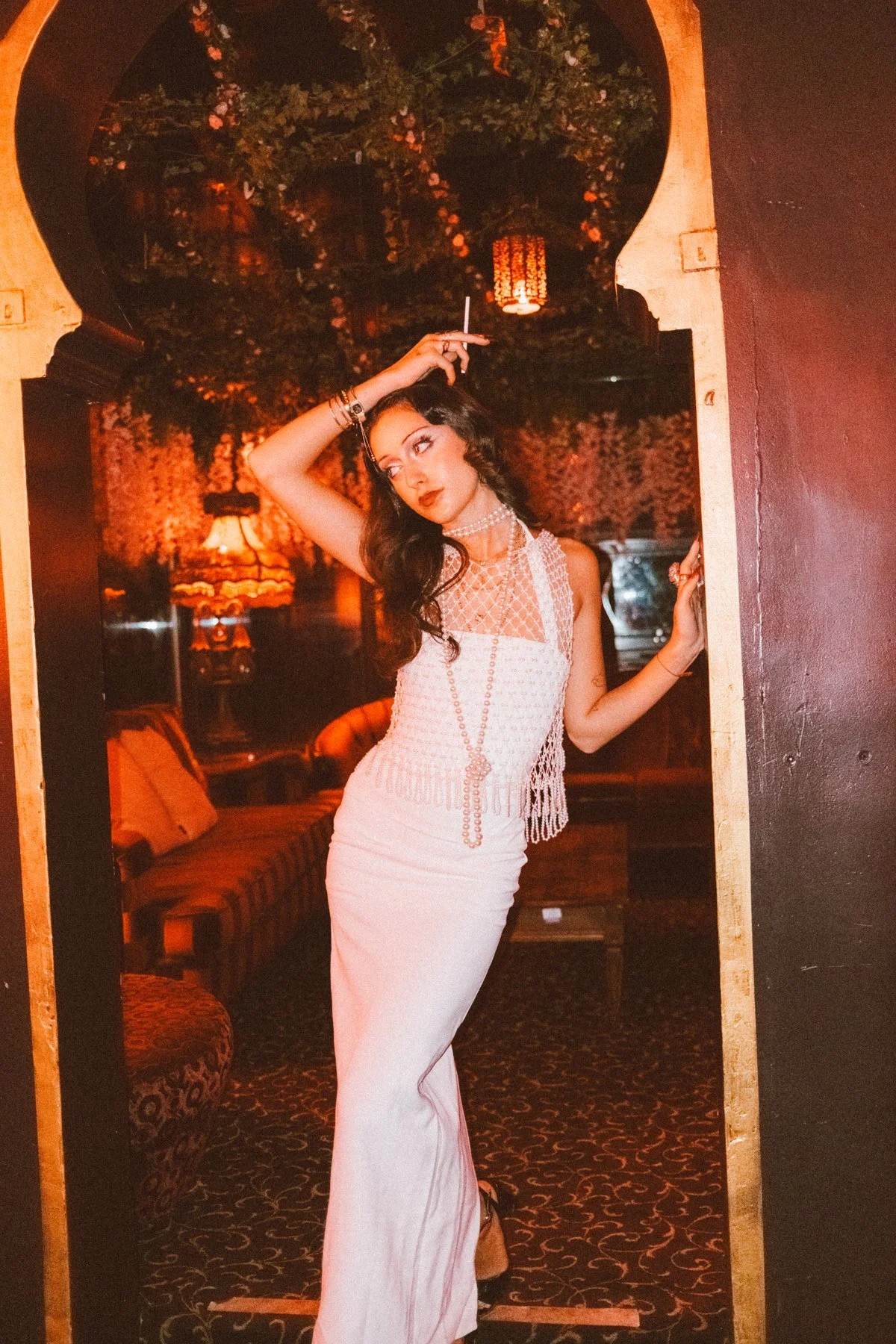
These portraits of Eden show why I can like the X100VI and still have reservations about its size. The room gives us plenty to work with: patterned furniture, red light, arched openings, and dark corners. The photographs move between that atmosphere and Eden's expression.
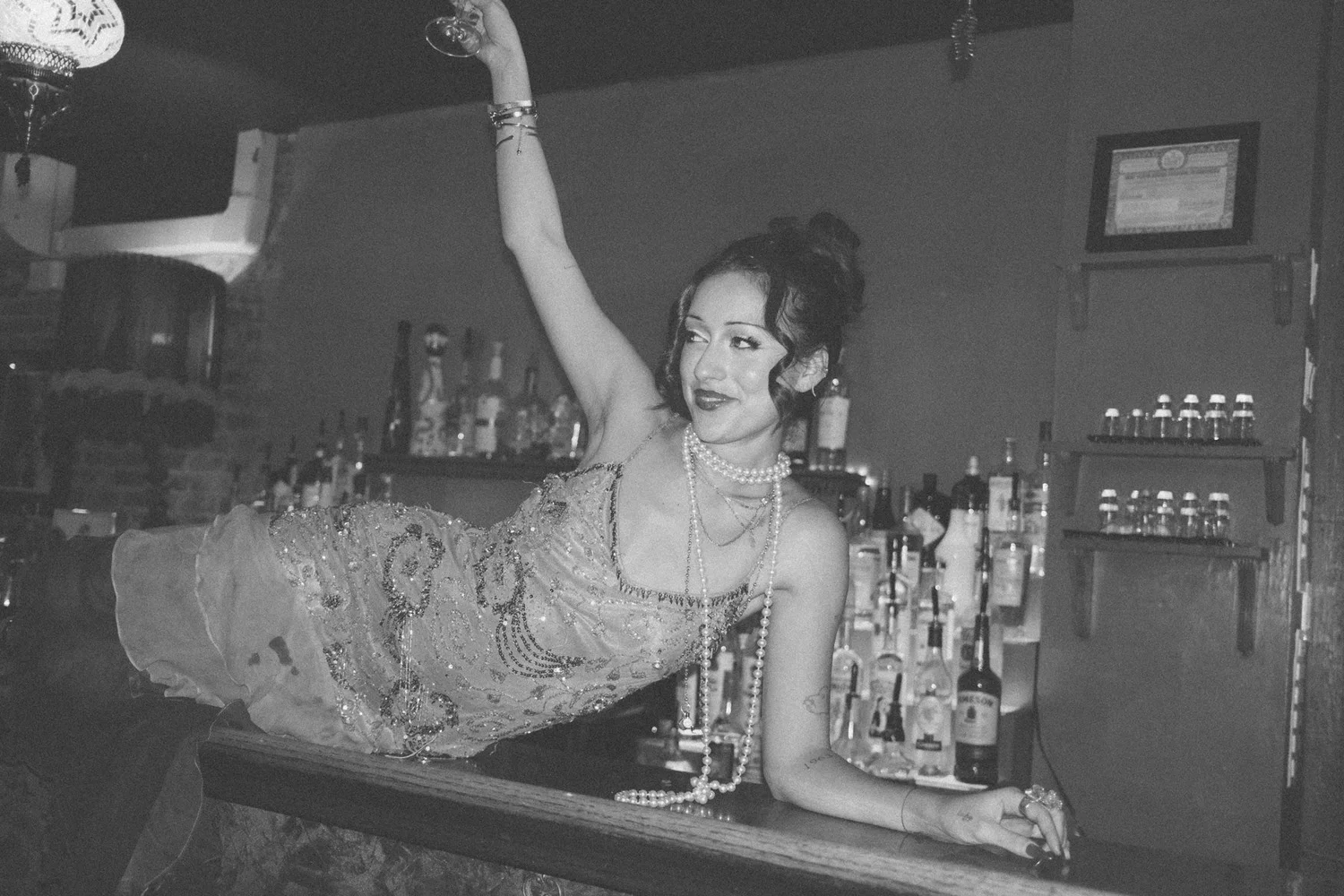
In the couch portrait, the surroundings take up a large part of the picture. The lanterns and upholstery help establish the feeling of the room. At the bar, the black-and-white treatment pulls attention toward her face, the glass, and the line of her outstretched arm. Changing what matters within a scene can be more interesting than changing the equipment.
These are 20 unique photographs from the same session, with color and black-and-white finishes that are part of my finished work. They show a range of compositions within one interior; they are not a survey of every situation the camera can handle.
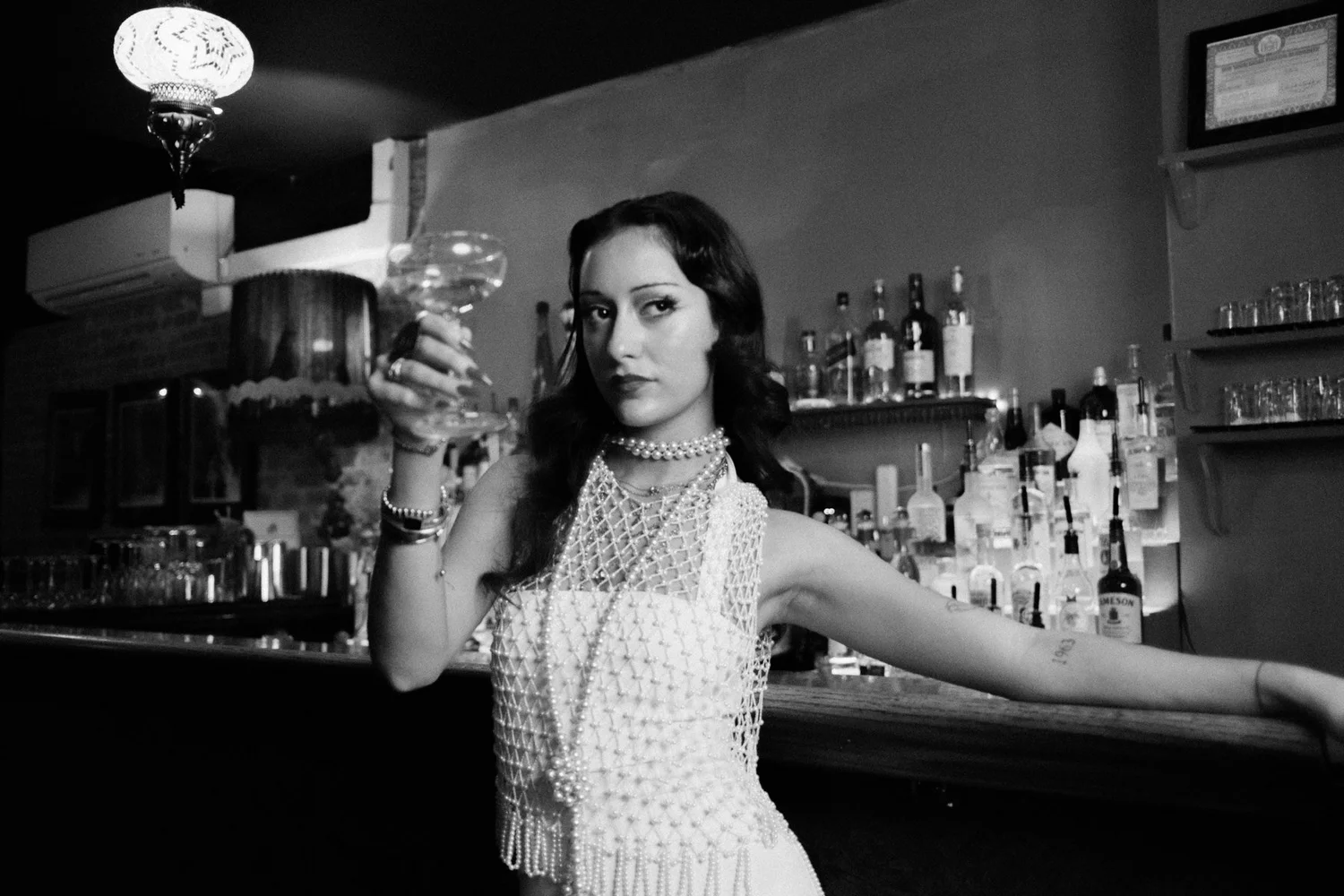
One room, different distances
The wider couch photograph establishes the setting. Moving closer makes Eden's posture and the upholstery more prominent. The bar portrait offers another variation: the body can remain in roughly the same place while a turned gaze changes the photograph. These are small compositional decisions you can explore with a fixed lens.
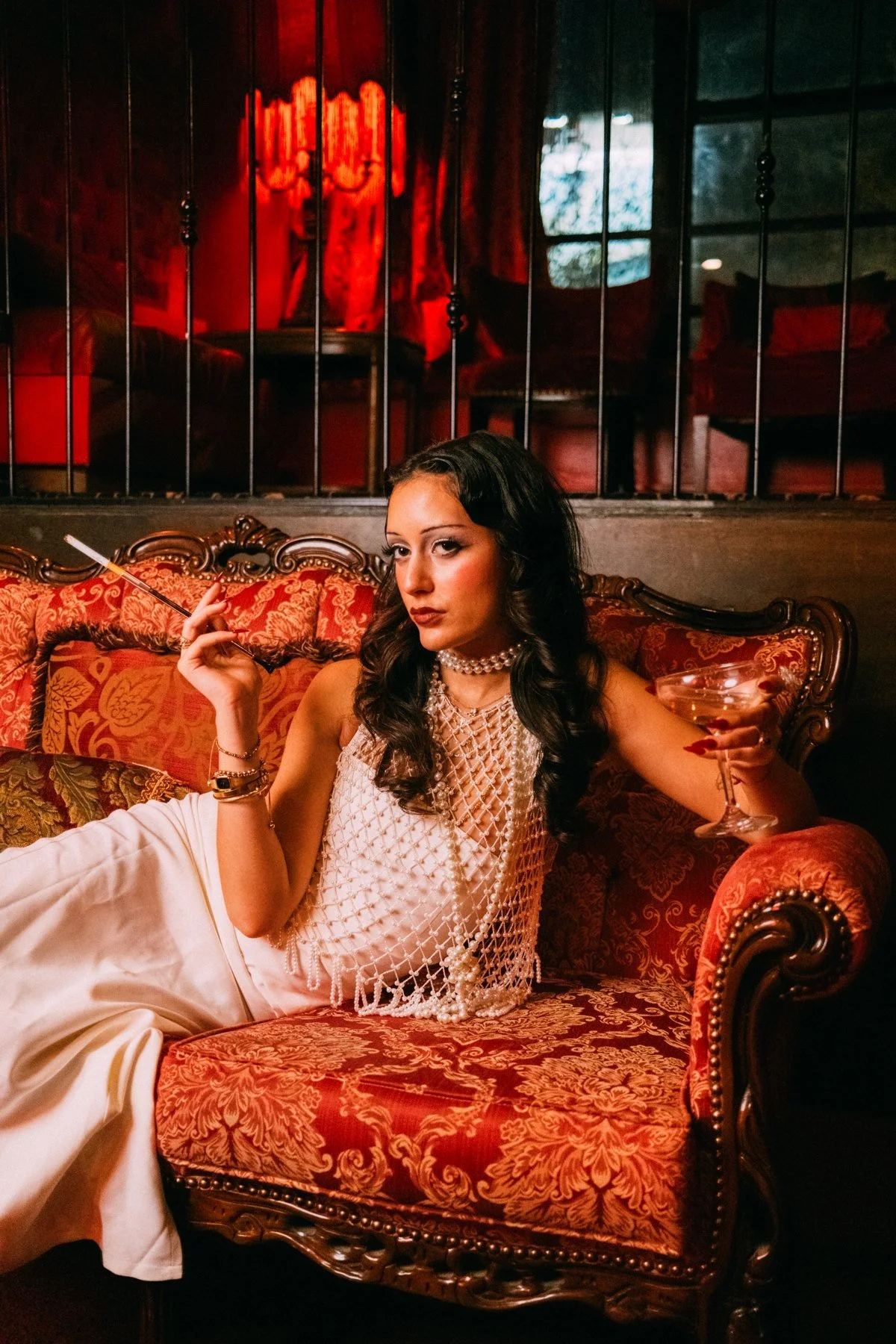
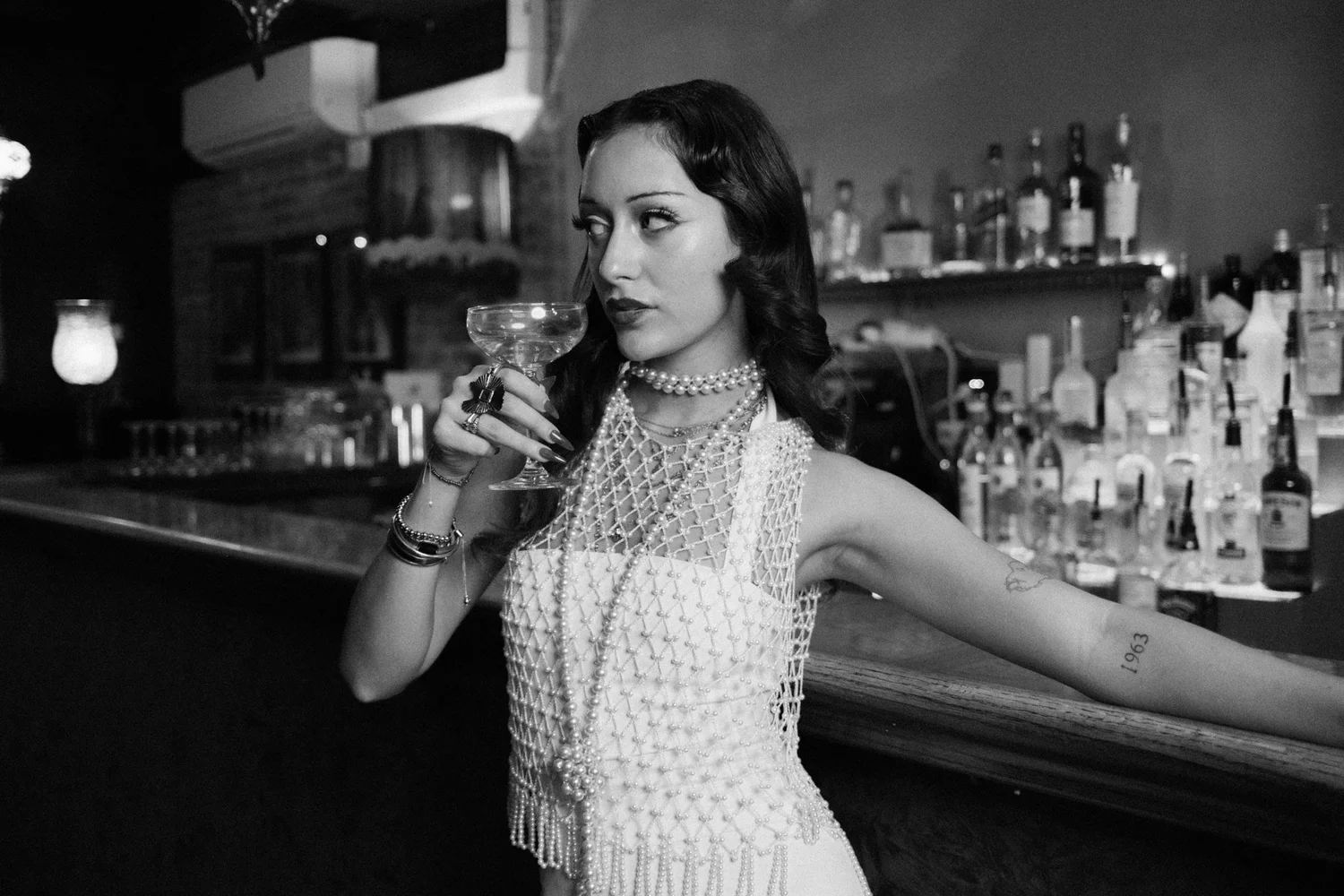
Working with the X100VI's fixed lens
The X100VI has a fixed 23mm f/2 lens, giving a view equivalent to 35mm on a full-frame camera, and an approximately 40.2-megapixel APS-C sensor. Those details come from Fujifilm's specifications.
A fixed lens keeps one angle of view available. To change the composition, you can change where you stand, where the person stands, or how the camera is positioned. Moving closer changes the relationship between the person and the background, too; it does more than make everything larger.
The portraits below are useful examples. An arch surrounds Eden in one, while the piano and a stretch of wall give the other portrait its structure. A wider composition lets those details contribute. Moving in would make a different photograph, with a different emphasis.
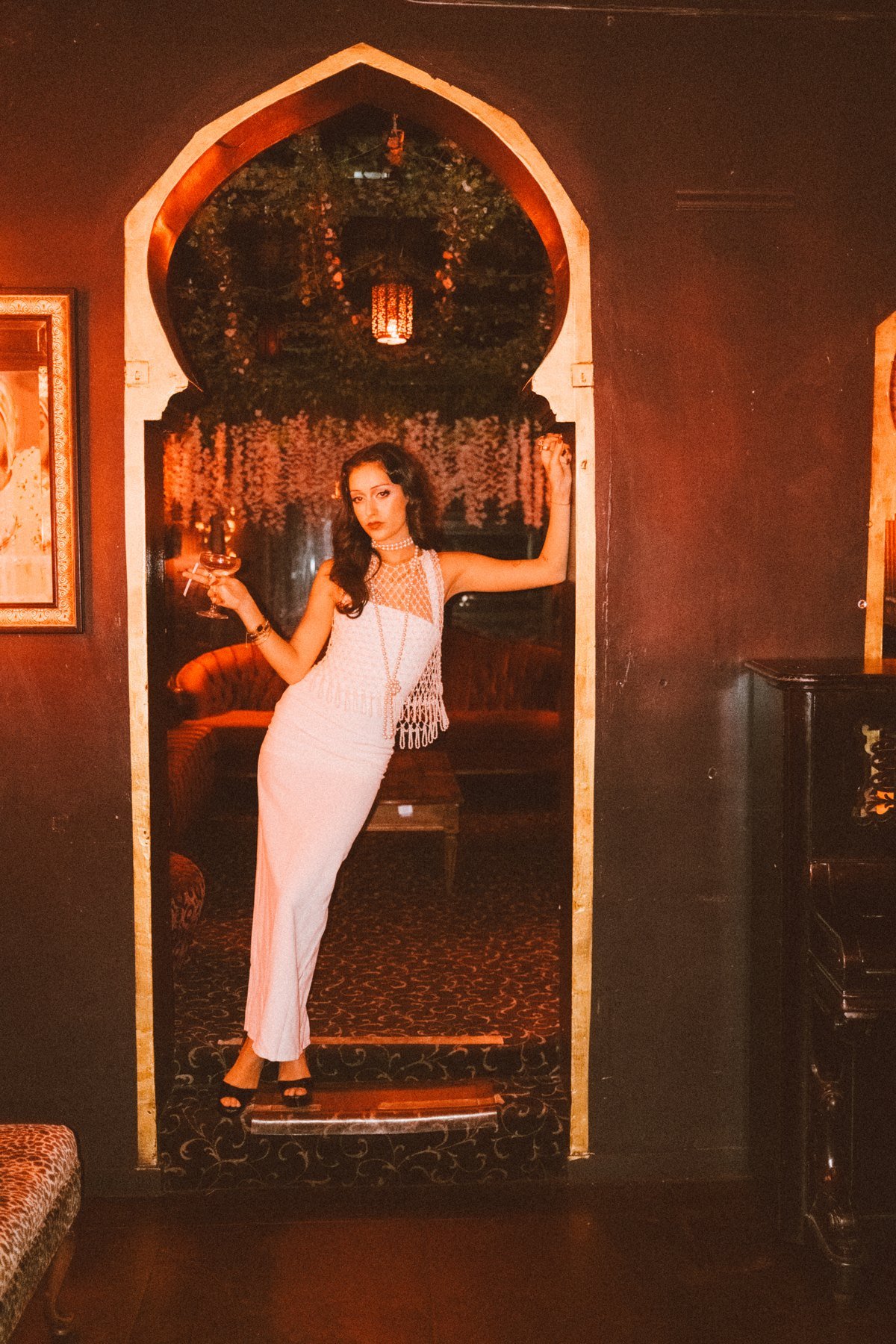
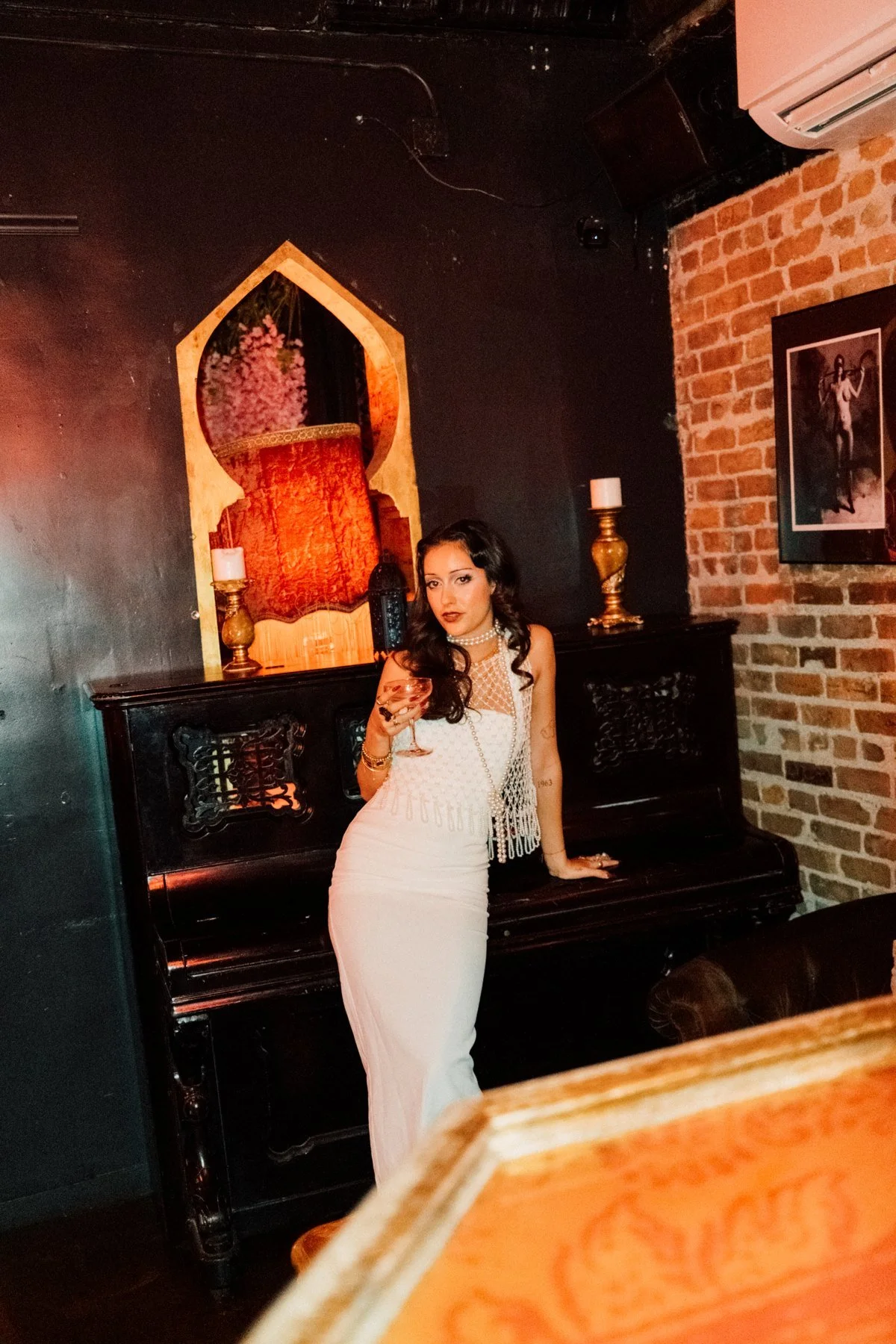
For a portrait session, one interesting corner, a seat, or a doorway can be enough to begin. The photographs become more varied through the way we use that space.
A full-length frame and a closer turn
A full-length composition has to organize the floor, clothing, and surrounding furniture. A closer portrait can leave much of that information outside the frame and concentrate on a turn of the shoulders. These two images are useful for thinking about distance and framing; the black-and-white finish is an editing choice, not a different lens characteristic.
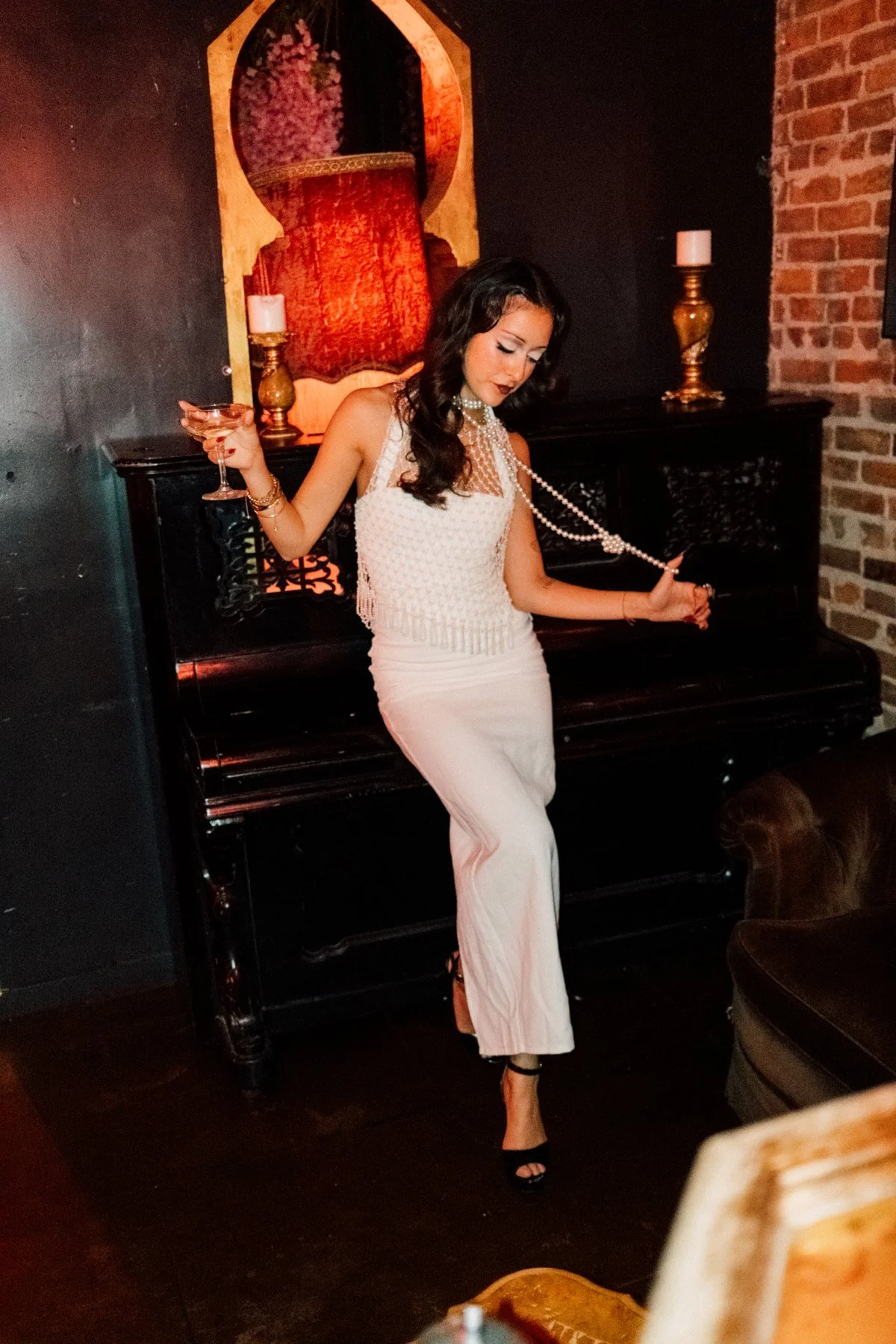
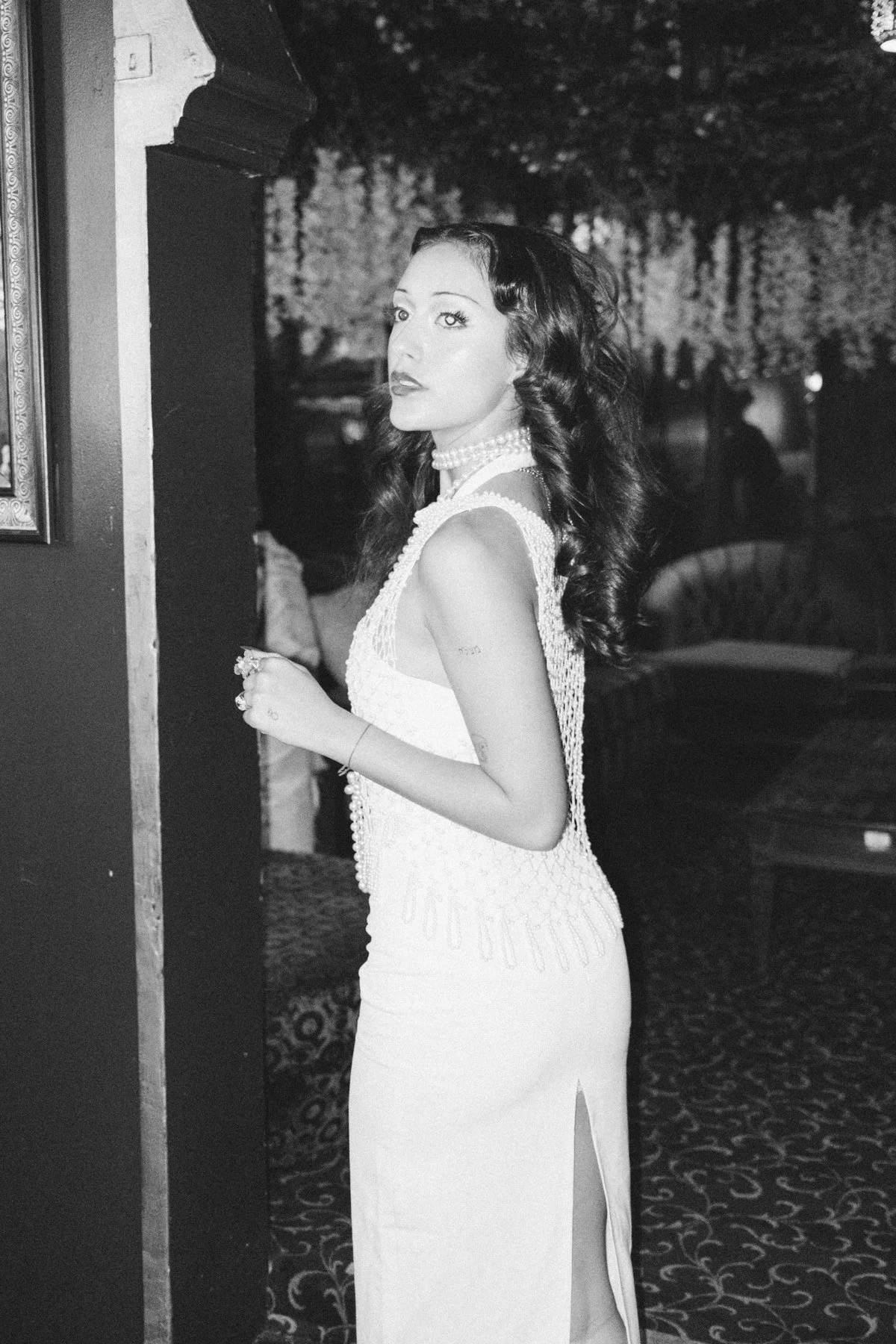
The settings behind these portraits
I've included the shutter speed, aperture, and ISO beneath each photograph. All 20 sample photographs use f/2. Most were made at 1/125 second; the slower exposures are identified in their captions. The ISO values vary across the set.
Someone holding a pose and someone moving quickly need different exposure choices. Use these settings as context for the photographs; the light and movement in your own scene should guide your decisions.
Eden's red-lit portrait and the photograph in the green outfit show two very different color arrangements. The white dress stands apart from the red surroundings; the green outfit brings another strong color into the bar. Looking at those relationships is a useful part of planning photographs, alongside choosing exposure settings.
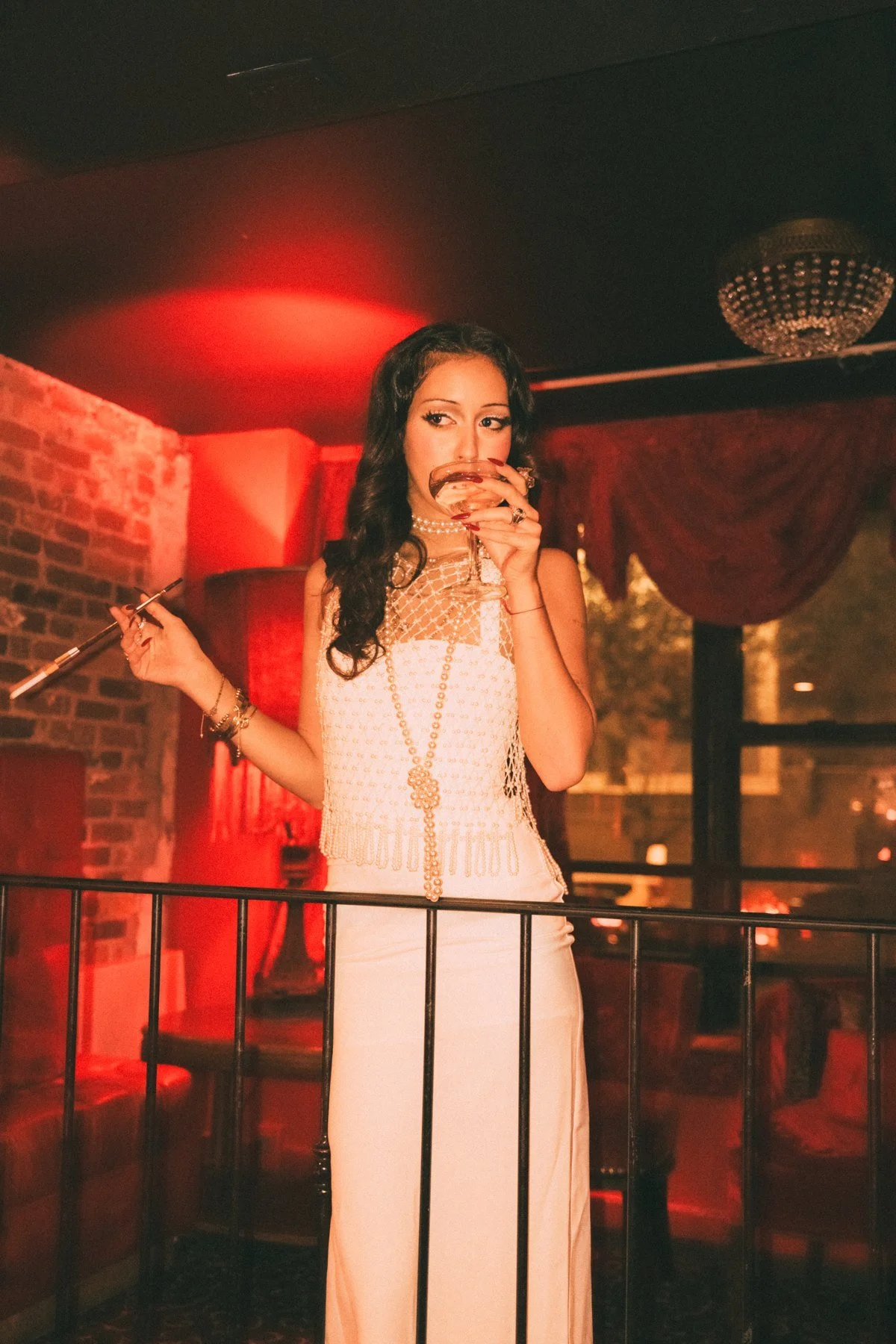
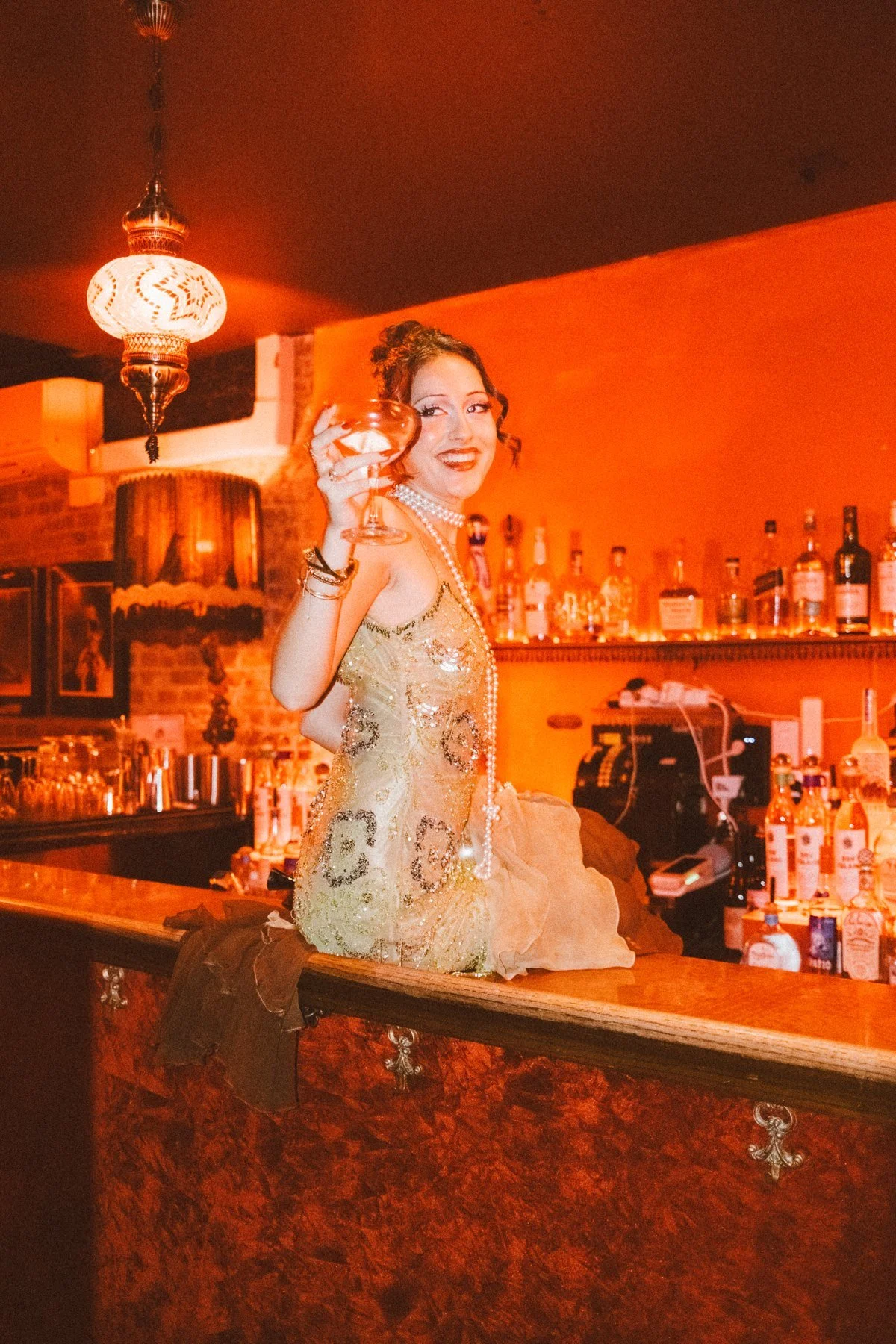
Read the light as well as the numbers
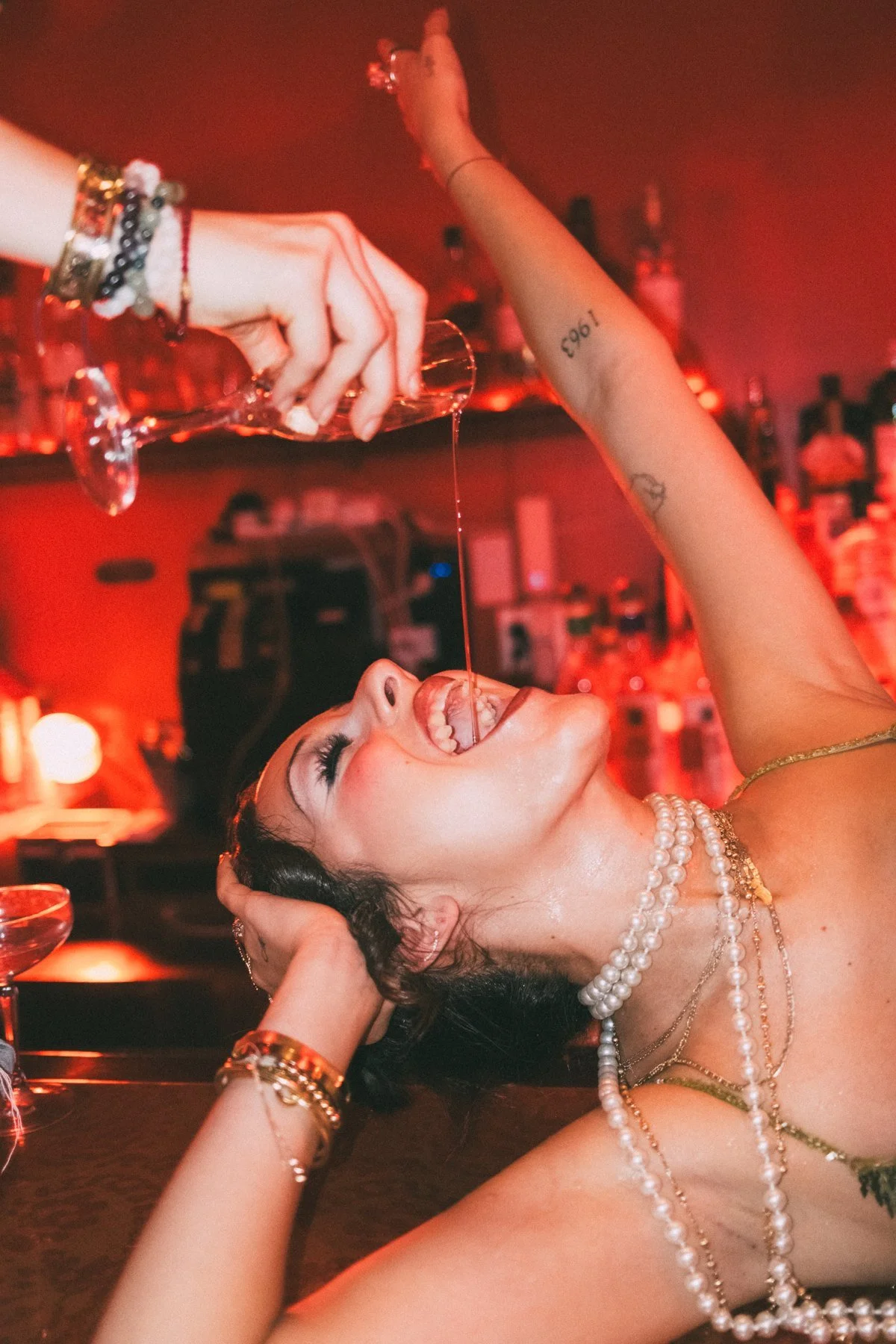
The EXIF records flash firing in the railing photograph below and no flash in the raised-arm bar photograph. That is useful context when looking at how the face and room balance against each other. A shutter speed and ISO alone cannot explain the whole lighting setup, and these frames were not made as a controlled flash comparison.
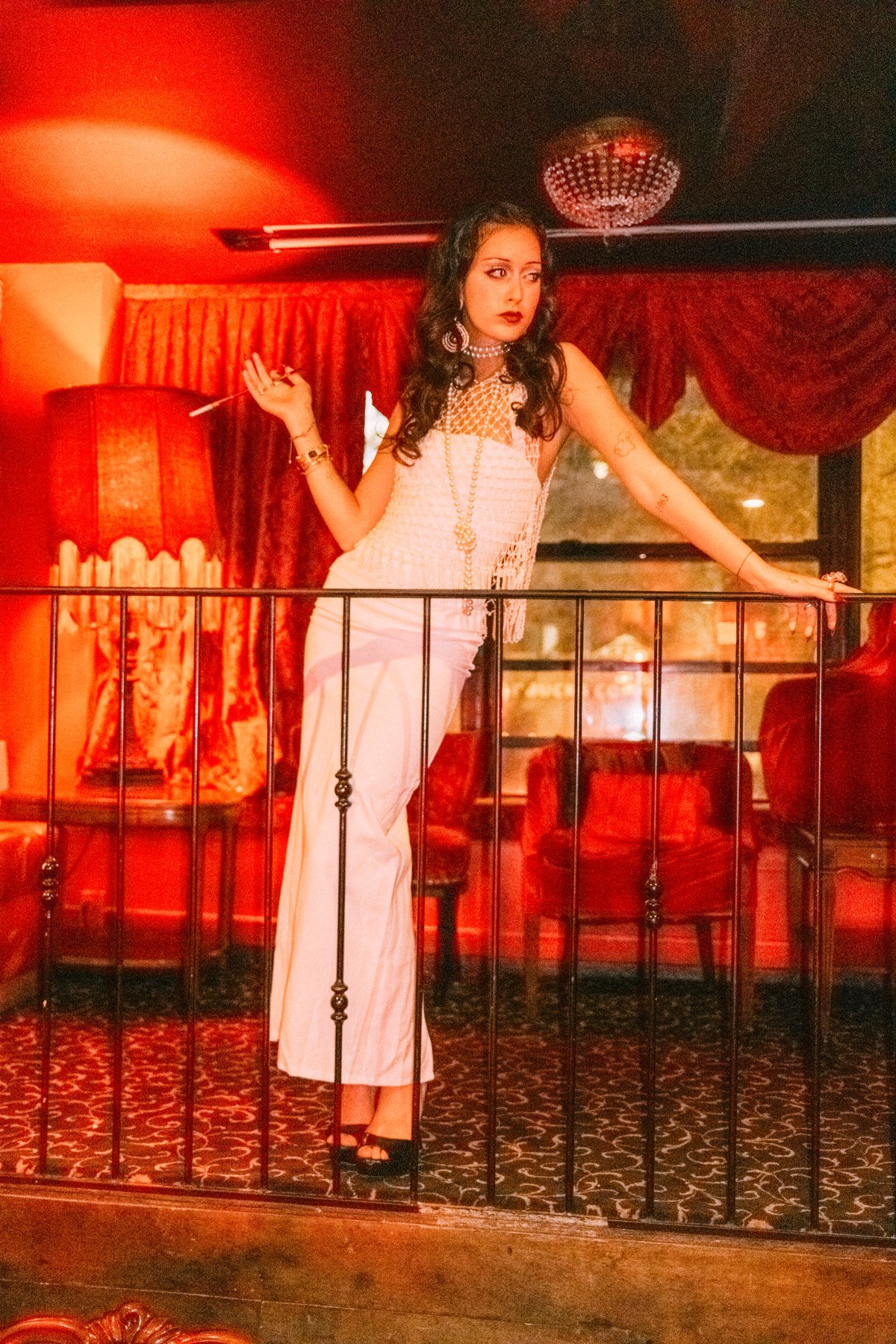
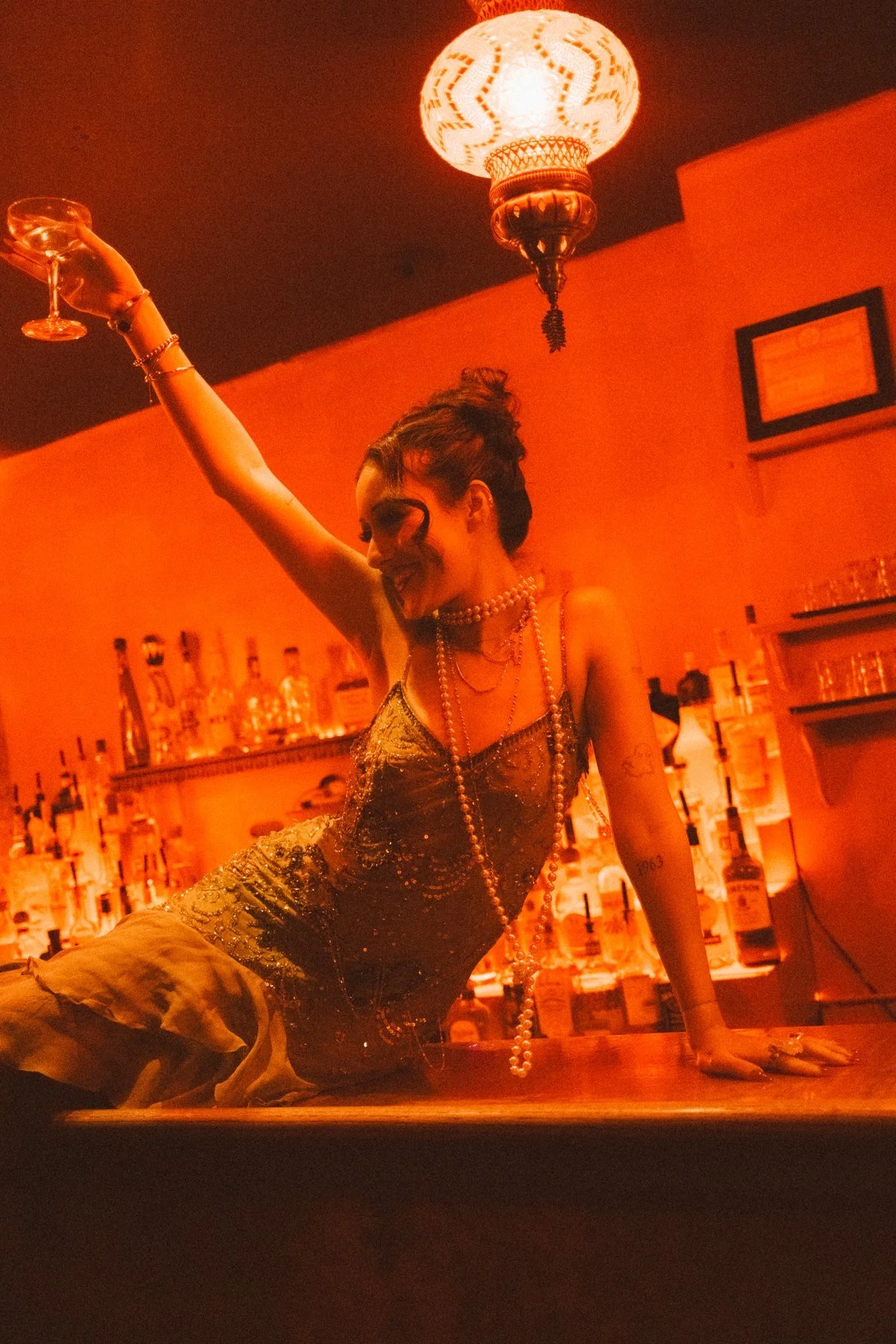
Let a chair support more than one gesture
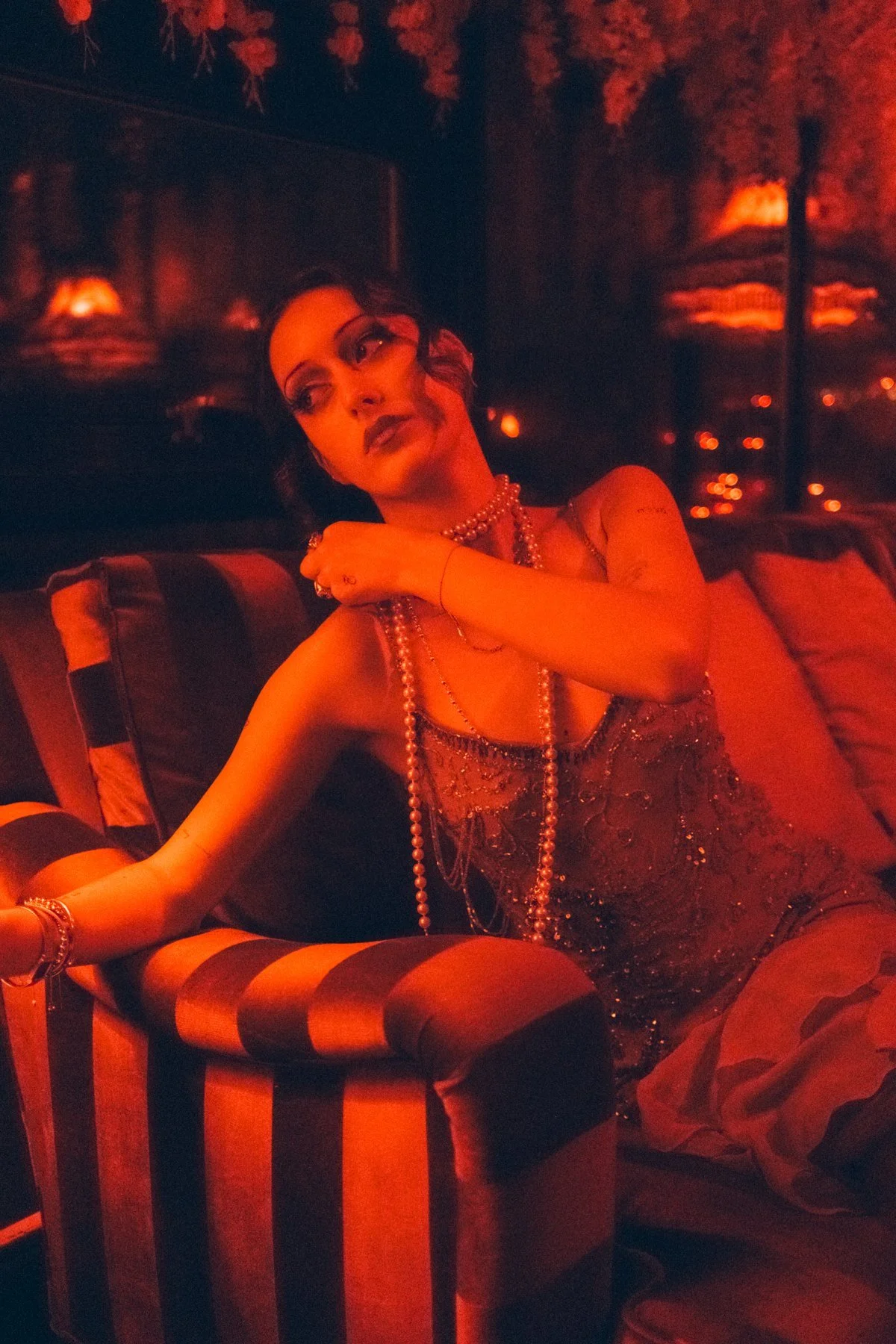
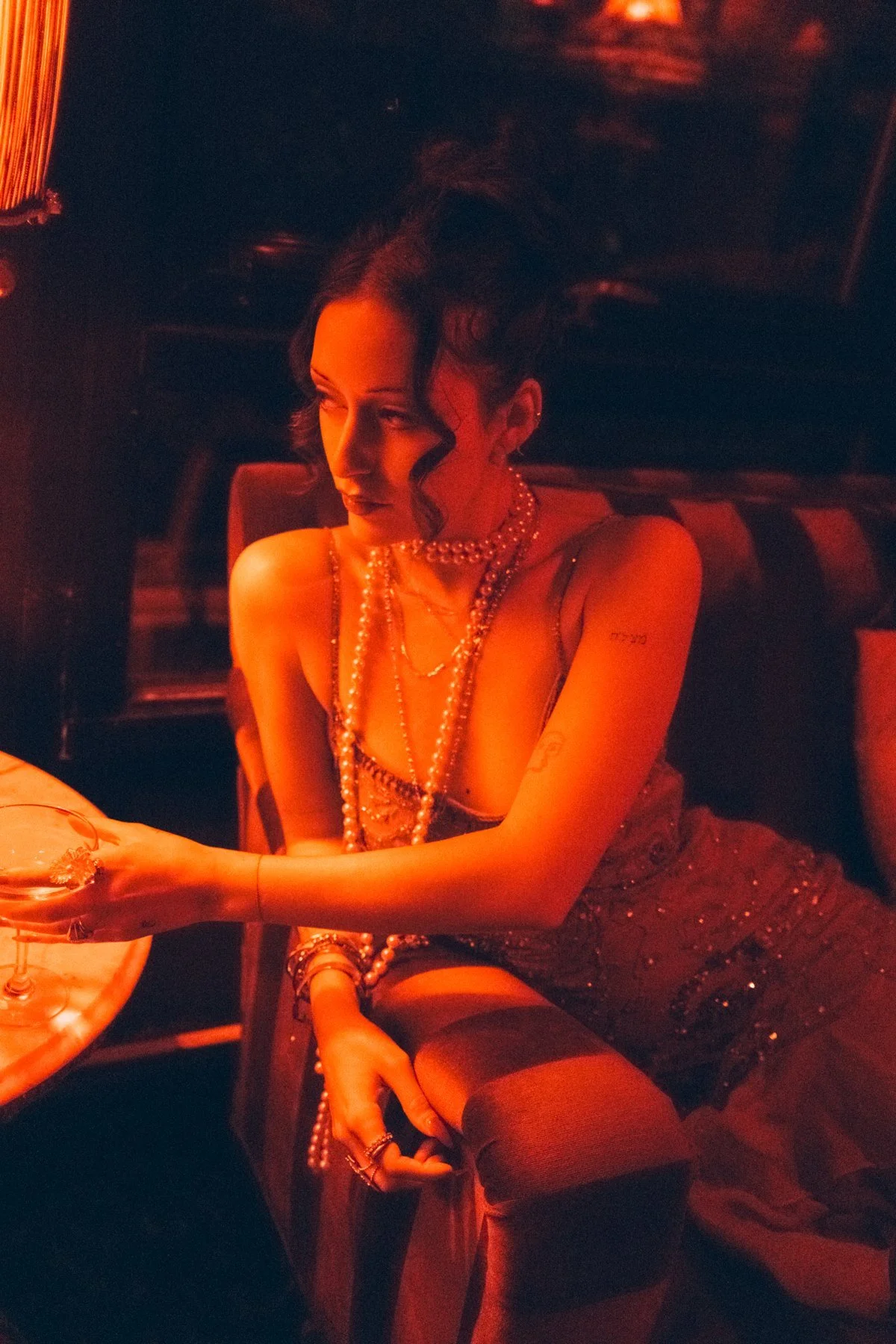
Leaning into the chair, sitting back, and smiling toward the camera create different lines even when the setting stays familiar. The samples show why a session does not need a new location for every photograph. The high ISO values belong to these particular exposures; the edited web images should not be treated as an unprocessed noise test.
Where the size gets in my way
My main reservation is about carrying it. For the kind of pocket camera I want, the X100VI doesn't feel small enough. That becomes especially relevant when I think about taking a camera to a concert.
I want the option to make photographs without carrying much. Pocketability is a practical requirement for that role. A camera can be relatively compact and still be too much for the way I want to bring it along.
That is why I would encourage someone considering the X100VI to handle one if possible. Think about the clothes you wear, whether you are happy using a strap or a bag, and what you actually mean by a camera you can take everywhere. Your answer may be different from mine.
Changing the viewpoint changes the picture
These closer frames place more emphasis on the face, hands, and the angle of the body. Compare them with the wider bar photograph earlier in the article: the setting has become a smaller part of the story. A fixed focal length still allows this kind of visual variety, provided the space lets you move.
Why the Ricoh GR III fits that role better for me
The GR III is much closer to what I want the X100VI to be: a camera I find easy to take anywhere. Its portability matters to me enough to shape which camera makes sense for that particular use.
If pocketability is your priority too, it deserves as much attention as the image specifications.
I wrote more about that experience in 1 Year With My Ricoh GR III, with portraits and everyday photographs showing the different things I bring it along for.
Shape and expression are the useful comparison
An arm lifted inside the ornate frame creates a different silhouette from a forward lean toward the table. These final examples are about what the person and the setting contribute. They are the reason I can enjoy working with the X100VI while still wanting a smaller camera for an everyday pocket.
My take on the Fujifilm X100VI
I think it is a great camera, and these portraits are part of my experience with it. My hesitation is specific: I want a pocket camera for the way I go out and make pictures, including taking one to concerts. For me, the GR III fits that need better.
For portrait work, the photographs are what I want people to connect with. The person, the light, and the space still give us the material to work with. You can explore more of that approach in my NYC portrait photography, with different people, settings, and ideas.